
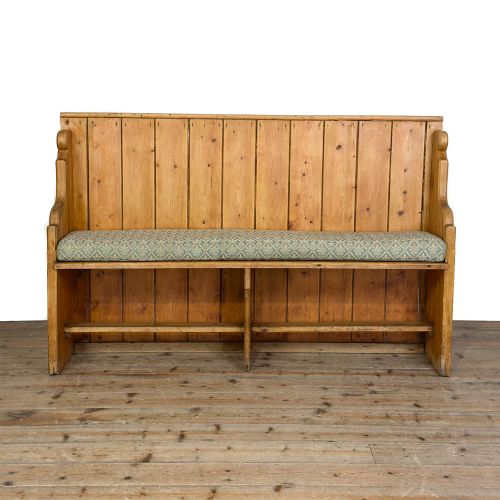
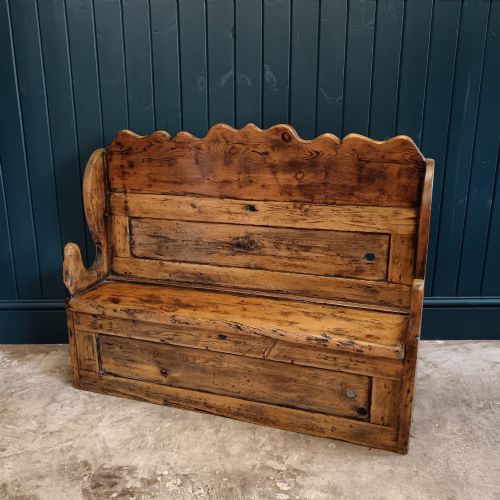
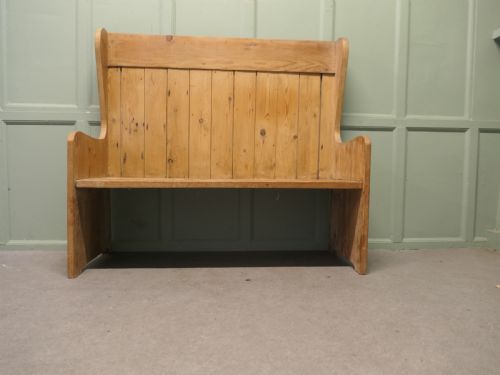
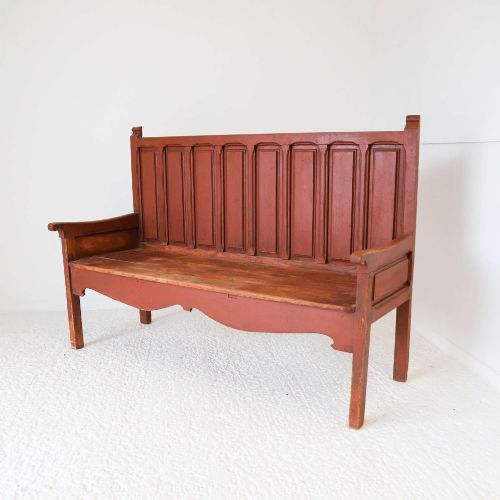





High Back Pine Settle
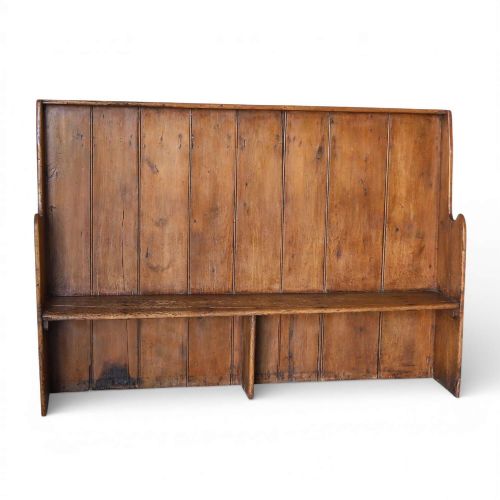
A high back pine settle blocks the draught from a hearth, offering a long wooden seat with tall panelled protection behind.
High Back Pine Settle
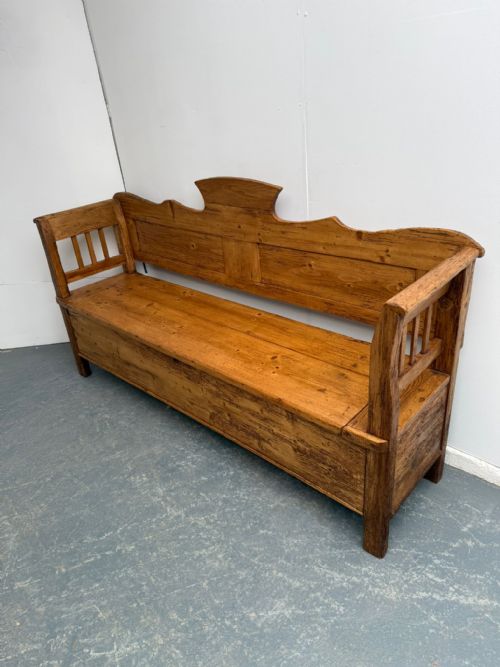
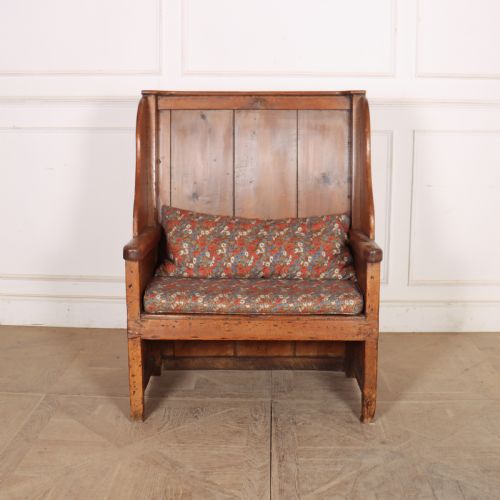
A high back pine settle takes the form of a bench with a tall wooden back designed to block cold air in domestic rooms and public houses. These pieces often feature integrated underseat storage or solid panelled construction to keep occupants warm by the fire.
The versions met on this page range from Georgian country examples to later Victorian and rustic pieces. Many display regional traits such as curved barrel backs or original painted finishes from English and Welsh workshops.
Distinguishing quality in rustic seating
The distinction between ordinary utility benches and finer examples rests in the preservation of original surfaces, such as early paint or scumble. Unaltered proportions and retained structural elements like box drawers or panelled canopies elevate certain pieces.
Construction integrity and timber selection dictate durability. Pieces retaining their early patination and native secondary woods demonstrate greater integrity than those altered or stripped down over time.
The listings on this page span the eighteenth, nineteenth, and early twentieth centuries, constructed from pine, elm, oak, and chestnut.
The High Back Pine Settle Glossary
- Settle
- A wooden bench with a high back and solid arms, designed to shield the user from draughts. They were standard seating in farmhouses and public houses before upholstered sofas became common.
- Barrel back
- A curved enclosure forming the back and sides of a seat to trap heat from a hearth. This enclosed form wraps around the occupant for maximum protection against cold air.
- Scumble
- A translucent layer of glaze dragged or mottled over a base coat to imitate finer grain or texture. It appears on country furniture to decorate simpler softwoods.
- Box settle
- A variant featuring a hinged seat lifting to reveal storage space underneath. This compartment held household goods or tavern supplies.
- Patina
- The surface sheen and colour acquired by wood through age, handling, and waxing. It develops naturally over decades of use.
High Back Pine Settle: Frequently Asked Questions
What is a high back pine settle?
A high back pine settle is a traditional wooden bench equipped with a tall backrest and solid sides. It served as functional seating in domestic kitchens and public houses to shield people from cold draughts.
These pieces combine seating with architectural presence, often incorporating underseat storage boxes or curved barrel designs. They remain practical furniture for hallways, kitchens, and large living spaces.
How were settles used in old homes?
Settles were placed near hearths in farmhouses and taverns where the high wooden back acted as a windbreak. The solid structure kept sitters warm by blocking cold air moving across stone floors.
Many examples included storage compartments beneath the seat for blankets or tavern gear. Their enclosed forms created a sheltered microclimate before central heating existed.
How do I identify a Georgian settle?
Georgian settles display characteristic period proportions, pegged panel construction, and native timber usage like pine and elm. They often feature primitive country details, waxed honey patination, or early painted surfaces.
Later Victorian and 19th-century interpretations frequently imitate these earlier forms but can be distinguished by secondary woods, machine-sawn components, or different assembly methods.
Are painted finishes original on these benches?
Some pieces retain early or original painted finishes, scumble decoration, or historic tavern paint layers. These surface treatments survive from regional workshops and historic domestic interiors.
Other examples show later decorative painting or surfaces that have been stripped down to reveal bare waxed pine over the decades.