

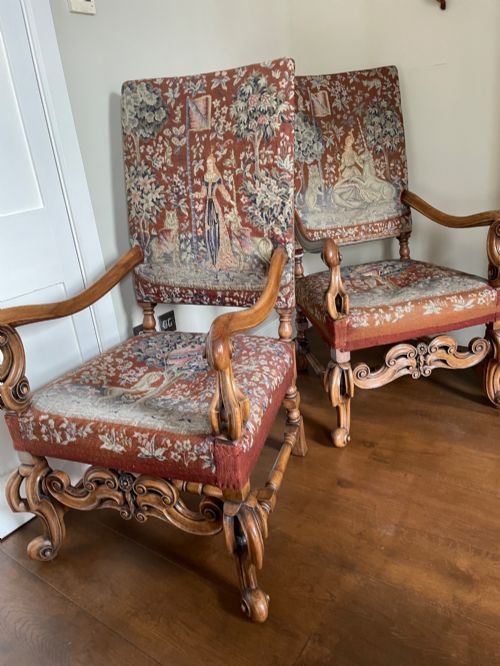
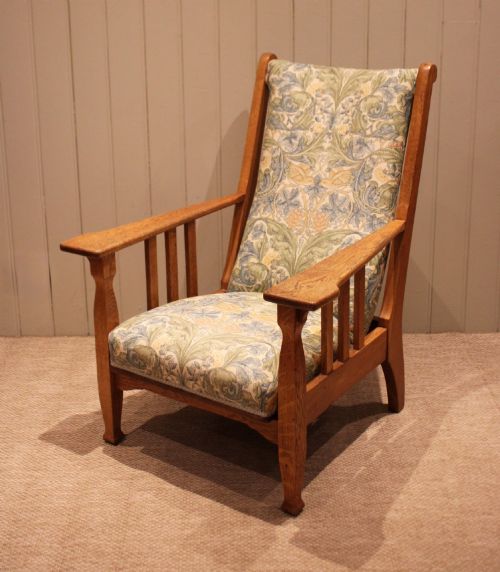
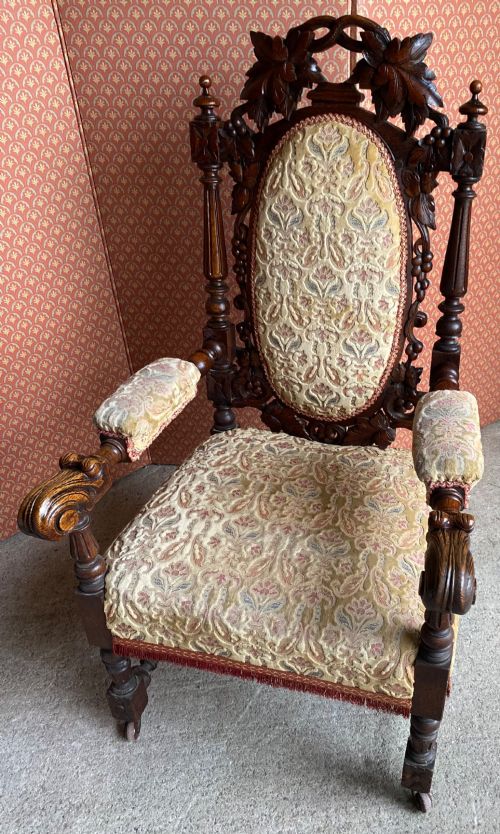
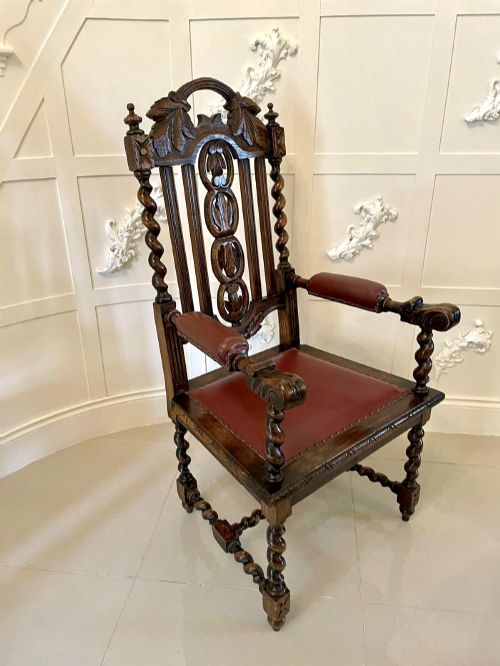
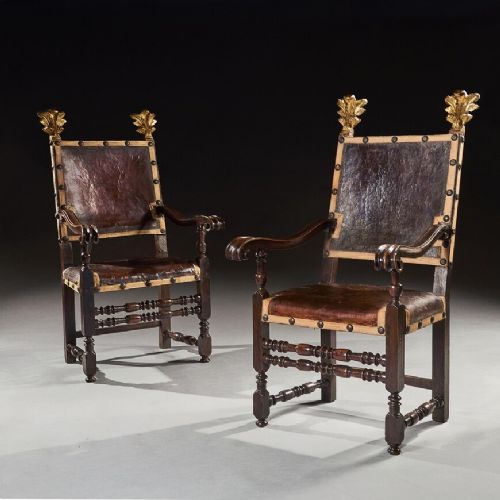
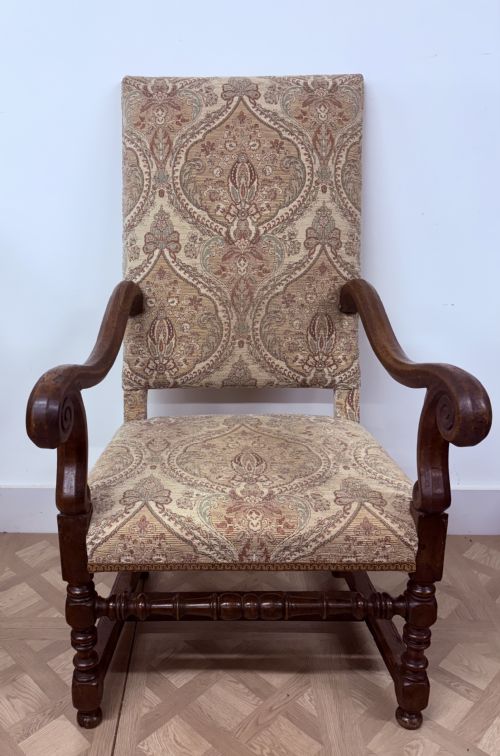
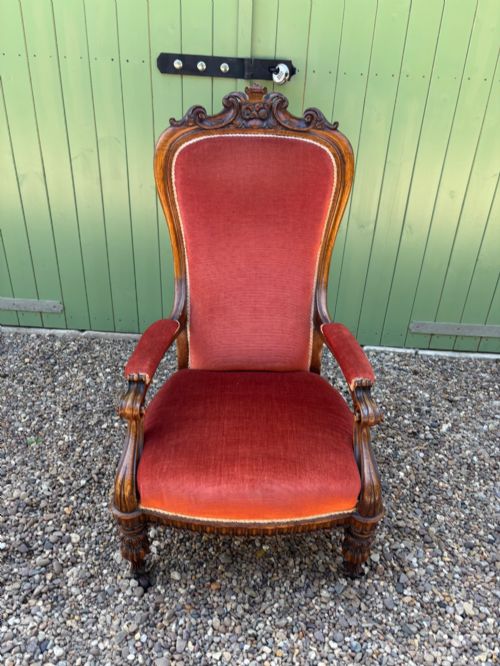
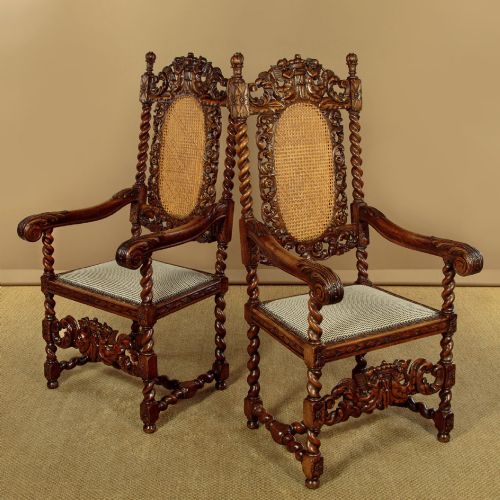
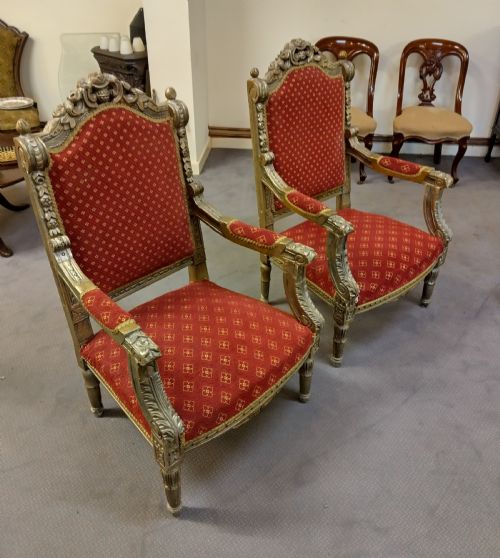
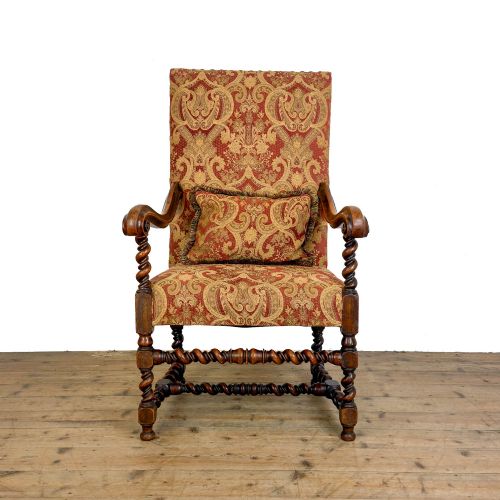
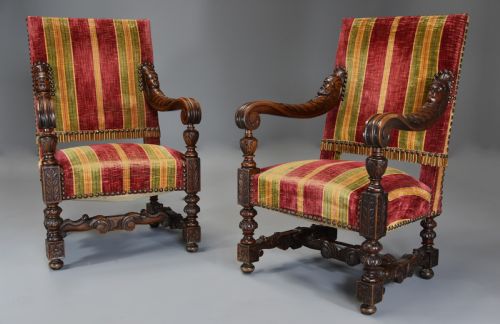

High Back Open Armchair
A high back open armchair offers commanding presence and upright support, drawing the eye with its soaring proportions and exposed structural frame.
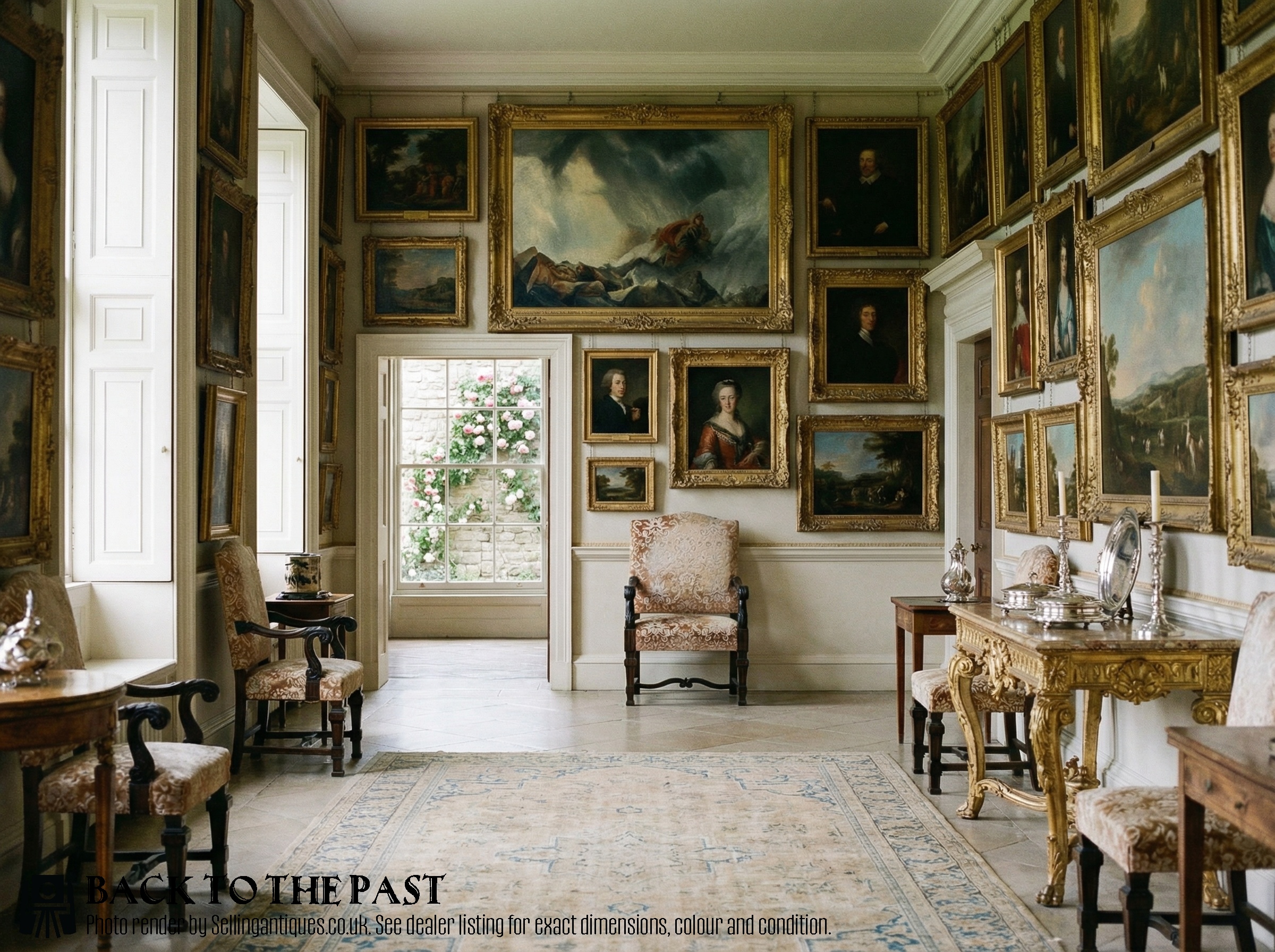
High Back Open Armchair
When you search for high back open armchair, you encounter seating designed for formal rooms, libraries, and studies where posture and status mattered. These pieces provide an elevated backrest combined with open arm structures, distinguishing them from fully enclosed upholstered wing chairs.
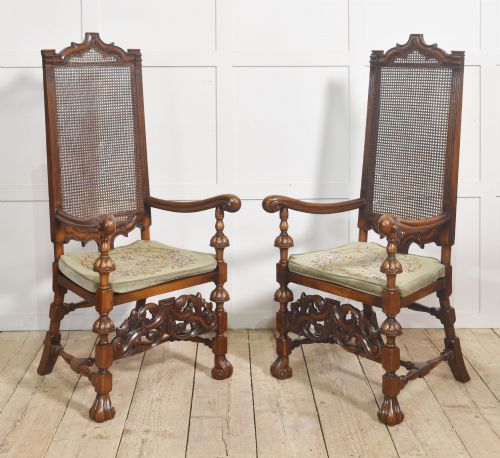
The selections span centuries from the seventeenth through the early twentieth century, showing revivals of Baroque, Carolean, and William and Mary styles alongside vernacular country pieces. Walnut and oak dominate the earlier examples, while mahogany and rosewood emerge in later periods.
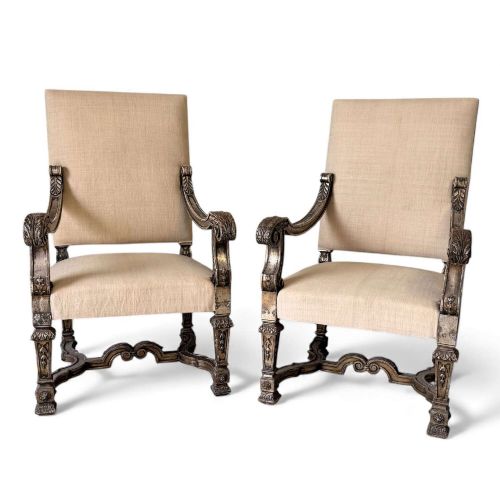
You are most likely to meet nineteenth-century interpretations and revivals on this page, often constructed in carved walnut or oak with varying upholstery. These range from imposing French library chairs to Dutch sculptural designs and English Arts and Crafts interpretations.
What varies in quality
The distinction between ordinary and exceptional examples rests upon the crispness of the timber carving and the architectural proportion of the frame. Superior chairs display deeply undercut foliage, balanced proportions, and substantial scantlings of walnut or mahogany rather than thin timber.
Originality of surface and structural integrity dictate the standing of a piece within its period. Chairs retaining their initial timber patination, authentic joinery, and period-appropriate upholstery materials command greater appreciation than heavily altered or reconstructed specimens.
High Back Open Armchair Retail Price Guide 2026
Typical asking prices for high back open armchair among the pieces listed under this phrase on Sellingantiques today, from the lower quarter to the upper quarter. They describe what is for sale here now, not the wider market.
Several chairs on this page have survived centuries of sitters by quietly submitting to multiple rounds of fresh upholstery.
John Reid and son·William Birch of High Wycombe·Louis Majorelle
The High Back Open Armchair Glossary
- Fauteuil
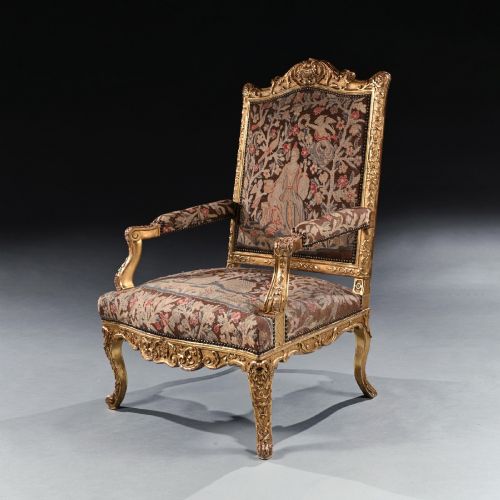
- A French open-arm armchair with an exposed wooden frame, typically upholstered on the seat and back. These chairs date back to the seventeenth and eighteenth centuries.
- Gainsborough chair
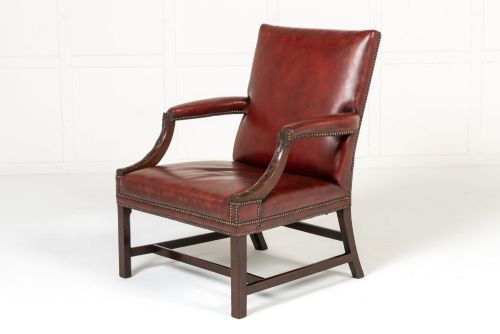
- A type of eighteenth-century English armchair featuring a wide seat, padded back, and open padded arms. They were originally designed for writing desks and libraries.
- Parcel-gilt
- A decorative technique where specific portions of a wooden or gesso frame are highlighted with gold leaf. This creates contrast against a painted or polished wood base.
- Crest rail
- The top horizontal member of a chair back, frequently shaped, carved, or adorned with cresting. It forms the uppermost visual boundary of the high back design.
- Strapwork
- An ornamental motif composed of flat, interlaced bands resembling leather straps or ribbons. It frequently appears on seventeenth-century walnut and oak framing.
High Back Open Armchair: Frequently Asked Questions
How do I use a high back open armchair today?
These chairs function well as reading seats in libraries or studies, paired with floor lamps and side tables. Their height gives them a strong visual anchor in larger living spaces.
Because the arms are open, they take up less visual weight than enclosed armchairs. Position them where the carved wooden frame remains visible from multiple angles in the room.
What is the difference between Baroque and William and Mary styles?
Baroque designs feature dramatic curves, sculptural carvings, and Italian or French influences. They often incorporate gilt finishes and heavily ornamented crest rails.
William and Mary pieces tend to show more restrained geometric turning, flat stretcher bases, and simpler walnut frames. They reflect Dutch design influences introduced to England around the turn of the eighteenth century.
Are these chairs comfortable for long periods?
The upright posture encouraged by the tall back provides strong lumbar support. Many period examples were built for formal conversation rather than lounging.
Comfort levels depend heavily on the internal webbing and padding quality. Some historic pieces have been reupholstered to modern comfort standards while retaining their antique frames.
How do I identify a nineteenth-century revival piece?
Nineteenth-century makers often copied seventeenth and eighteenth-century forms precisely, using machine-assisted joinery alongside hand carving. Look at the interior timber surfaces and screw types for clues to the manufacturing date.
Revival pieces from the Victorian era or Arts and Crafts movement display exceptional woodwork quality. They capture earlier styles while incorporating the heavier proportions favoured by nineteenth-century tastes.