

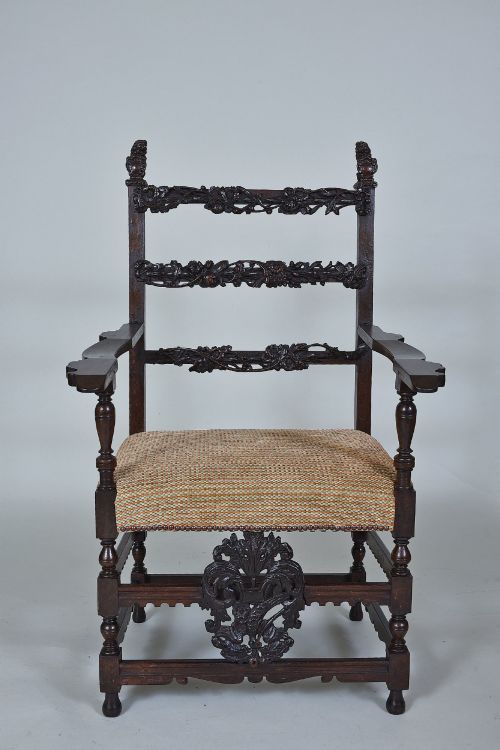


Baroque Style Carver Chair
A baroque style carver chair brings theatrical presence and rich carving into a room, offering grand seating shaped by centuries of European revival craftsmanship.
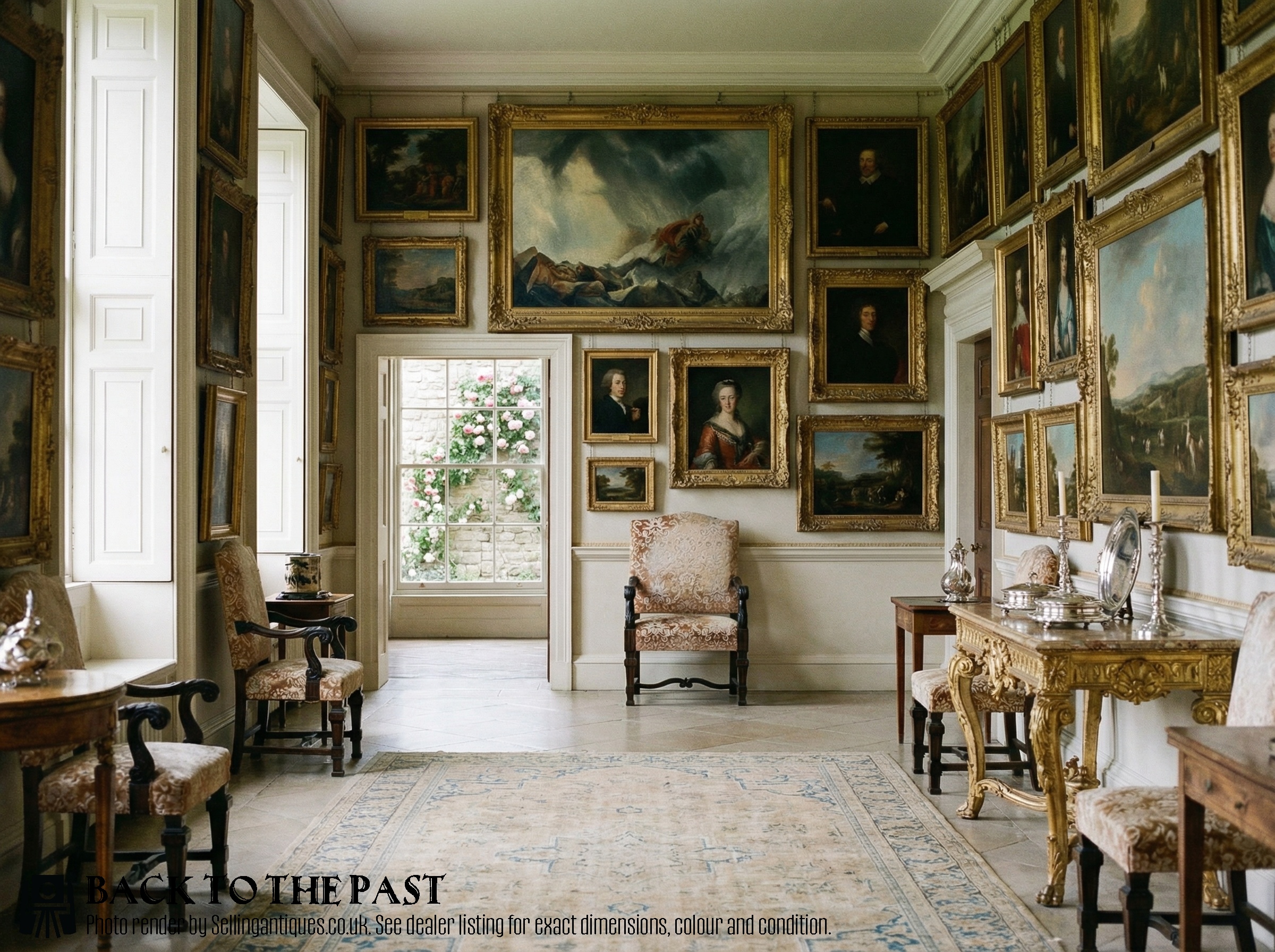
Baroque Style Carver Chair
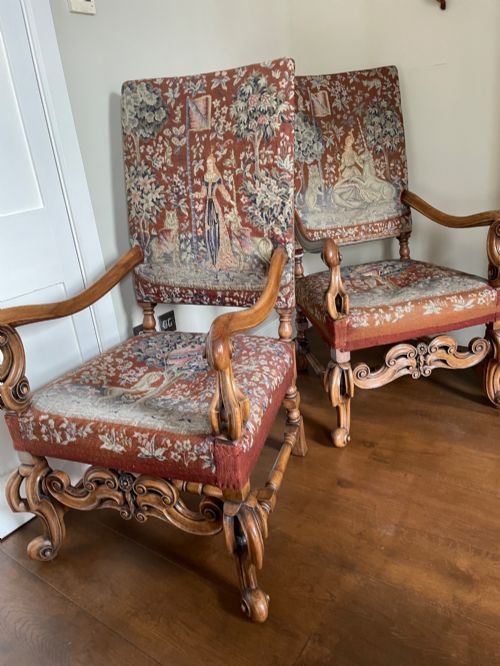
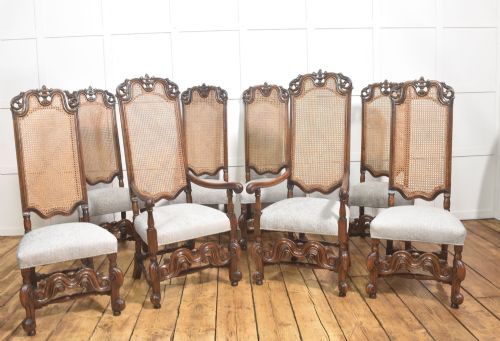
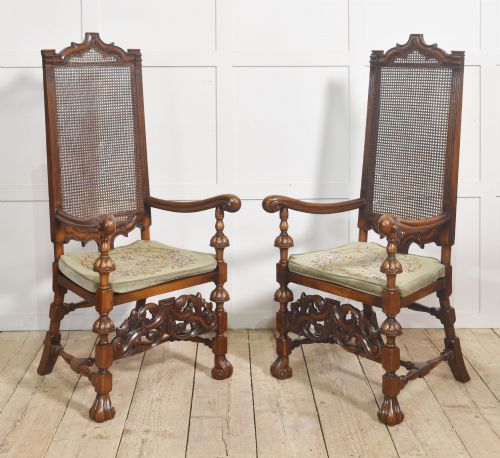
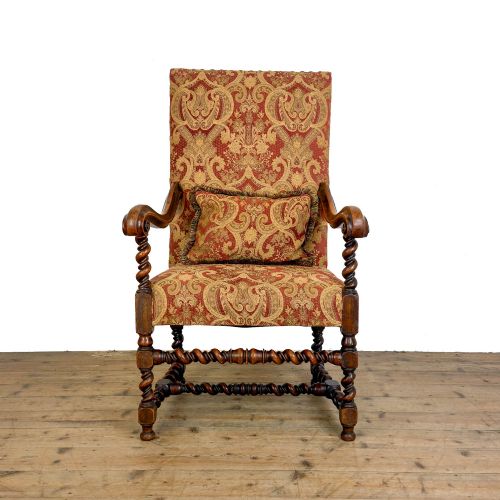
A baroque style carver chair is a substantial seating form designed with pronounced arms, high backs, and elaborate timber or gilt framing. When browsing this selection, a buyer encounters examples ranging from nineteenth-century revival dining sets to sculptural seventeenth and eighteenth-century continental armchairs.
The objects listed span several decades and origins, including walnut high-back dining chairs, French giltwood throne armchairs, and carved oak Carolean style seating. Most pieces on this page originate from the nineteenth century, reflecting robust interest in historical revivals during the Victorian era and the early twentieth century.
Forms vary between open armchairs, elbow chairs, and heavier dining carvers intended to anchor the ends of a table. Construction materials shift across walnut, oak, padouk wood, and giltwood, frequently paired with cane inserts, wool tapestry, or modern upholstery fabric.
Materials and construction
Carvers in this group rely heavily on dense hardwoods such as walnut and oak, which tolerate deep relief carving without splintering. Artisans shaped structural frames through traditional joinery, applying hand-carved scrolls, foliage, and crest rails directly to the solid timber.
Surface treatments range from natural polished grain to applied gilding on giltwood throne chairs and contrasting padouk wood. Many examples incorporate woven cane panels into the backrests and seats, while others utilise heavy wool tapestry or upholstery fabric fastened with decorative tacks.
Baroque Style Carver Chair Retail Price Guide 2026
Typical asking prices for baroque style carver chair among the pieces listed under this phrase on Sellingantiques today, from the lower quarter to the upper quarter. They describe what is for sale here now, not the wider market.
Listings feature woods spanning walnut, oak, padouk wood, and giltwood.
Assessing quality and execution
The distinction between standard production and superior work lies in the depth and crispness of the hand-carving on the crests and arm terminals. Fine examples display undercut foliage and balanced proportions, whereas lesser pieces show shallow, mechanically smoothed moulding.
Structural integrity also separates the range, governed by the tightness of the joints and the original thickness of the timber frame. Chairs retaining undisturbed period surfaces and tight cane or traditional upholstery demonstrate superior preservation compared to heavily altered equivalents.
The Baroque Style Carver Chair Glossary
- Carver chair
- An armchair, typically larger and more decorative than standard dining chairs, designed to sit at the head of a table.
- Carolean revival
- A nineteenth-century British stylistic movement mimicking late seventeenth-century Restoration furniture through high cane backs and scrolling carved woodwork.
- Giltwood
- Timber coated with fine gold leaf or gilt paint, frequently utilised on grand decorative armchairs and throne seating.
- Padouk wood
- A dense tropical timber valued for its rich natural colour and durability in carved furniture frames.
Baroque Style Carver Chair: Frequently Asked Questions
What is a baroque style carver chair?
A baroque style carver chair is a grand armchair featuring prominent armrests, high backs, and ornate, sculptural woodwork inspired by seventeenth-century continental design.
Most examples found today date from nineteenth-century revival periods, when cabinetmakers recreated historic furniture forms using walnut, oak, and giltwood.
How were these armchairs used historically?
These imposing seats were traditionally placed at the head of a dining table or used as formal accent pieces in parlours and reception rooms to denote status.
The substantial arms and high backs provided both physical presence and comfort during formal dining and entertaining.
How do I care for cane and upholstered seats?
Cane panels require gentle dusting and occasional light moisture to prevent the natural fibres from drying out and snapping under pressure.
Upholstered sections benefit from regular vacuuming with a soft brush attachment and professional cleaning when dealing with delicate fabrics like wool tapestry.
How do I distinguish between different revival periods?
Distinguishing periods involves examining the carving style, timber species, and construction techniques, such as identifying nineteenth-century interpretations of seventeenth-century Carolean forms.
Revival pieces often combine historical motifs with nineteenth-century machine assistance, whereas true eighteenth-century examples show entirely hand-wrought joinery and patinated timber surfaces.