




High Back Caned Armchair
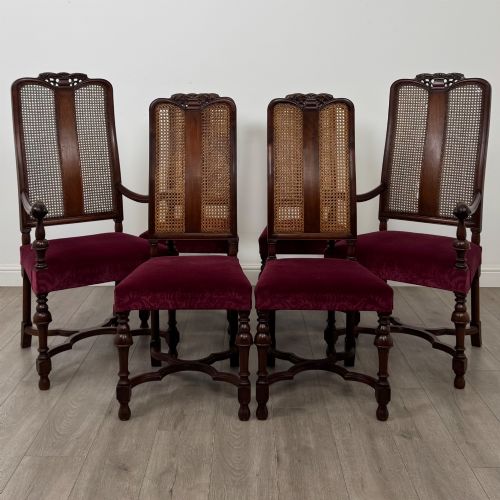
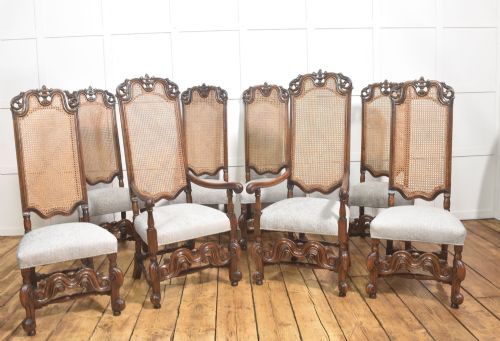
A high back caned armchair brings commanding presence to a room, offering upright support through woven seating and soaring wooden frames.
High Back Caned Armchair
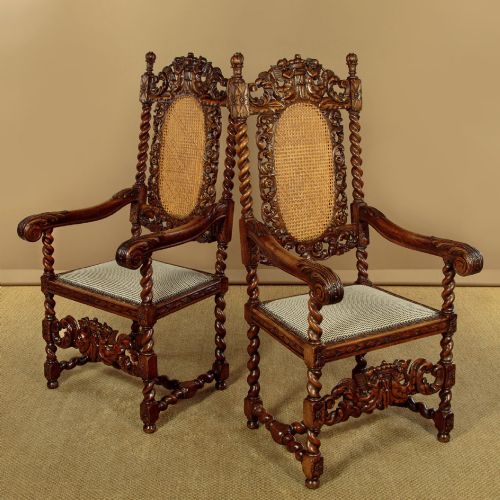
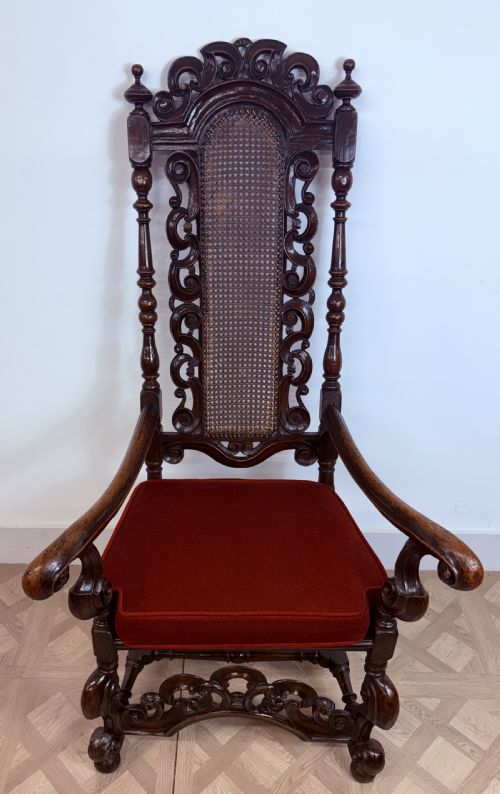
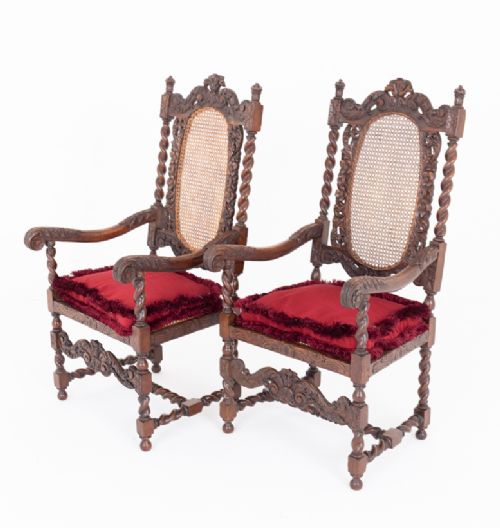
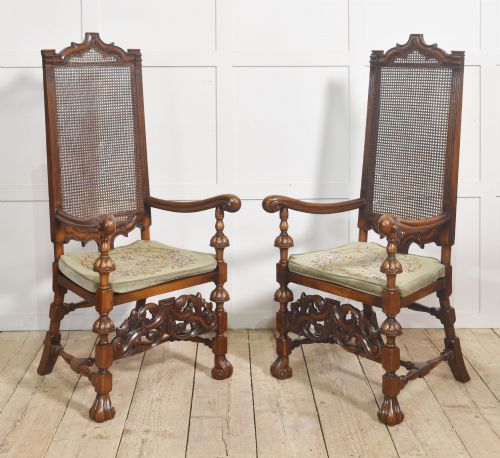
A high back caned armchair provides a striking silhouette rooted in seventeenth-century seating design. These chairs combine generous timber frames with woven cane panels set into the backrest and frequently the seat.
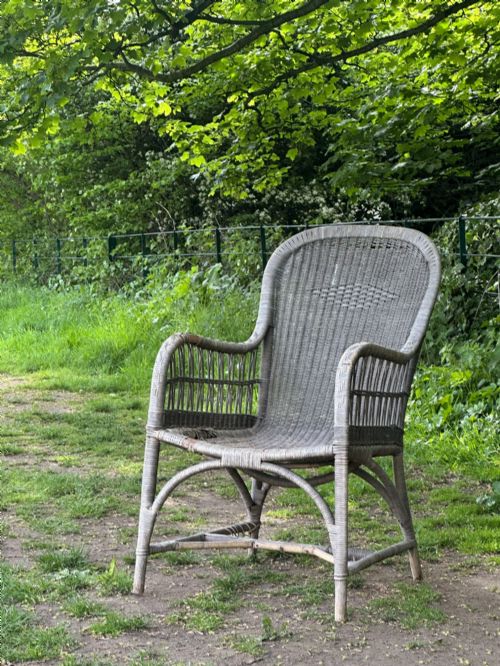
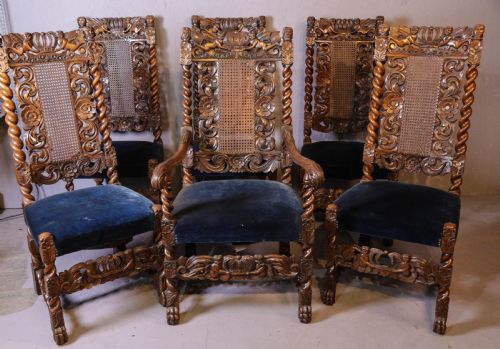
The selections available range from seventeenth-century originals and nineteenth-century revivals to twentieth-century Arts and Crafts iterations. Buyers frequently encounter revival pieces echoing Carolean, Jacobean, and William and Mary aesthetics alongside wicker and rattan interpretations.
Forms span individual library or lounge armchairs, rocking chairs, and substantial suites of dining chairs. Walnut and oak dominate the timber selections, often accompanied by heavy carving and turned supports.
Materials and Construction Methods
Timbers such as walnut and oak form the structural skeleton of these chairs, shaped through turning, mortise and tenon joints, and elaborate hand carving. Artisans fashioned soaring uprights and scrolled arms to support the seated occupant.
Cane and rattan provide the characteristic woven surfaces for backs and seats, threaded meticulously through drilled frame channels. Secondary materials like willow and beech appear in country and rocking variants, while occasional velvet or fabric upholstery accents the design.
The inventory records dining chairs, rocking chairs, and lounge seating incorporating stylistic influences from the Carolean, Jacobean, and Arts and Crafts movements.
Distinctions in Quality and Craftsmanship
Depth and crispness of the timber carving separate standard revival pieces from superior examples. Finely executed scrollwork, pierced crest rails, and balanced proportions reflect the skill of the original maker.
The integrity of the woven cane work dictates the refinement of the piece. Uniform tension, tight strands, and untouched period webbing demonstrate elevated standards of historical furniture production.
Dryad of Leicester
The High Back Caned Armchair Glossary
- Cane
- The peeled bark of the rattan palm utilised for resilient, flexible seating and backrest panels. It provides lightweight strength while maintaining visual transparency within heavy timber frames.
- Carolean
- Pertaining to the reign of King Charles II, characterised by opulent walnut furniture, elaborate carving, and soaring backrests. This aesthetic experienced significant revival periods during the nineteenth and twentieth centuries.
- Mortise and tenon
- A traditional woodworking joint where a projecting tongue fits snugly into a corresponding cavity. This method secures the structural framework of the chair without relying on metal fasteners.
- Turned
- Shaped on a lathe to create symmetrical decorative profiles along legs, stretchers, and arm supports. Craftsmen utilised this technique extensively on seventeenth-century and revival seating.
- Crest rail
- The horizontal topmost member of a chair back, frequently shaped, pierced, or carved with heraldic and floral motifs. It serves as the visual crown of high back seating.
High Back Caned Armchair: Frequently Asked Questions
How do I identify a seventeenth-century original?
Authenticating a true seventeenth-century piece relies on examining timber oxidation, hand-cut joinery marks, and the wear patterns inherent in aged walnut or oak. Original pieces show natural shrinkage in the wood and pegged joints rather than modern fixings.
Revival pieces from the nineteenth and twentieth centuries often exhibit machine precision, standardised turning, and secondary woods inconsistent with seventeenth-century workshop practices. Comparing the carving depth and construction methods against known historical examples clarifies the production era.
Are these chairs comfortable for daily use?
High back armchairs were designed to encourage upright posture, keeping the occupant clear of cold drafts in historical interiors. The angled backrests and woven cane provide surprising spring and support during seated activities.
Adding a loose squab cushion allows for softer lounging without compromising the visual integrity of the cane base. Rocking variants and lounge chairs offer relaxed seating postures suited to modern living spaces.
What is the difference between Carolean and Jacobean styles?
Jacobean furniture generally dates from the early seventeenth century under King James I, featuring sturdy rectangular oak construction and geometric strapwork carving. The aesthetic emphasises solidity, architectural lines, and sombre dignity.
Carolean design emerges later in the century, introducing lighter walnut timbers, rich crest rails, and extravagant scrollwork. Revival movements later blended these vocabulary elements into Victorian and Edwardian seating.