
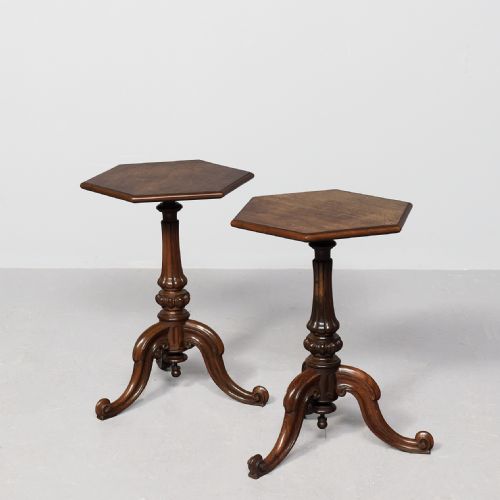
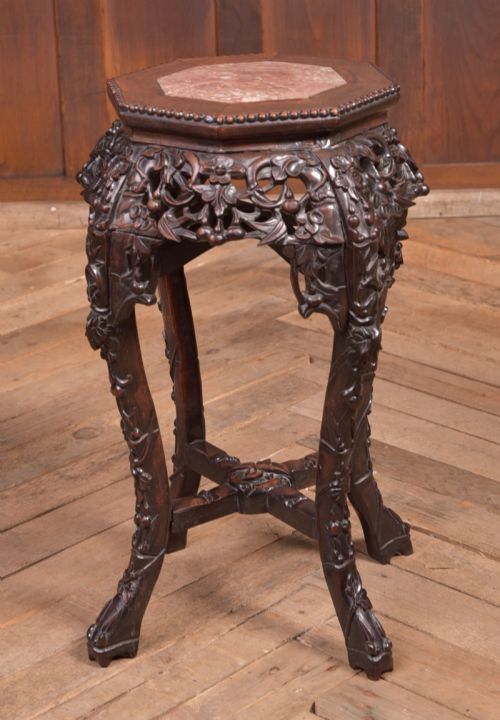


Hexagonal Carved Pedestal
These hexagonal carved pedestal tables and stands offer distinct geometric surfaces supported by elaborate ornamentation, built for display in period interiors.
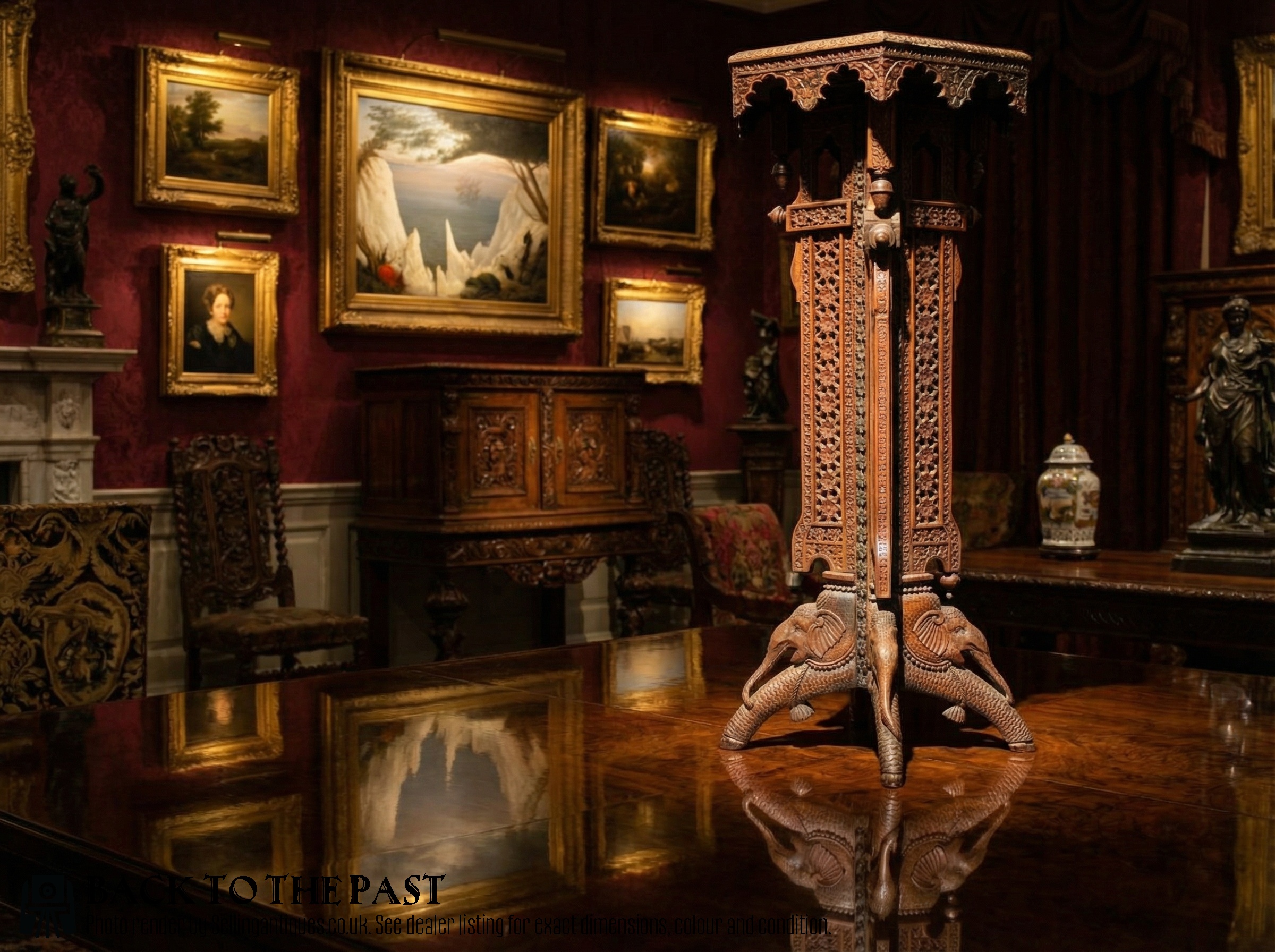
Hexagonal Carved Pedestal
The hexagonal carved pedestal encompasses occasional tables, plant stands, and torcheres designed with six-sided tops and sculpted supports. These pieces emerge across nineteenth century, Victorian, Regency, and Edwardian periods, reflecting diverse stylistic influences from domestic British workshops to Anglo-Indian and Chinese craftsmanship.
The most common forms on this page include occasional tables and plant stands featuring carved wooden bases. Examples range from solid rosewood stands and pollard oak lamp tables to specimen wood tops and inlaid Syrian surfaces.
Makers adapted the hexagonal format for various domestic functions, serving as central display surfaces, side tables, or elevated pedestals for ornaments and plants. Their geometric tops provide an alternative to traditional circular or rectangular tables while maintaining compact footprints.
How they were made
Craftsmen utilised dense timbers including mahogany, oak, walnut, rosewood, padouk, and pollard oak to construct these stands. These durable woods provided stable foundations for intricate carving and heavy ornamentation.
Makers applied specialist techniques such as pearl inlay, specimen wood parquetry, and surface painting to embellish the hexagonal forms. Joiners combined solid timber construction with detailed hand-carving on the bases and pedestal shafts.
Some nineteenth-century tables arrive with lift tops, proving that even Victorian ancestors enjoyed hiding their clutter inside a pedestal.
What varies in quality
The refinement of the carving dictates the distinction between standard production and superior craftsmanship. Crisp, deep relief work on the pedestal base demonstrates greater skill than shallow, mechanical moulding.
Material selection significantly influences the standing of a piece, with figured timbers like pollard oak, padouk, and solid rosewood commanding higher regard than plain hardwoods. The precision of geometric joinery around the six-sided top further separates accomplished workshop output from simpler execution.
The Hexagonal Carved Pedestal Glossary
- Torchere
- A tall, slender stand designed to hold a lamp or candle, often featuring an elevated platform supported by a carved column. These pieces function primarily as decorative vertical accents in a room.
- Padouk
- A heavy, durable tropical hardwood with a reddish-brown hue utilised in fine cabinetmaking. This timber resists warping and accepts detailed carving exceptionally well.
- Pollard Oak
- Oak timber harvested from trees that have been pollarded, producing dense wood with highly figured, mottled grain patterns. Cabinetmakers prize this material for decorative table tops and drawer fronts.
- Specimen Woods
- An assemblage of various native and exotic timbers arranged in geometric patterns or mosaics across a table top. This technique showcases the natural colour variations of different woods.
- Occasional Table
- A small, movable table designed for specific, intermittent use within a reception room or parlour. These versatile pieces frequently double as plant stands or display surfaces.
Hexagonal Carved Pedestal: Frequently Asked Questions
Where should I place a hexagonal carved pedestal?
These pieces suit corners, window bays, or flanking positions beside seating where their six-sided geometry breaks up rigid room layouts. Their compact footprints allow them to function effectively as plant stands, lamp tables, or display surfaces for decorative objects.
Ensure the surface timber matches or complements the surrounding furniture while maintaining clear walking paths around the projecting angles of the hexagonal top.
How do I care for antique rosewood and mahogany tables?
Maintain these polished hardwood surfaces by dusting regularly with a soft, dry cloth and avoiding direct exposure to strong sunlight or sudden temperature changes. Natural waxes applied sparingly help preserve the lustre of the timber without building up heavy residues.
Protect the top from moisture and heat by using coasters or mats beneath any objects placed on the wood.
What is the difference between a torchere and a plant stand?
Torcheres traditionally derive from lighting supports designed to hold candles or lamps on elevated columns, whereas plant stands focus on supporting botanical displays. In practice, makers often used these terms interchangeably for tall, slender pedestals.
Both forms share the characteristic upright shaft and stable base configuration seen in nineteenth-century designs.
How can I identify a Regency period table?
Regency pieces often incorporate classical architectural motifs, bold wood grains, and clean structural lines influenced by archaeological discoveries of the early nineteenth century. Makers utilised dark timbers like mahogany and rosewood, frequently incorporating robust pedestals with carved or reeded detailing.
Examining the underside construction and joint methods helps confirm the age and workshop origin of the piece.