





Heriz Wool Floor Rug
A heriz wool floor rug brings geometric structure and deep regional warmth to a room through traditional Persian knots.
Heriz Wool Floor Rug
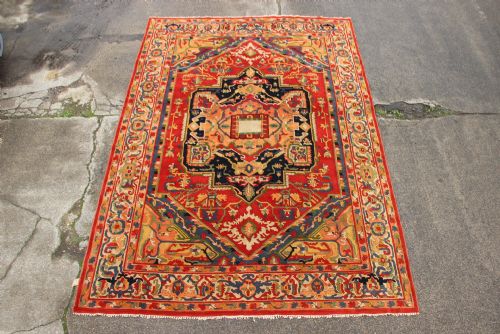
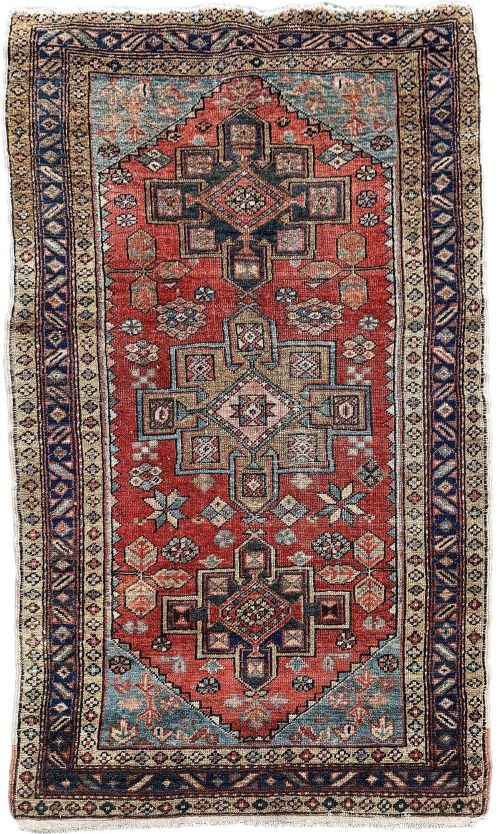
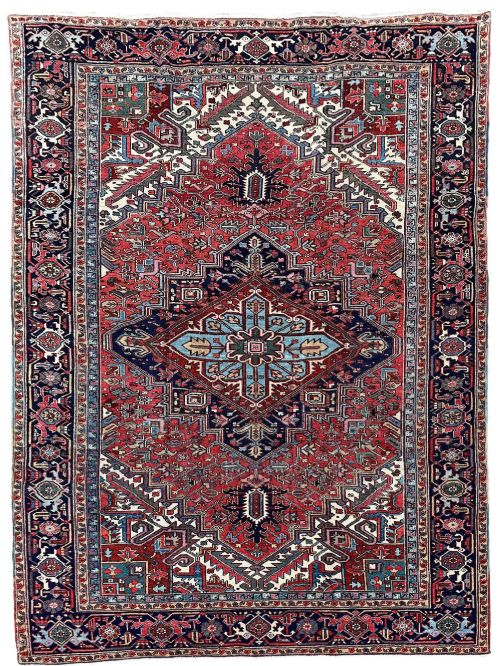
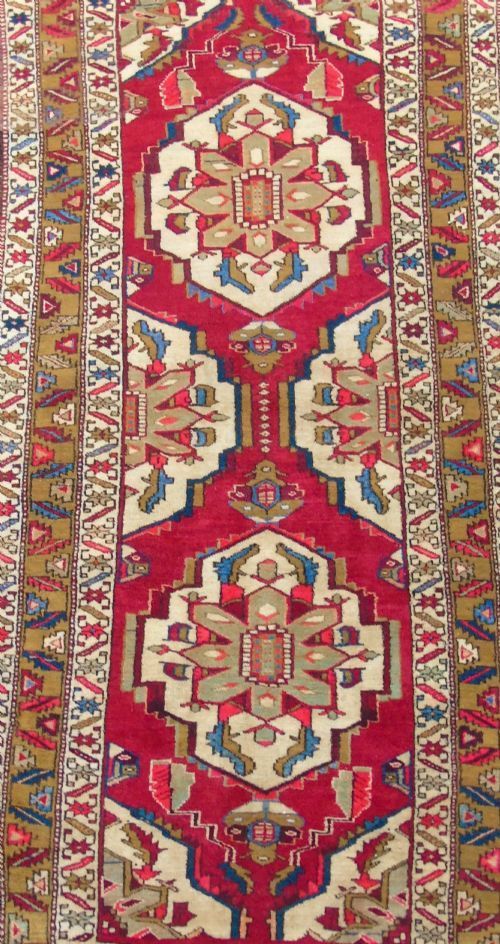
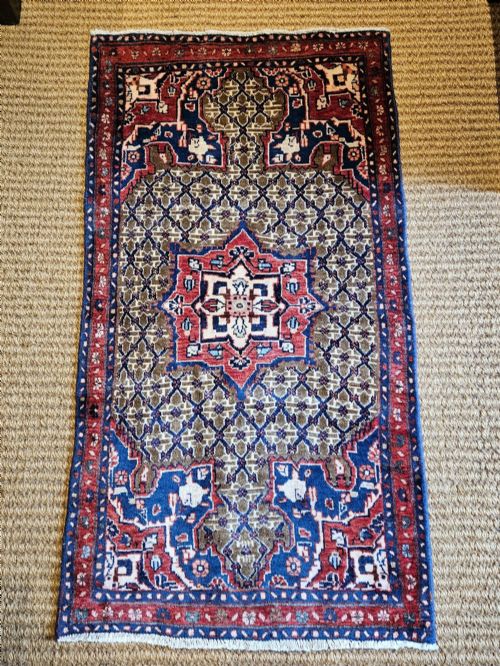
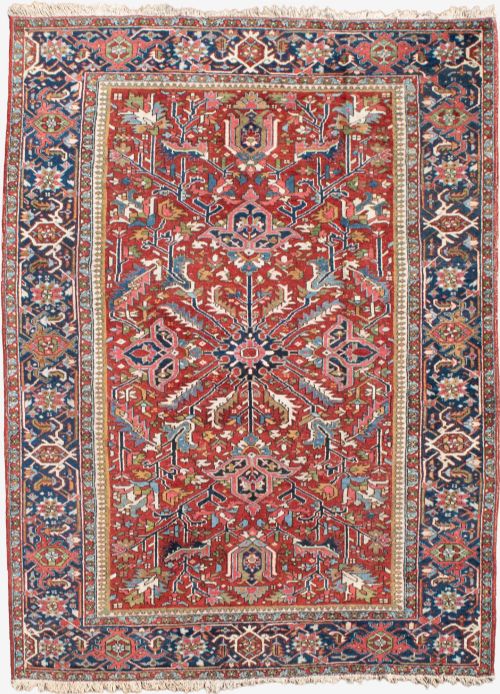
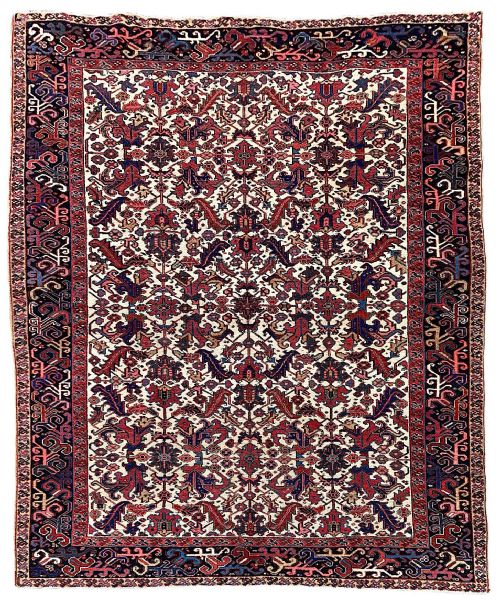
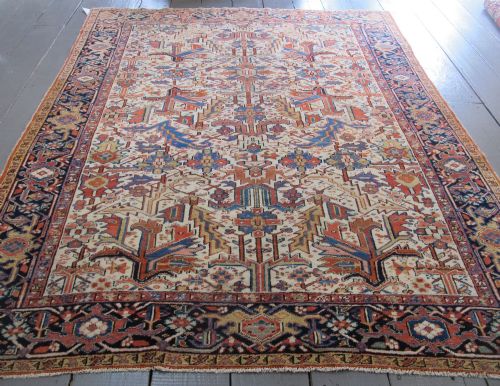
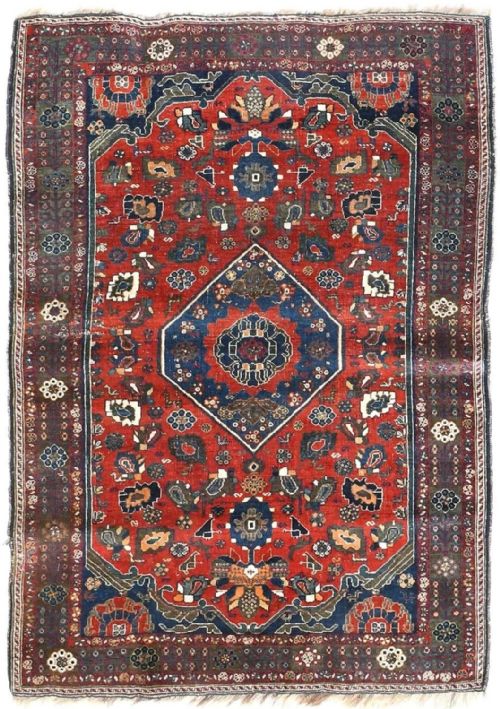
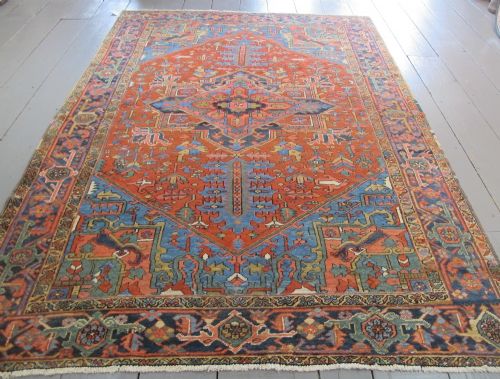
A heriz wool floor rug originates from north-west Persia, taking form as large carpets, small area rugs, hearth sizes, and hallway runners. These pieces display strong geometric medallions and bold corner spandrels rooted in traditional Persian styles.
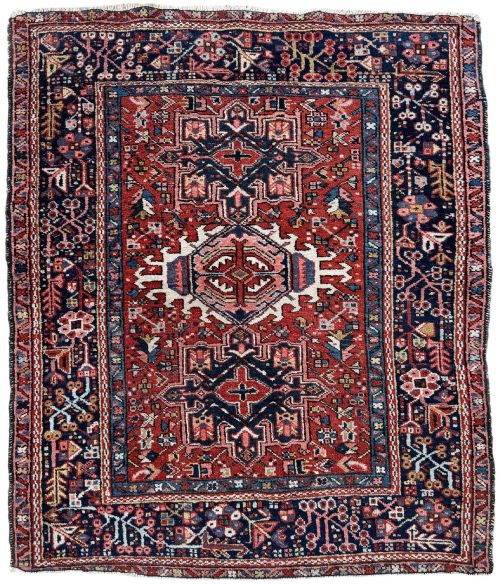
The version most commonly met on this page is the antique room-sized carpet dating from around 1800 to the early decades of the twentieth century. Alongside these large carpets, buyers encounter compact Karaja rugs and elongated runners.
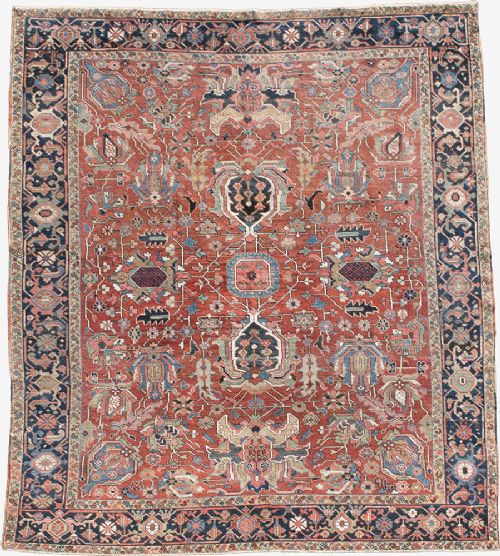
Makers in this tradition utilised durable foundations to create heavy floor coverings designed for continuous domestic use. The visual identity relies on balanced layouts, whether featuring a central medallion or an all-over repeating pattern.
Materials and Construction Methods
These floor coverings are constructed using wool pile knotted tightly onto sturdy cotton foundation warps and wefts. The combination of resilient wool and reliable cotton creates the substantial weight required for a floor rug.
Weavers employed hand-woven knotting techniques typical of Persian tribal workshops in the north-west region. Natural dyes provided the deep ivory grounds, sky blues, and colourful accents seen across the surviving examples.
Heriz Wool Floor Rug Retail Price Guide 2026
Typical asking prices for heriz wool floor rug among the pieces listed under this phrase on Sellingantiques today, from the lower quarter to the upper quarter. They describe what is for sale here now, not the wider market.
Listings span from the 1850s to the 1930s, featuring wool pile on cotton foundations across room-sized carpets, runners, and hearth rugs.
Factors Determining Quality
Quality in these carpets rests upon the density of the weave and the crispness of the geometric drawing within the medallion and field. Tighter knotting and finer wool yield a sharper definition of the traditional motifs.
The harmony and saturation of the colours differentiate examples, alongside the integrity of the original wool pile across the entire surface. Well-preserved borders and intact outer edges contribute significantly to the standing of a piece.
The Heriz Wool Floor Rug Glossary
- Serapi
- A sub-style of Heriz carpet often characterised by a more open, spacious medallion design and softer, highly nuanced palette. These pieces generally date to the nineteenth century.
- Karaja
- A distinct type of rug woven in the same region, typically smaller in format with repeating geometric motifs or multiple small medallions rather than one large central design.
- Medallion
- The prominent central ornament set into the middle of the rug, forming the focal point of the traditional Heriz layout.
- Spandrels
- The triangular corner pieces situated in the upper and lower sections of the field, framing the central medallion.
- Warp
- The vertical foundation threads running lengthwise through the rug, carrying the fringe and supporting the knotted pile.
Heriz Wool Floor Rug: Frequently Asked Questions
Where were these rugs made?
These rugs were produced in the Heriz region and surrounding villages of north-west Persia during the nineteenth and early twentieth centuries.
Local workshops developed distinctive geometric styles that distinguished them from the curvilinear floral carpets woven in other Persian cities.
How do I care for a wool rug?
Regular gentle vacuuming without a rotating brush bar keeps wool floor rugs clean by preventing grit accumulation in the pile.
Professional specialist cleaning is recommended every few years to maintain the natural oils in the wool and preserve the dyes.
How do I tell Heriz and Karaja apart?
Heriz pieces tend to be larger carpets featuring a massive central geometric medallion and bold, architectural borders.
Karaja rugs are usually smaller format pieces with repetitive geometric figures or rows of hooked medallions.