




Heriz Hallway Runner
A heriz hallway runner brings geometric weight and enduring colour to long passages.
Heriz Hallway Runner
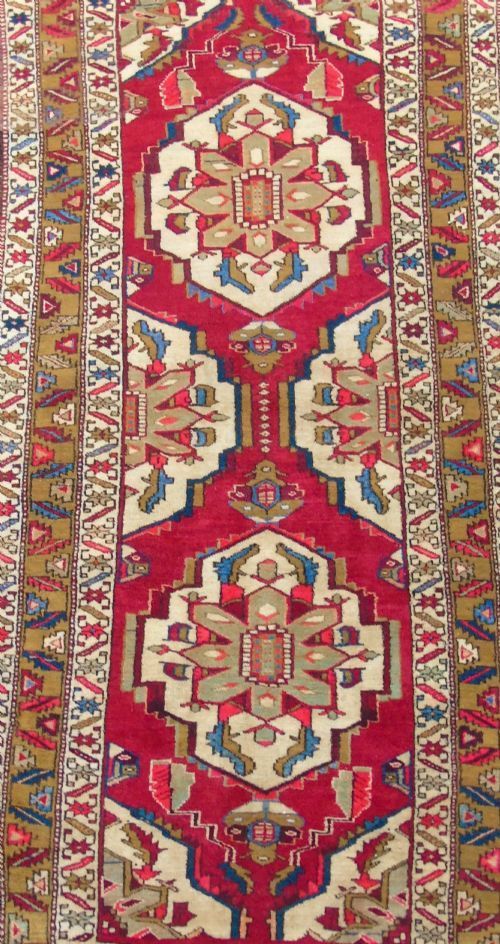
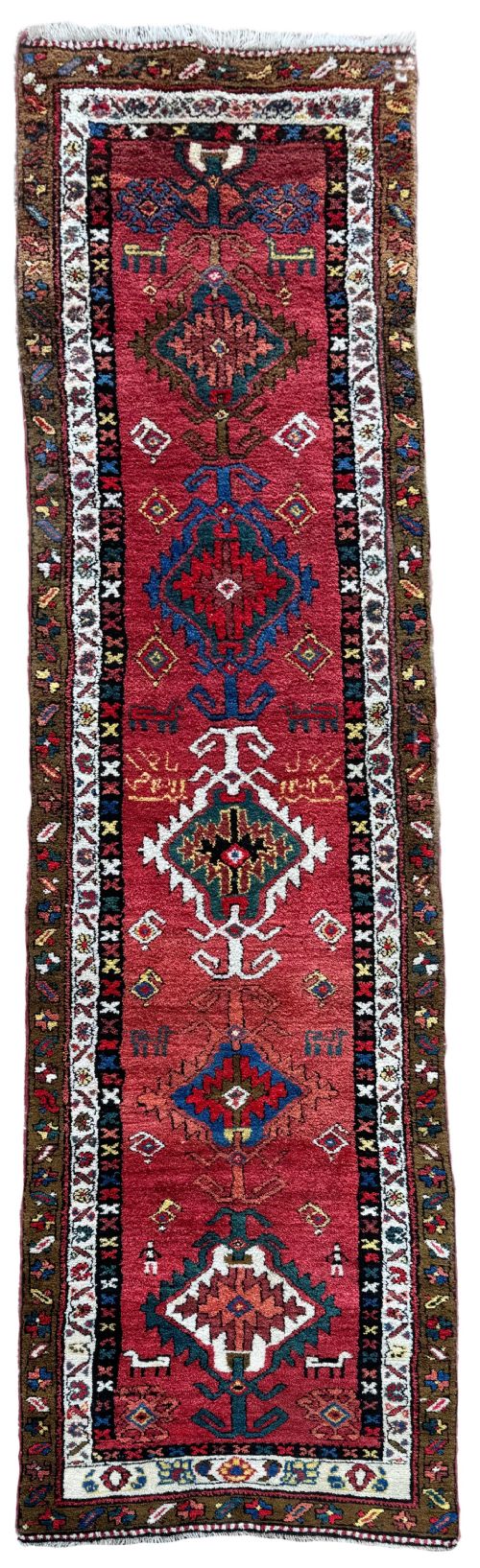
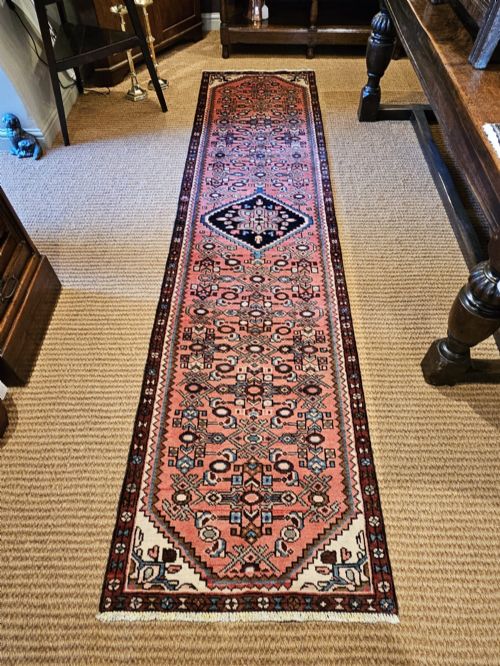
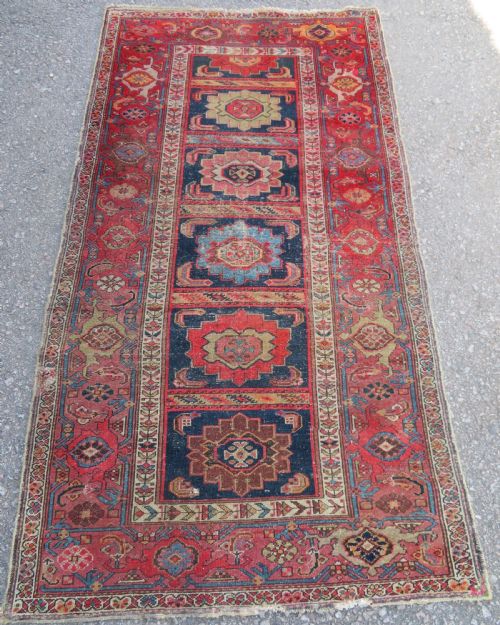
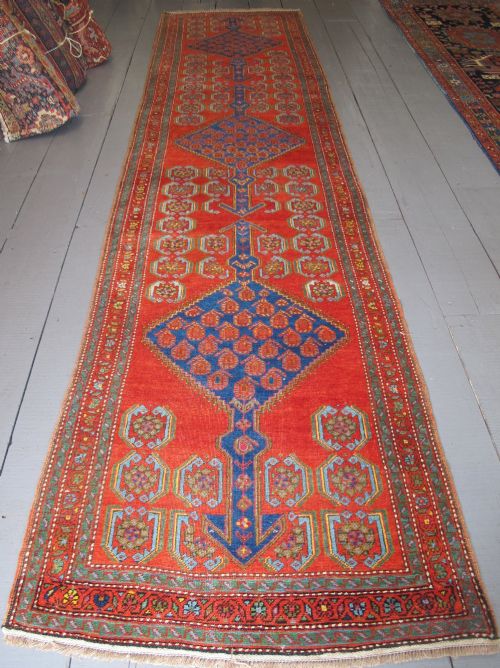
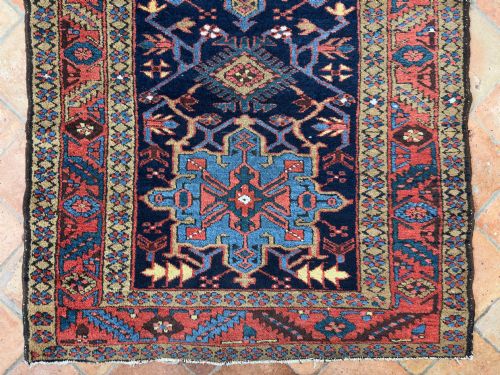
When searching for a heriz hallway runner, buyers encounter narrow Persian carpets woven in the towns and villages of north-west Persia during the late nineteenth and early twentieth centuries. These long formats serve specific architectural proportions, designed to line corridors and landings with robust floor coverings.
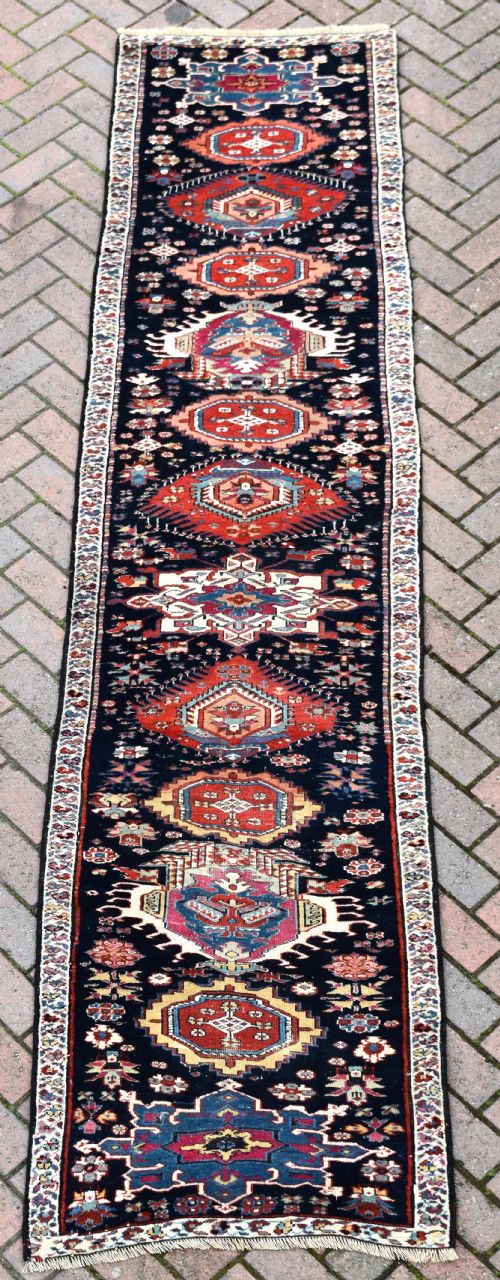
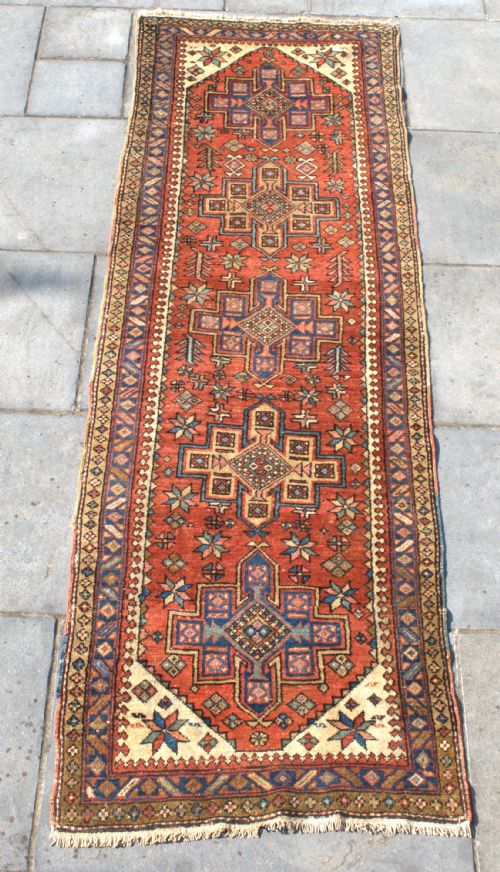
The pieces seen here span periods from the 1880s to the 1930s, encompassing related regional weaving traditions such as Karaja, Gorevan, Serapi, Bakshaish, and Hastrud. Most examples on this page belong to the Heriz and Karaja groupings, sharing strong linear designs suited to heavy domestic traffic.
Materials and construction
These runners are built on sturdy cotton foundations that support dense wool pile knotted by hand. The combination of durable wool and cotton ensures the structural integrity required for narrow, high-traffic hallway formats.
Weavers utilised vegetable and mineral dyes to create deep terracotta, indigo, and ivory tones across traditional Persian and tribal motifs. The resulting textiles display characteristic geometric medallions, angular vine scrolls, and crab designs.
Heriz Hallway Runner Retail Price Guide 2026
Typical asking prices for heriz hallway runner among the pieces listed under this phrase on Sellingantiques today, from the lower quarter to the upper quarter. They describe what is for sale here now, not the wider market.
Listings span from the 1880s through the 1930s, constructed entirely from wool and cotton across various north-west Persian weaving styles.
Evaluating quality
Quality in these runners depends on the precision of the geometric drawing and the crispness of the medallion outline. Stronger pieces exhibit balanced proportions, deliberate colour saturation, and tight knotting that maintains structural firmness along narrow widths.
The condition of the wool pile and the integrity of the original side cordings also determine the standard of a piece. Examples retaining their full length and original end finishes represent the higher end of the surviving output.
Waring and Gillow
The Heriz Hallway Runner Glossary
- Heriz
- A town in north-west Persia known for bold, geometric carpet designs featuring large central medallions. These rugs are woven with durable wool on cotton foundations.
- Karaja
- A village weaving tradition near Heriz producing smaller rugs and narrow runners with distinctive geometric layouts. They often incorporate repeating tribal motifs and rich indigo hues.
- Serapi
- An older designation often applied to nineteenth-century carpets and runners from the Heriz region. These pieces typically display more open designs and muted vegetable dye palettes.
- Bakshaish
- An antique weaving style from north-west Persia associated with whimsical tribal patterns and earthy tones. They pre-date many standard Heriz productions.
- Medallion
- A large central ornamental design set into the field of the rug. In north-west Persian weaving, this element usually takes an angular, geometric form.
Heriz Hallway Runner: Frequently Asked Questions
How do I style a hallway runner?
Place the runner centrally along the floor of a passage or narrow landing, leaving a consistent border of exposed timber or stone around the edges. This anchors the long space and guides movement through the interior.
Keep surrounding furniture minimal to let the geometric patterns and saturated wool colours remain the focal point of the hallway.
Are these runners durable for heavy traffic?
These pieces are constructed from dense wool pile knotted onto sturdy cotton foundations. They were originally made to withstand heavy daily domestic use in busy household corridors.
Regular rotation and a quality underlay will help distribute foot traffic and preserve the wool pile over decades of use.
How do I tell a Heriz runner from a Karaja runner?
Heriz runners typically measure longer and feature large, prominent geometric medallions with angular corner spandrels. The drawing tends to be monumental and architecturally structured.
Karaja runners often appear in narrower widths with more repetitive geometric motifs or smaller repeating medallions across the field.
How do I clean an antique wool runner?
Vacuum gently using suction attachment without a rotating brush bar to remove surface dust from the wool pile. Avoid shaking the ends or beating the textile.
Professional specialist cleaning is recommended for periodic deep washing to protect the natural dyes and cotton foundations.