

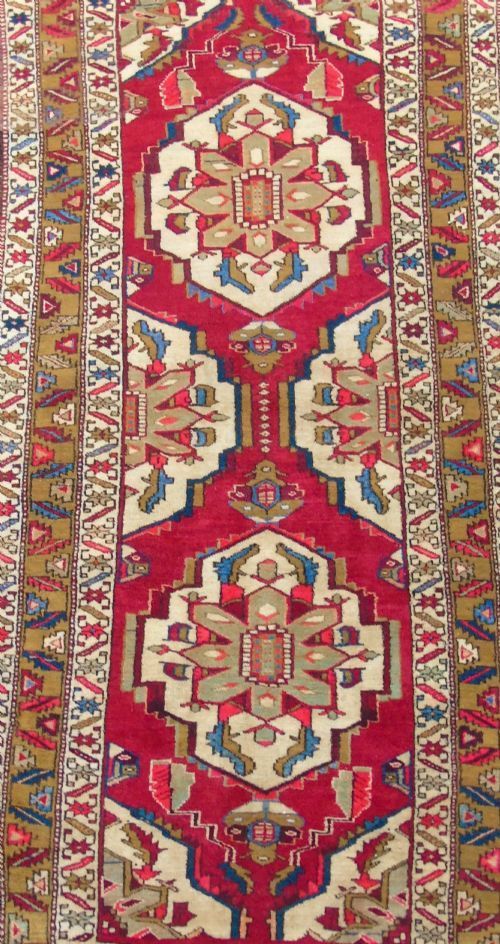
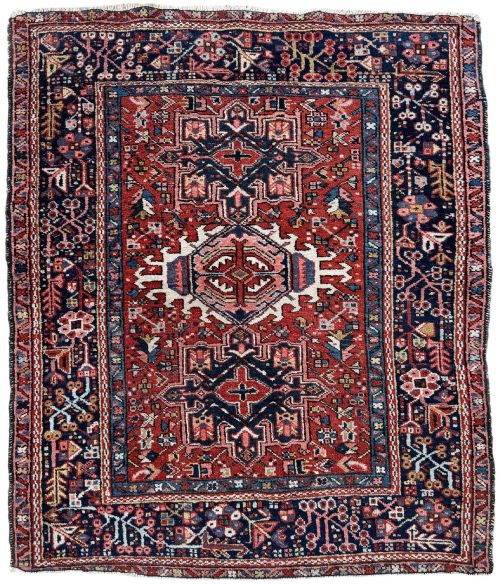

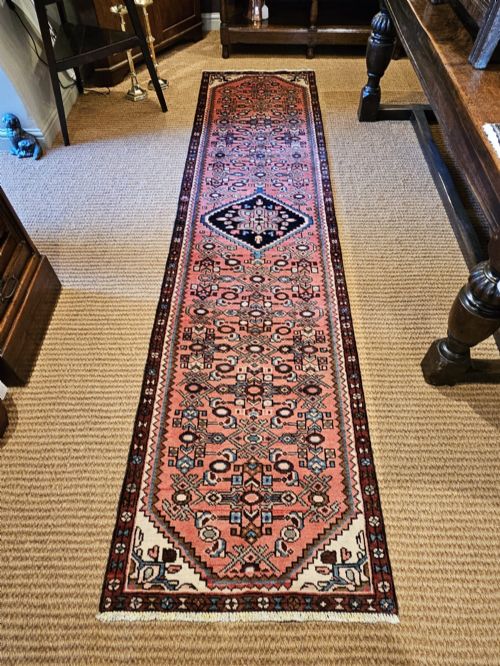
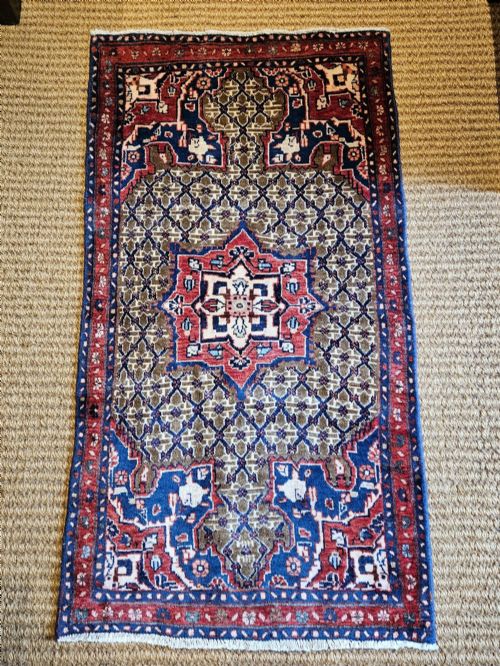

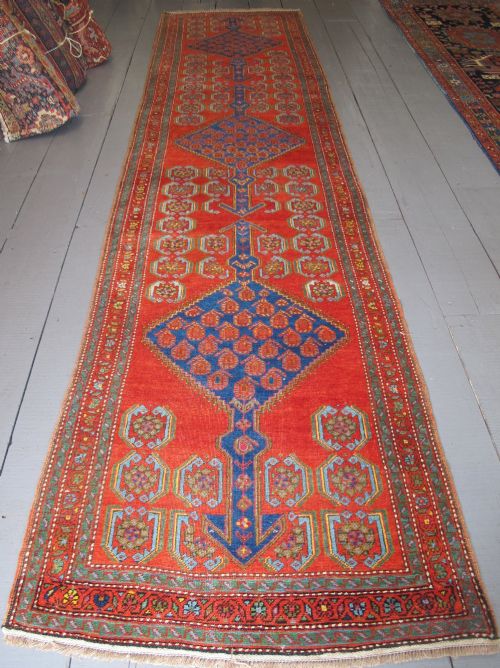


Heriz Geometric Runner
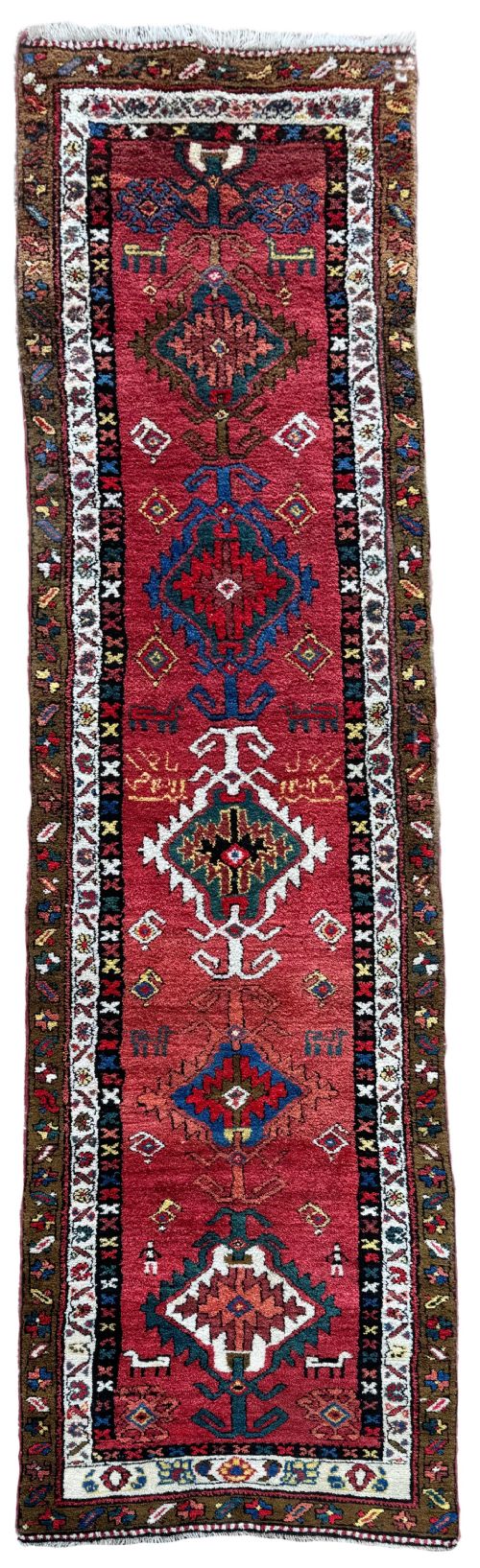
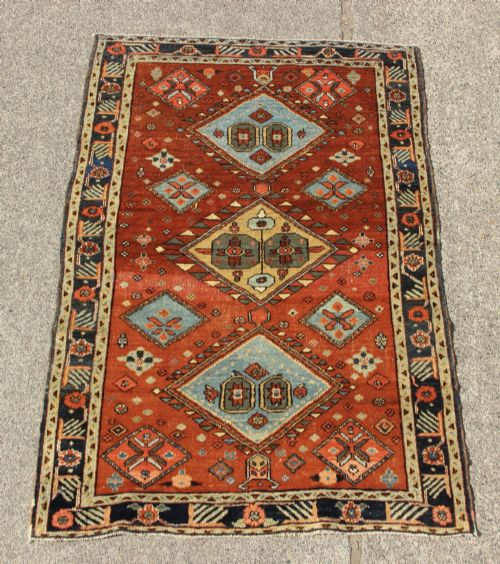
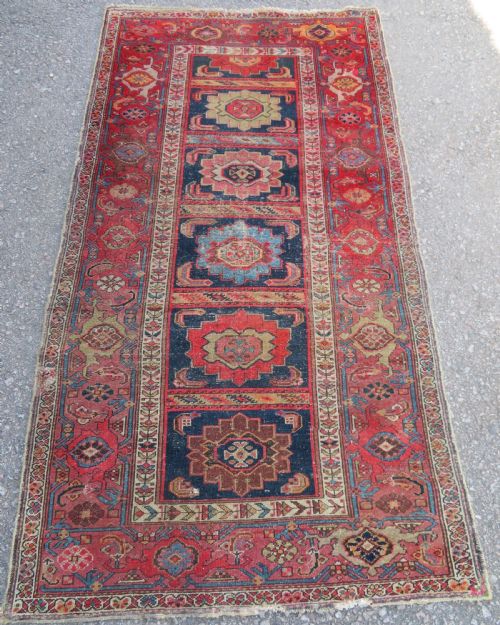
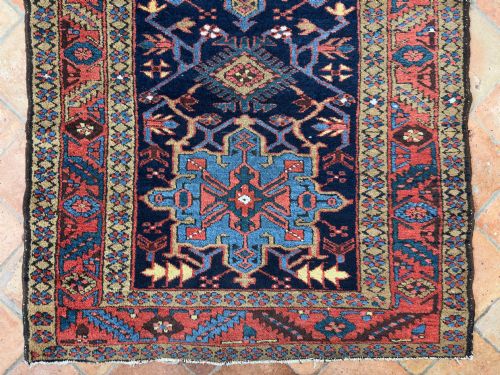
When you search for a heriz geometric runner, you are looking for a room-defining NW Persian weave built with bold straight lines and robust wool.
Heriz Geometric Runner
A heriz geometric runner is a narrow, elongated floor covering originating from the Heriz region and surrounding northwest Persian districts. These pieces bridge formal village weaving and tribal artistry, designed to endure heavy foot traffic in hallways and long rooms.
Most examples encountered here stretch across the late nineteenth and early twentieth centuries, spanning decades from the 1870s to the 1930s. They appear primarily as long, narrow formats tailored for corridors, accompanied by related regional rug formats.
How they were made
Weavers constructed these runners using durable wool piles knotted onto sturdy cotton foundations. This pairing of materials provided the structural tension necessary to keep large, heavy formats flat on the floor.
Natural dye traditions governed the palette, utilising wool yarns treated with substantive plant and insect extracts. The resulting colours settled over generations into deep, harmonious tones.
Heriz Geometric Runner Retail Price Guide 2026
Typical asking prices for heriz geometric runner among the pieces listed under this phrase on Sellingantiques today, from the lower quarter to the upper quarter. They describe what is for sale here now, not the wider market.
Several runners are long enough to guide a brisk walk from the front door straight into the sitting room.
What varies in quality
Quality rests in the crispness of the geometric drawing and the balance of the field proportions. Finer examples display precise execution of large medallion structures and uncrowded borders.
The handle and density of the wool pile also distinguish individual pieces. Tightly packed knots yield a firmer, more resilient surface that preserves the linear integrity of the design.
Waring and Gillow
The Heriz Geometric Runner Glossary
- Heriz
- A region in northwest Persia renowned for durable carpets and runners featuring bold geometric medallions. These pieces draw on traditional village motifs executed in sturdy wool.
- Runner
- A long, narrow carpet format specifically proportioned for corridors, hallways, and staircases. It guides movement through domestic spaces while protecting timber floors.
- Medallion
- A large central ornament placed in the field of a rug or runner. In this regional tradition, it frequently takes a geometric, angular form.
- Karaja
- A neighbouring weaving centre producing rugs and runners closely related to Heriz styles. Pieces from this origin often share similar wool textures and palette choices.
- Pile
- The upright woolen surface of a rug formed by the cut ends of knots. Its thickness and twist determine how light reflects across the design.
Heriz Geometric Runner: Frequently Asked Questions
Where should I place a runner?
These long formats suit corridors, hallways, and narrow entryways where linear floor coverage is practical. They soften long expanses of timber or stone while handling daily foot traffic.
Ensure the dimensions leave a consistent margin of exposed flooring around the edges of the space. This frames the textile properly within the room.
How do I care for antique wool?
Vacuum gently using a suction-only attachment without a rotating brush roll. This removes embedded grit without stressing the historic cotton foundations.
Keep the piece out of direct, prolonged sunlight to protect the natural dyes. Rotate the runner occasionally to ensure even wear across the length.
How do I date a runner?
Examine the structural materials, knot structure, and dye palette for indicators of age. Late nineteenth and early twentieth-century examples often exhibit distinct regional characteristics.
Compare the proportions and secondary border motifs against documented regional types from the 1880s through the 1930s.
What is a geometric design?
A geometric design relies on straight lines, polygons, and angular motifs rather than curving floral vines. This style gives regional Persian runners their architectural and structured appearance.
Triangles, diamonds, and rectilinear medallions dominate the field, creating a balanced visual rhythm down the length of the runner.