





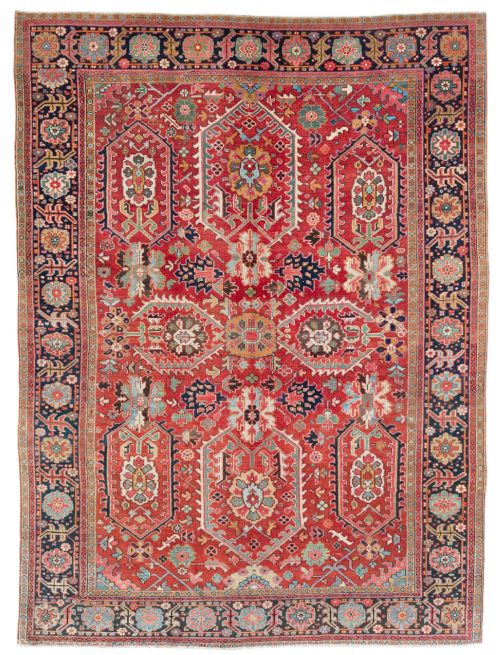

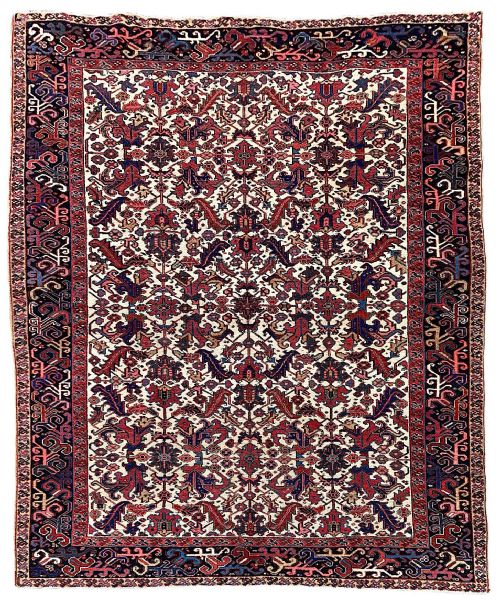
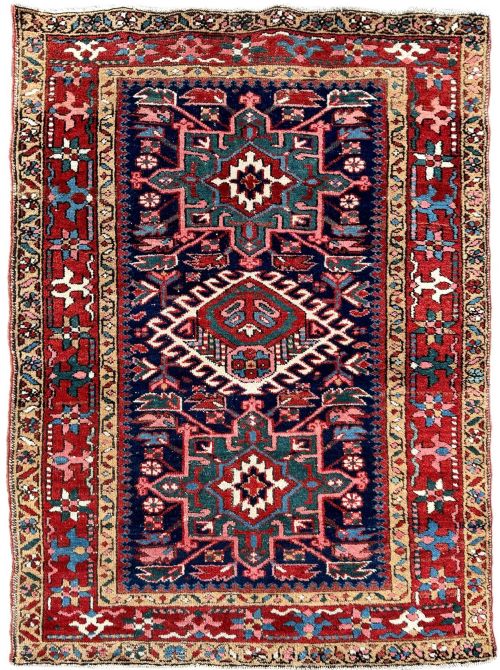
Heriz Floor Rug
A heriz floor rug brings the striking geometry of North-West Persia onto timber boards with robust wool and time-tested knots.
Heriz Floor Rug
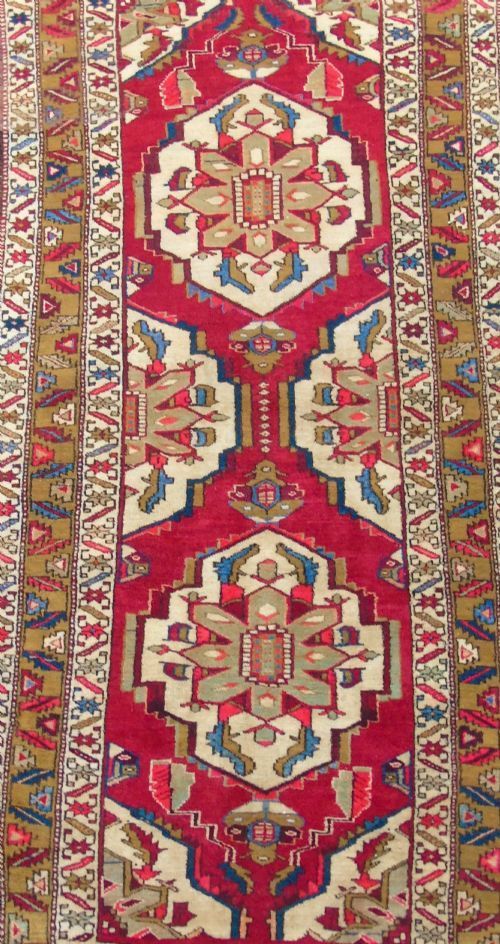
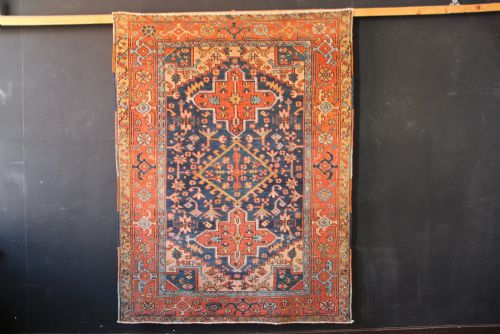
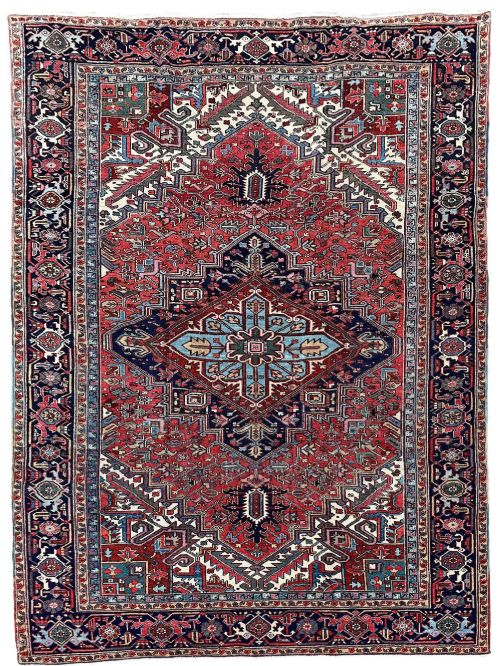
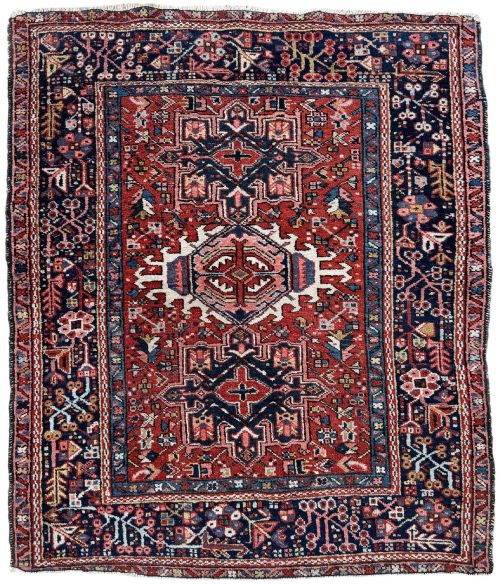
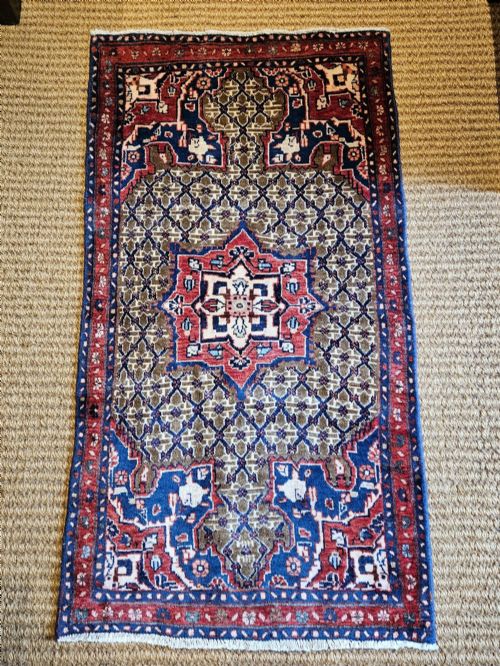
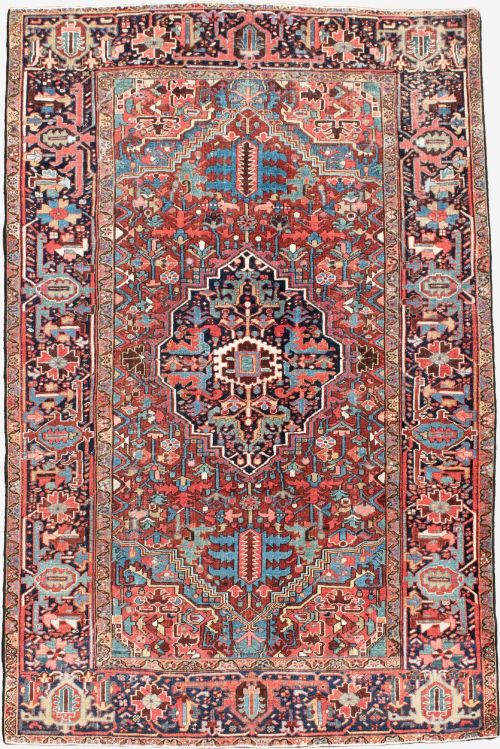
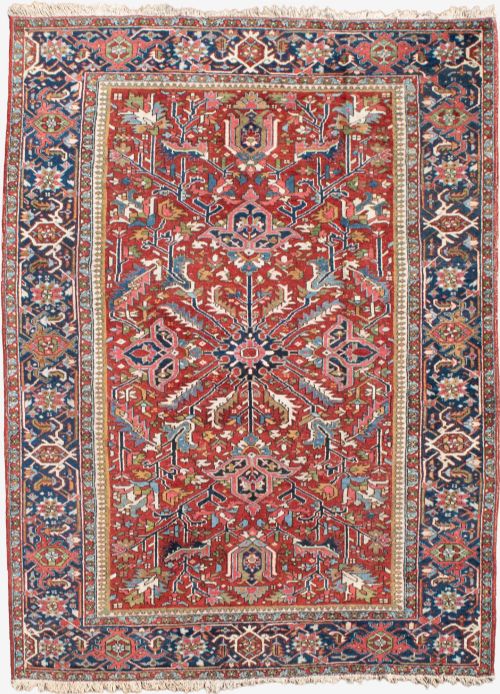
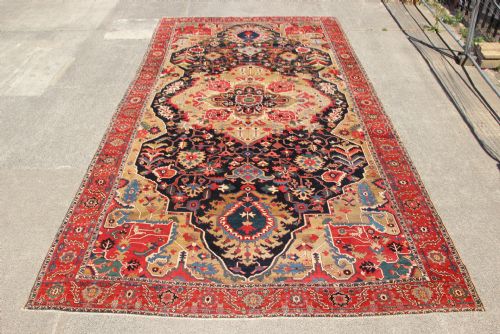
A heriz floor rug typically emerges from the workshops and villages of North-West Persia during the late nineteenth and early twentieth centuries. These floor coverings span substantial room-sized carpets down to hearth-sized formats, hallway runners, and smaller square rugs.
The version most commonly encountered in these listings is the antique Heriz carpet, dated largely between eighteen eighty and nineteen thirty, accompanied by related regional styles such as Karaja and Serapi.
Buyers seek out these rugs for their bold central medallions, geometric corner spandrels, and strong architectural presence that anchors a traditional or modern interior.
Materials and Construction
These floor pieces are constructed using durable wool piles hand-knotted onto sturdy cotton foundations, yielding a heavy cloth that withstands centuries of foot traffic.
Weavers utilised natural dyes to achieve deep saturated tones, ranging from sky blue and ivory grounds to rich terracotta and colourful accents across the geometric motifs.
Heriz Floor Rug Retail Price Guide 2026
Typical asking prices for heriz floor rug among the pieces listed under this phrase on Sellingantiques today, from the lower quarter to the upper quarter. They describe what is for sale here now, not the wider market.
Some runners stretch past six metres in length, designed to warm up long, draughty Persian corridors with thick hand-knotted wool.
Distinctions in Quality
Quality in a heriz floor rug rests upon the fineness of the knotting and the precision of the geometric design, where finer execution yields sharper lines in the medallions and borders.
The integrity of the wool pile and the balance of the original colour palette elevate certain pieces, distinguishing standard village weaving from exceptionally finely rendered carpets.
The Heriz Floor Rug Glossary
- Medallion
- The prominent central ornamentation found in the middle of the rug field. It dictates the symmetrical layout of the surrounding geometric patterns.
- Spandrel
- The triangular design element situated in the corners of the rug field, framing the central medallion.
- Runner
- A long, narrow carpet format designed specifically for hallways and corridors.
- Serapi
- A sub-style associated with older Heriz carpets, known for a more spacious geometric design and subtle palette.
Heriz Floor Rug: Frequently Asked Questions
Where were heriz floor rugs made?
These rugs originate from the town of Heris and the surrounding villages in the North-West region of Persia. The area developed a distinct geometric weaving tradition separate from the curvilinear designs of urban Persian workshops.
Local weavers adapted traditional motifs into bold, architectural patterns that became characteristic of the district's output through the nineteenth and twentieth centuries.
How do I care for an antique rug?
Protect your wool floor covering by placing a quality underlay beneath it to prevent slipping and reduce friction against hard floors. Vacuum gently using suction only, avoiding the rotating brush bars that can pull at the hand-knotted pile.
Rotate the carpet periodically to ensure even exposure to sunlight and foot traffic, keeping the wear balanced across the entire wool surface.
What is the difference between heriz and karaja?
Karaja rugs originate from a village near Heris and typically present in smaller formats, such as compact area rugs or runners. They often feature distinct geometric medallion repeats along the central axis.
Heriz carpets generally scale larger and display the grand, commanding medallion and spandrel compositions associated with room-sized floor coverings.
How old are these carpets?
The pieces available in this category date predominantly from the late nineteenth century through the early decades of the twentieth century, specifically spanning the eighteen eighties to the nineteen thirties. This period represents the height of traditional hand-weaving output in the region.
Each rug carries the age indicators of vegetable-dyed wool and hand-spun materials consistent with antique Persian production.