







Herati Pattern Runner
A herati pattern runner brings intricate Persian artistry and linear geometry to narrow spaces through centuries-old motifs.
Herati Pattern Runner
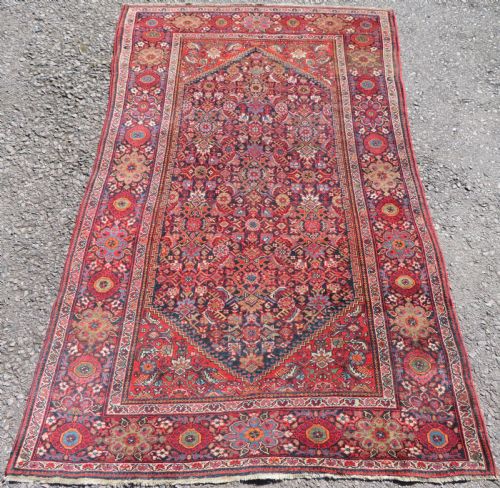
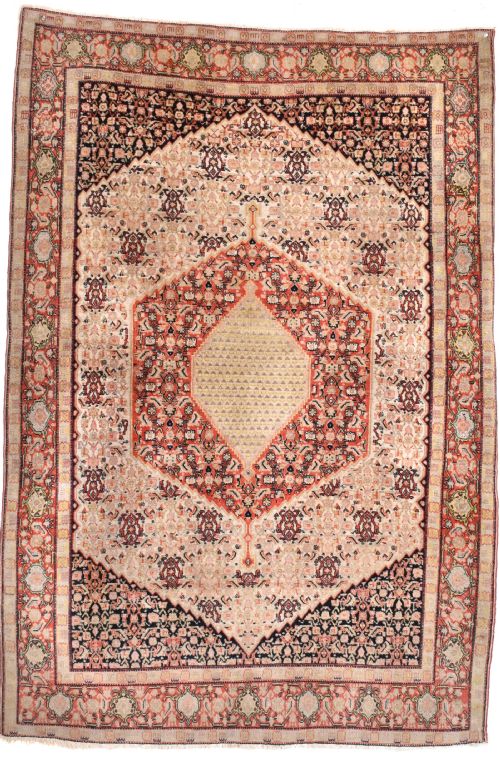
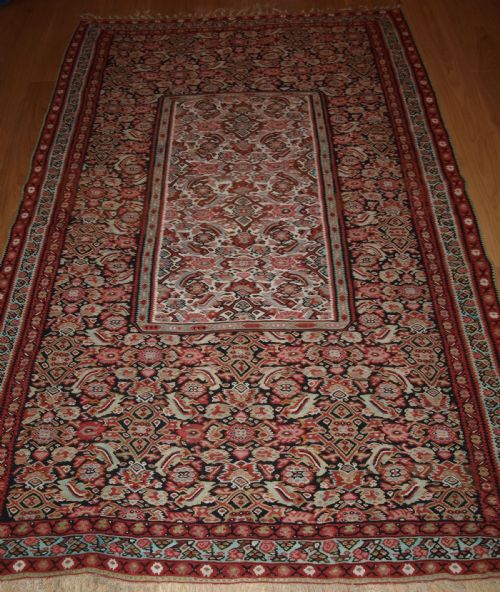
A herati pattern runner centres on a repeating botanical motif composed of a central rosette flanked by serrated leaves, often enclosed within a geometric trellis. These elongated floor coverings originate from Persian weaving traditions, spanning regional groups such as Bidjar, Malayer, Ferahan, and Senneh.
The format you encounter on this page takes the form of traditional runners and long carpets, designed specifically for hallways and corridors. Dating ranges from the mid-nineteenth century through the early twentieth century, capturing distinct tribal and village interpretations of the classic design.
How they were made
Weavers constructed these pieces using hand-spun wool for the pile, dyed with rich vegetable colours that mellow gracefully over decades of use. Cotton foundations provided the structural strength necessary for long carpets and runner formats.
Intricate knotting techniques secured the dense pile, allowing the fine geometric curves of the herati motif to maintain clarity across the length of the runner.
Herati Pattern Runner Retail Price Guide 2026
Typical asking prices for herati pattern runner among the pieces listed under this phrase on Sellingantiques today, from the lower quarter to the upper quarter. They describe what is for sale here now, not the wider market.
Listings span from eighteen-fifty to nineteen-twenty, utilising traditional wool pile on cotton foundations across Persian regional styles.
What varies in quality
The refinement of the drawing sets individual pieces apart, distinguishing fluid, precise botanical motifs from simpler, more rigid interpretations. Tightly packed pile and balanced proportions also indicate superior regional weaving standards.
Material integrity and the survival of original borders dictate the standing of a runner, reflecting the skill of the original workshop or tribal maker.
The Herati Pattern Runner Glossary
- Herati pattern
- A classic Persian textile design featuring a central flower surrounded by four leaves enclosed in a lattice. It remains one of the most enduring motifs in traditional rug weaving.
- Kelleh
- A specific format of Persian carpet that is longer than it is wide, falling between the proportions of a standard room rug and a hallway runner. These pieces suit narrower interior spaces.
- Pushti
- A small-format Persian rug or mat, often used as a cushion or seat cover by tribal weavers. They display the same meticulous pattern work seen on larger carpets.
- Kilim
- A flat-woven carpet produced without a pile, resulting in a lighter textile with a distinct texture. These pieces rely entirely on the interweaving of warp and weft threads.
Herati Pattern Runner: Frequently Asked Questions
Where should I place a herati pattern runner?
These elongated rugs suit narrow interior spaces such as hallways, corridors, and long landings where linear geometry guides the eye. Their traditional motifs add warmth and historical character to functional transit areas.
Ensure you use a suitable underlay to keep the textile stable on hard flooring and to protect the cotton and wool foundation from excessive friction.
How do I clean an antique wool runner?
Gentle, regular vacuuming without a rotating brush helps remove dust from the wool pile without damaging the natural fibres. Professional textile cleaning is recommended for deeper maintenance.
Avoid exposing the vegetable dyes to direct, prolonged sunlight to preserve the depth of the original coloration.
How can I tell different Persian regional styles apart?
Regional styles reveal themselves through the tightness of the weave, the choice of border designs, and the specific rendering of the herati motif. Bidjar pieces often feel exceptionally heavy and dense, while Senneh and Ferahan examples display finer, more delicate botanical drawing.
Tribal pieces like Baluch or Afshar incorporate distinct geometric accents and local palette choices that differ from urban workshop productions.
What period do these runners come from?
The pieces available originate from the nineteenth and early twentieth centuries, spanning the Victorian era through the 1920s. Each runner represents the hand-woven output of Persian villages and tribal groups from that timeframe.
Dating relies on stylistic markers, wool preparation techniques, and structural evidence within the weave.