

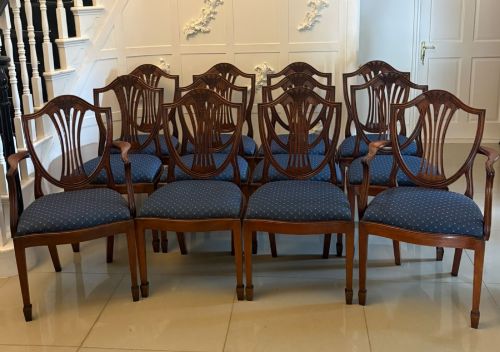
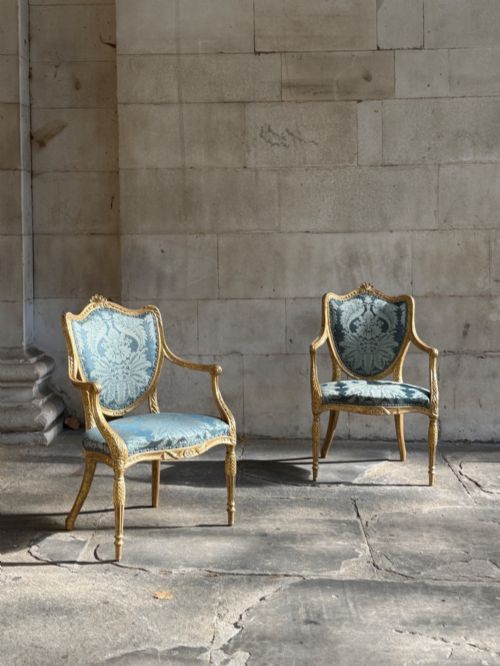
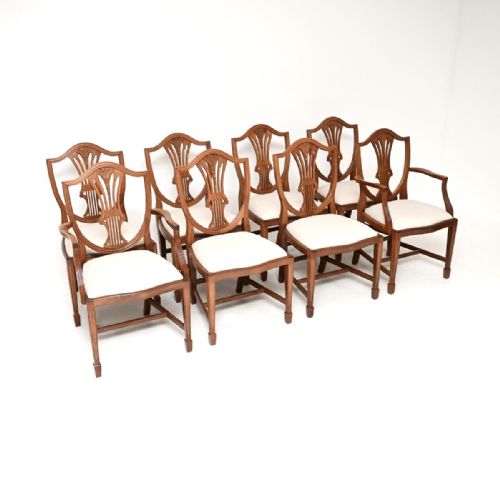
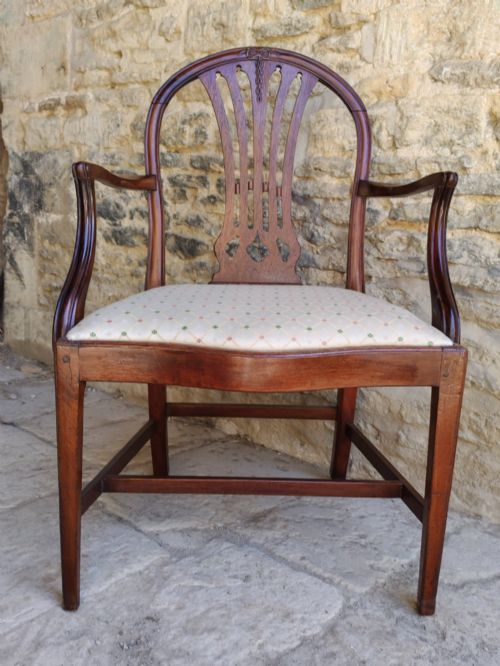
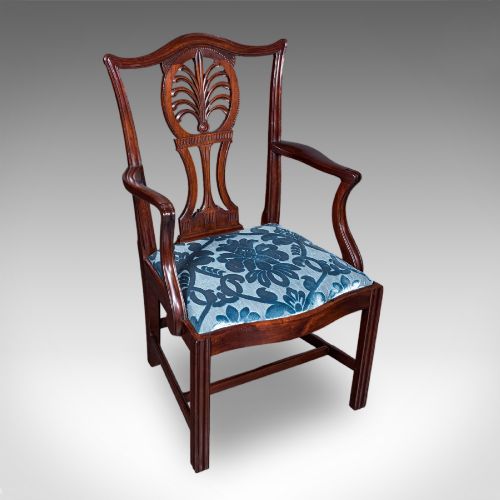
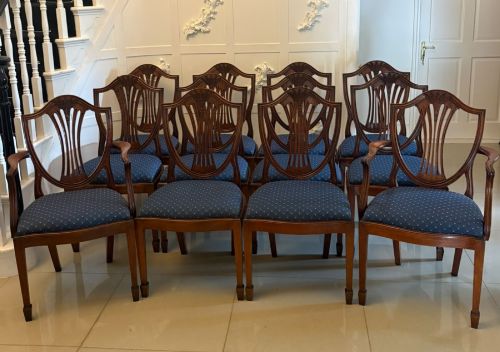
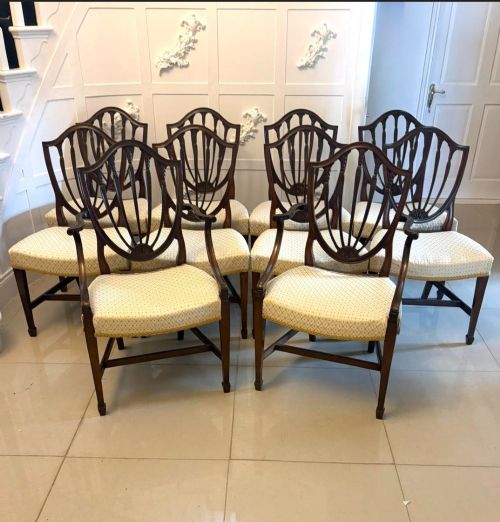
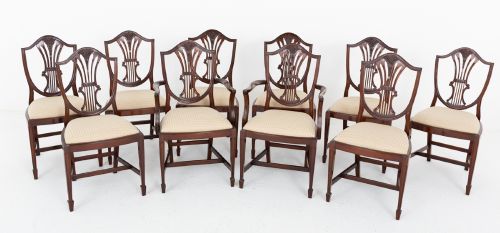
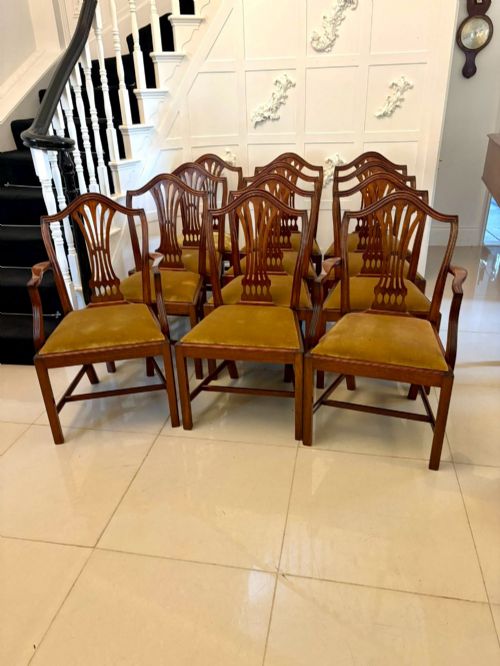
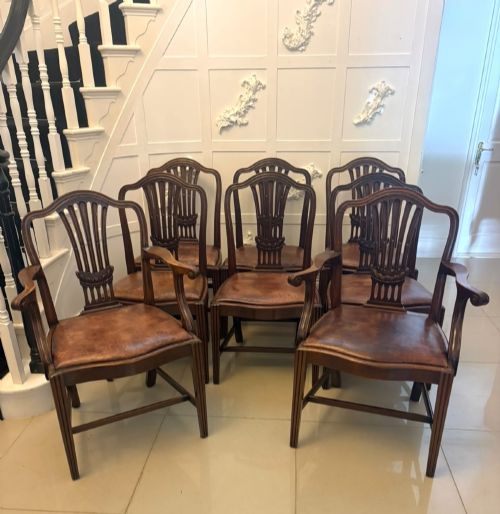
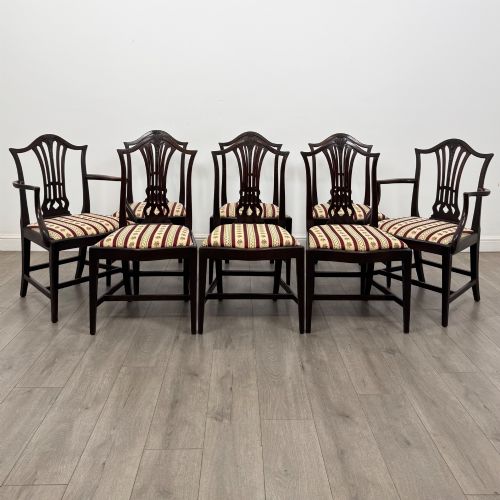
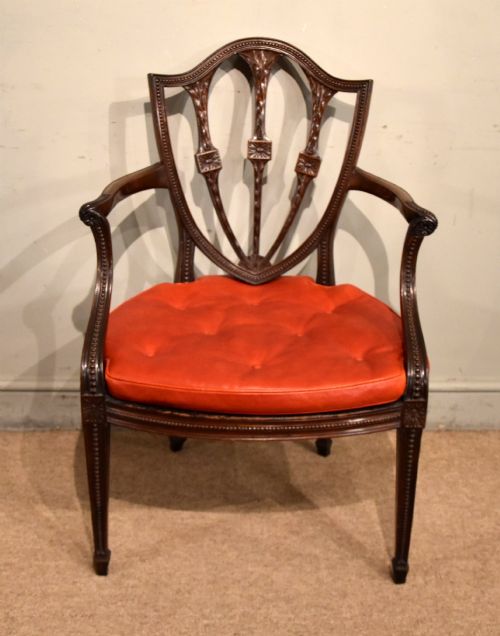
Hepplewhite Shield Back Carvers
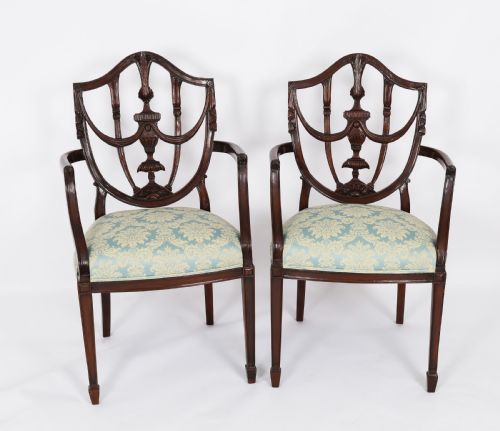
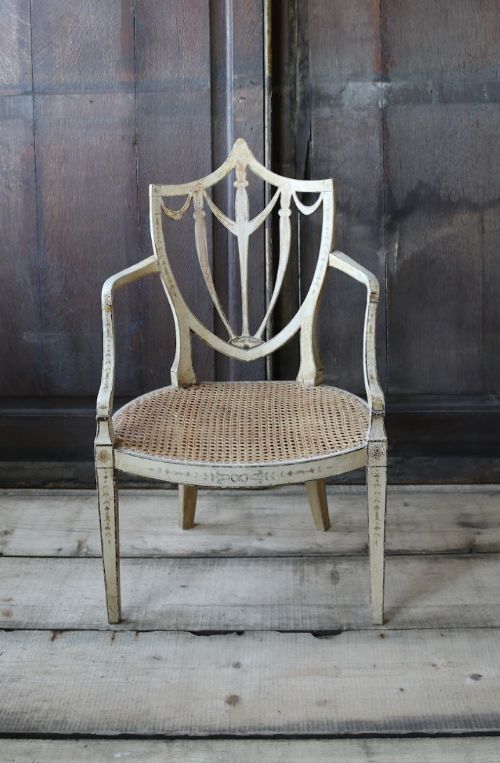
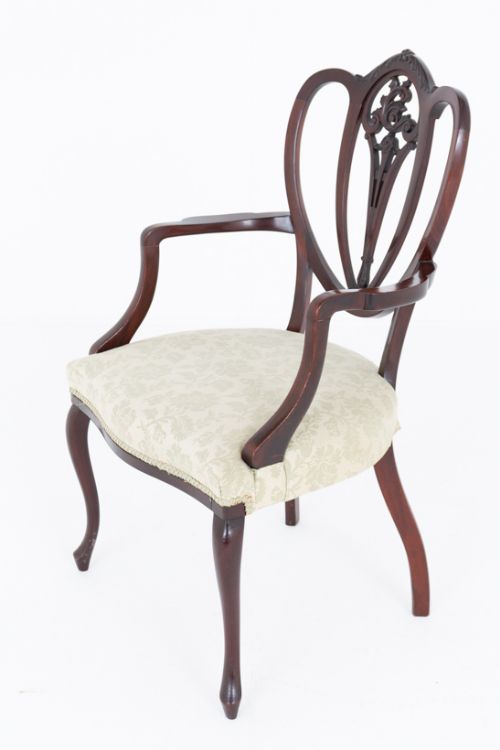
Hepplewhite shield back carvers are elegant dining armchairs featuring distinctive carved backrests designed for comfort at the head of the table.
Hepplewhite Shield Back Carvers
When searching for hepplewhite shield back carvers, buyers encounter sophisticated armchairs originating from the 18th century through to 20th-century revivals. These seating options include formal dining chairs and open armchairs designed to accompany matching sets or pairs.
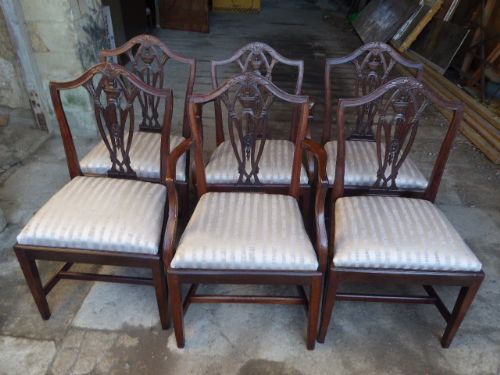
The selections span Georgian originals alongside Edwardian and Victorian revivals. Most examples on this page date from later revival periods, built in larger sets or pairs alongside standard dining chairs.
How they were made
Makers utilised solid mahogany for its strength and rich grain, occasionally incorporating maple or painted decoration on select frames. Joinery relied on traditional mortise and tenon construction to support the open armrests and curved back rails.
Upholstery techniques involved drop-in seats covered in leather, fabric, or velvet, secured over supportive webbing. Brass details sometimes appeared on castors or structural reinforcements depending on the period.
Hepplewhite Shield Back Carvers Retail Price Guide 2026
Typical asking prices for hepplewhite shield back carvers among the pieces listed under this phrase on Sellingantiques today, from the lower quarter to the upper quarter. They describe what is for sale here now, not the wider market.
Listings feature mahogany construction paired with leather, velvet, and textile upholstery across Georgian, Victorian, and 20th-century periods.
What varies in quality
The refinement of the carved splat within the shield-shaped frame dictates the visual distinction of the piece. Crispness in the pierced woodwork and proportion in the open arms separate standard workshop production from finer cabinet work.
The integrity of the timber frame and the retention of original upholstery materials influence the character of surviving examples. Chairs retaining early leather or textile coverings show different levels of historic patina compared to later restorations.
Maple and Co
The Hepplewhite Shield Back Carvers Glossary
- Carver
- An armchair designed with open sides to accommodate formal dining attire, typically placed at the ends of a table.
- Shield-back
- A chair backrest shaped like an inverted shield, often filled with pierced splats carved in wheat ear or drapery motifs.
- Hepplewhite revival
- Furniture produced in the 19th or 20th centuries copying the lighter, neoclassical styles associated with the 18th-century designer.
- Open armchair
- A seat featuring wooden armrests without upholstered padding, allowing greater freedom of movement.
Hepplewhite Shield Back Carvers: Frequently Asked Questions
What is a carver chair?
A carver is an armchair traditionally placed at the head of a dining table. These pieces match smaller side chairs while offering armrests for added comfort.
They function as the primary seating for hosts during formal meals.
How do I identify a revival piece?
Revival pieces date from the Victorian, Edwardian, or later periods but replicate 18th-century designs. Examination of timber tool marks and internal framing helps determine the exact manufacturing era.
Later copies often utilise machine assistance rather than entirely hand-carved joinery.
Were these chairs sold in sets?
Original and revival dining sets frequently included two carvers alongside six or more standard side chairs. Larger suites comprising ten or twelve chairs appear across various periods.
Pairs of carvers were also produced independently for domestic use.
What materials are used for seats?
Seats are typically upholstered in leather, velvet, or woven fabric over a drop-in frame. Many pieces feature traditional horsehair stuffing beneath the top covering.
Surviving examples often display later replacement upholstery matching the original style.