


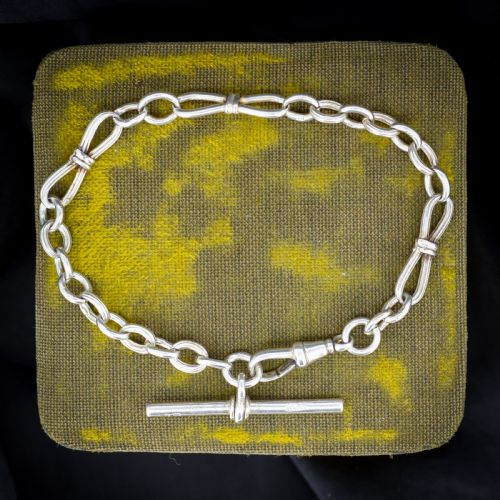


Heavy Silver Albert
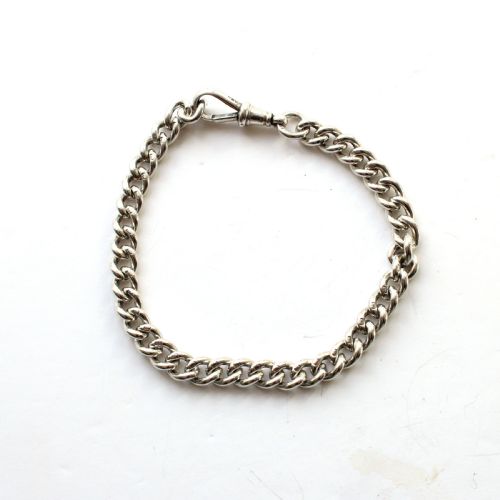
A heavy silver albert is a substantial pocket watch chain, worn across the waistcoat or adapted today as a heavy necklace or bracelet.
Heavy Silver Albert
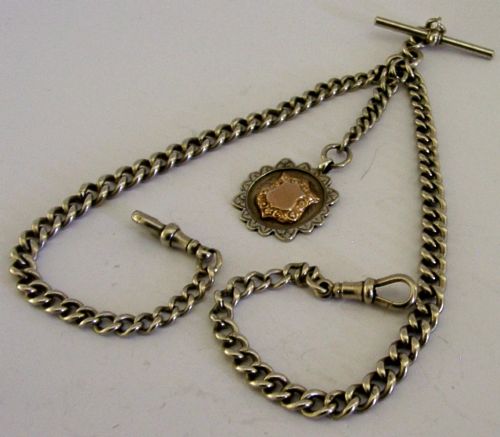
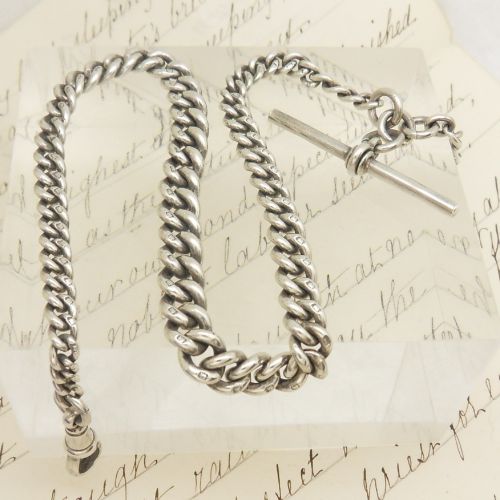
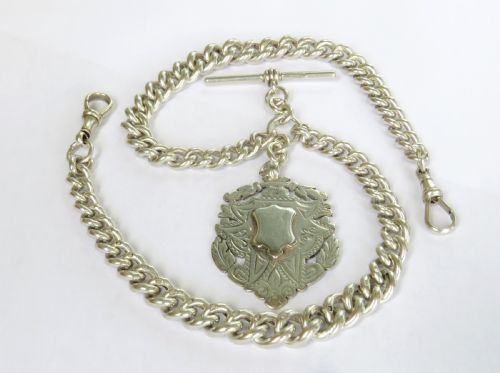
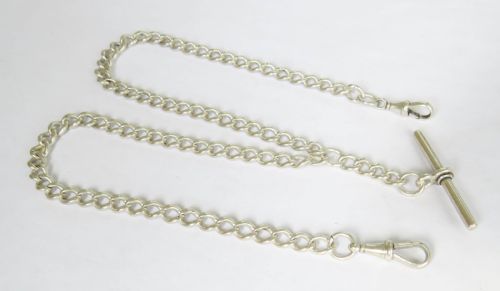
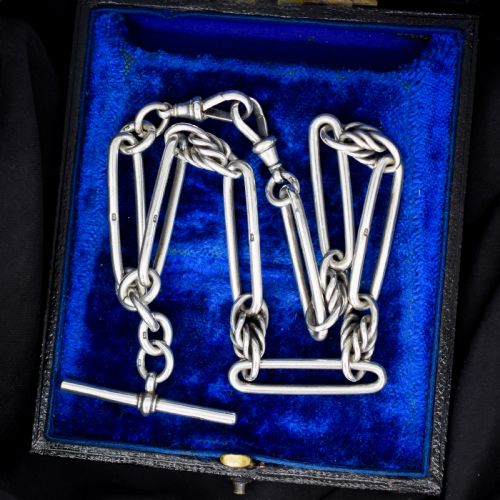
A heavy silver albert is primarily a pocket watch chain, designed during the Victorian and Edwardian periods to secure a gentleman's timepiece. These robust lengths of silver typically incorporate a sliding T-bar at one end and a spring dog clip at the other.
The versions most commonly met on this page span the late nineteenth century through to the nineteen-twenties, alongside occasional mid-century modifications. They appear as single or double strands, sometimes adapted into contemporary necklaces or bracelets.
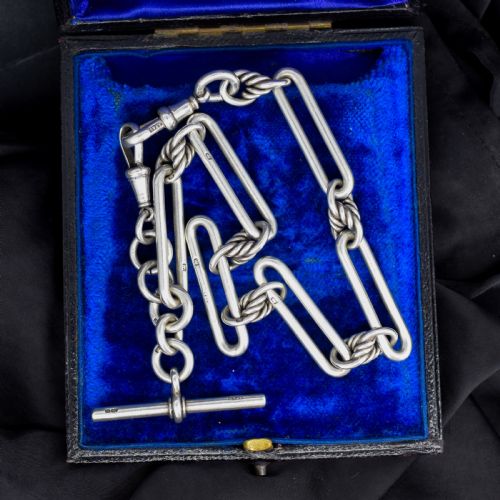
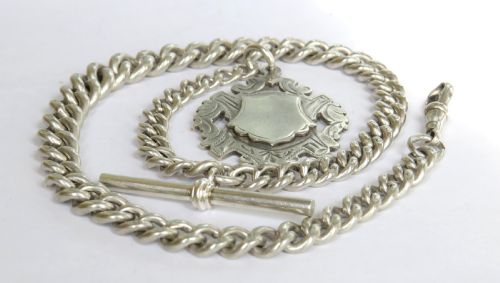
Makers fashioned these substantial chains using distinct link formations such as belcher, curb, and trombone patterns. Many pieces retain original hallmarks detailing assay offices and date letters from periods like 1880 to 1926.
How they were made
Silversmiths constructed these chains predominantly from sterling silver, shaping individual metal links by hand or utilising early mechanical stamping methods for uniformity. Each link was soldered or interlocked securely to withstand the daily weight and movement of a pocket watch.
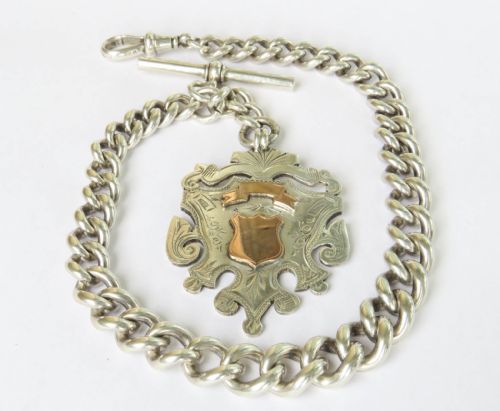
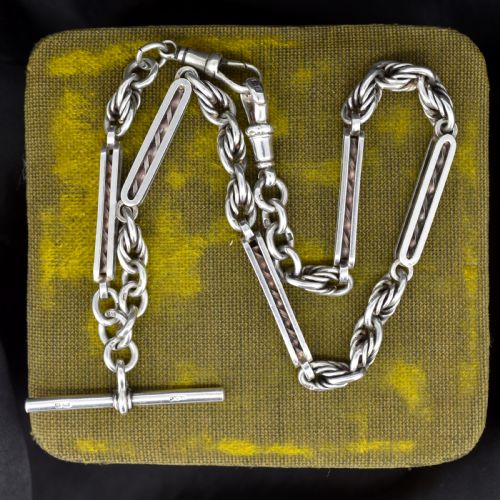
Makers integrated specialised components such as dog clips and T-bars, often cast and hand-finished to ensure smooth mechanical action. Gold highlights occasionally appear on silver links or charms as decorative accents.
Heavy Silver Albert Retail Price Guide 2026
Typical asking prices for heavy silver albert among the pieces listed under this phrase on Sellingantiques today, from the lower quarter to the upper quarter. They describe what is for sale here now, not the wider market.
Listings feature sterling silver and continental silver items spanning the Victorian, Edwardian, and Art Deco periods, predominantly comprising watch chains, bracelets, and necklaces.
What varies in quality
The distinction between standard pieces and the finest examples rests on the complexity of the link construction and the crispness of the hallmarks. Trombone links paired with intricate love knots represent a higher tier of design ambition than simple uniform chains.
Substantial gauge thickness and original matching components, including the T-bar and dog clips, elevate the overall integrity of a piece. The survival of clear town marks and maker stamps on every individual link demonstrates superior original manufacture.
The Heavy Silver Albert Glossary
- Albert chain
- A pocket watch chain named after Prince Albert, designed to secure a timepiece in a pocket while anchoring to a buttonhole. It remains a defining form in antique silver jewellery.
- Dog clip
- A spring-loaded swivel fastener attached to the end of a watch chain to secure the timepiece or fob. This mechanism allows the attached item to rotate freely without twisting the metal links.
- T-bar
- A transverse bar of metal attached to the centre or end of a watch chain, slipped through a waistcoat buttonhole to anchor the chain securely. It forms an iconic silhouette on Victorian and Edwardian watch accessories.
- Belcher link
- A type of chain link that is typically broader than it is thick, featuring rounded sections. It provides a fluid drape and a robust structure suitable for heavy daily wear.
- Trombone link
- An elongated rectangular link with rounded ends, frequently alternated with smaller circular or love knot links in antique silver chains. This pattern creates a distinctive geometric rhythm along the length of the piece.
Heavy Silver Albert: Frequently Asked Questions
How do I wear a pocket watch chain today?
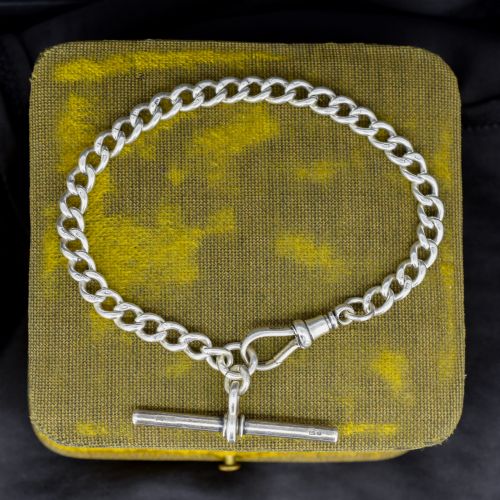
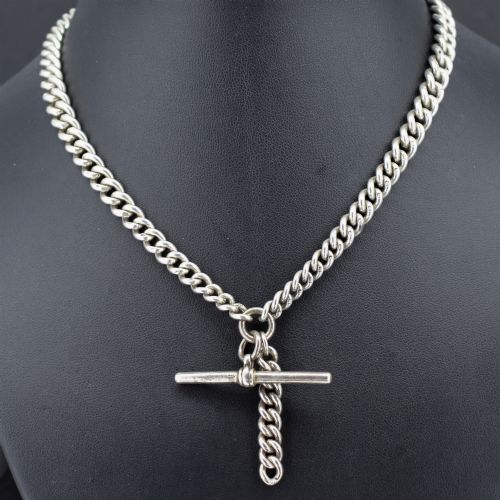
Many people adapt these chains to wear as substantial necklaces or wrap them multiple times to form a heavy bracelet. The T-bar and dog clips can be fastened together or left to drape as decorative elements.
Alternatively, you can thread the T-bar through a lapel buttonhole and secure a pocket watch or modern pendant from the dog clip.
How can I tell the age of a silver albert?
British silver pieces typically feature a series of hallmarks stamped onto the links, the T-bar, and the dog clips. These stamps include a date letter indicating the exact year of assay and a standard mark such as a lion passant for sterling silver.
Comparing the specific link style, such as Edwardian trombone links or Victorian curb links, helps corroborate the period suggested by the hallmarks.
Can these chains be resized?
Silversmiths can shorten a chain by removing individual links, provided the construction allows for discrete disassembly. Lengthening is more challenging because matching the exact gauge, wear, and period link style requires an extensive search for donor material.