

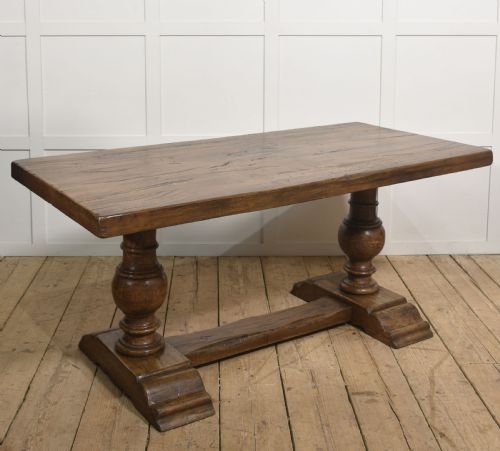


Heavy Pedestal Dining Table
A heavy pedestal dining table anchors a room with solid presence, offering substantial timber work and enduring utility for gathering.
Heavy Pedestal Dining Table
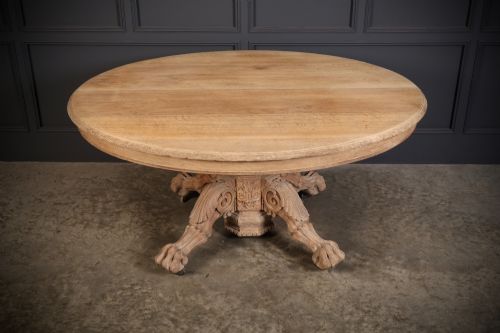
A heavy pedestal dining table brings together substantial timber and sturdy support, serving as the central gathering place in a home. The pieces found here span the nineteenth and early twentieth centuries, encompassing Victorian, rustic farmhouse, Tudor revival, Jacobean revival, and French hunting styles.
Buyers most frequently encounter robust examples fashioned from oak, walnut, and pine, often incorporating refectory and centre table forms. These tables originate from periods stretching from eighteen sixty through to nineteen thirty, showing deep historical roots in domestic and institutional settings.
The construction typically relies on thick timber tops paired with substantial underframes, sometimes introducing cast iron for extra stability. Such proportions demand adequate floor space and offer considerable weight, ensuring they remain steadfast during daily use.
How they were made
The makers of these tables relied heavily on solid oak, walnut, and pine, selecting timber for density and grain character. Planks were joined and mounted onto heavy wooden or cast iron supports to bear significant loads without flexing.
Heavy Pedestal Dining Table Retail Price Guide 2026
Typical asking prices for heavy pedestal dining table among the pieces listed under this phrase on Sellingantiques today, from the lower quarter to the upper quarter. They describe what is for sale here now, not the wider market.
The inventory includes refectory, centre, and console tables with distinct revival styles.
What varies in quality
Quality in a heavy pedestal dining table rests upon the selection of timber and the depth of the hand carving. Pieces utilising dense solid oak or walnut with well-defined joinery stand apart from simpler pine or utilitarian workshop builds.
The articulation of decorative details, such as deep relief carving found in Victorian and French hunting styles, dictates the aesthetic standard. Heavier cast iron elements and well-proportioned refectory frames also signal higher workshop ambition.
The Heavy Pedestal Dining Table Glossary
- Refectory table
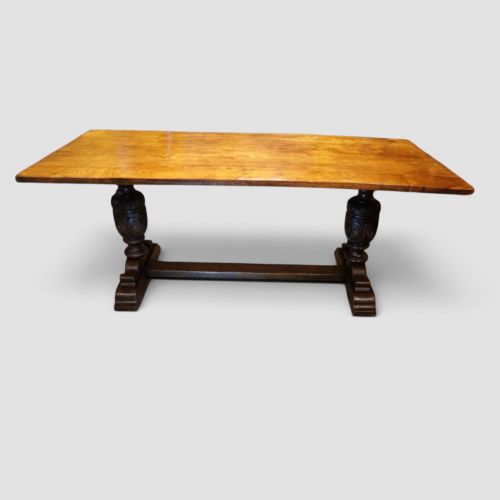
- A long, narrow dining table originally used in monasteries and large institutions. These forms feature substantial length and sturdy stretcher bases.
- Centre table
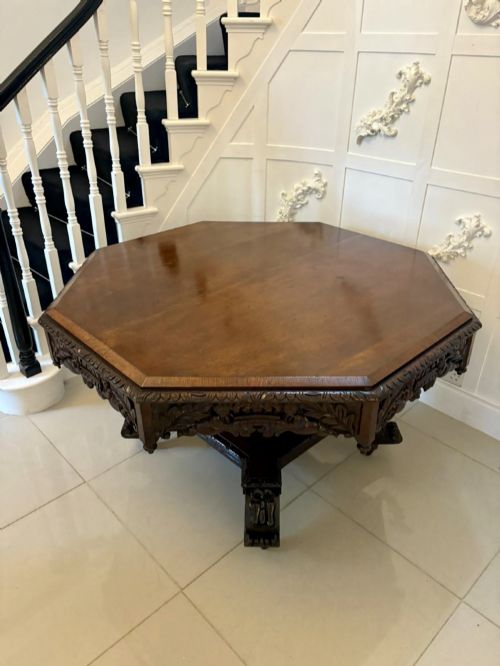
- A freestanding table designed to be viewed from all sides, often placed in the middle of a large room or hall rather than against a wall.
- Bleached oak
- Oak timber treated to lighten its natural tone, a finish seen on nineteenth-century examples to soften the visual weight of the wood.
- French hunting style
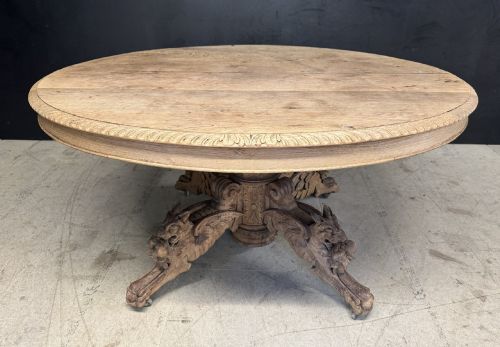
- A decorative tradition marked by deep relief carvings of foliage, animals, and game, popular in nineteenth-century furniture.
Heavy Pedestal Dining Table: Frequently Asked Questions
How do I care for a heavy wooden dining table?
Maintain the timber by cleaning with a damp cloth and applying appropriate beeswax periodically to nourish the grain.
Avoid placing these tables in direct sunlight or near heat sources to prevent the solid wood from splitting over time.
Can these tables be used for everyday family meals?
These tables were built for heavy domestic use, making them durable enough for daily dining and gatherings.
Their substantial construction handles regular activity well, provided coasters and placemats are used to protect the historic finish.
What is the difference between a refectory table and a centre table?
A refectory table is elongated and designed specifically for communal dining, supported by sturdy stretchers and legs.
A centre table is typically more compact and proportioned to sit freestanding in a large hall or parlour.
How do I determine the period of an antique oak table?
Examine the tool marks, construction joints, and wood patination to understand the manufacturing methods of the era.
Stylistic markers such as Victorian revival carving or nineteenth-century framing proportions also offer clear chronological clues.