



Heavy Oak Server
A heavy oak server is a substantial piece of dining room furniture built to store tableware and serve food.
Heavy Oak Server
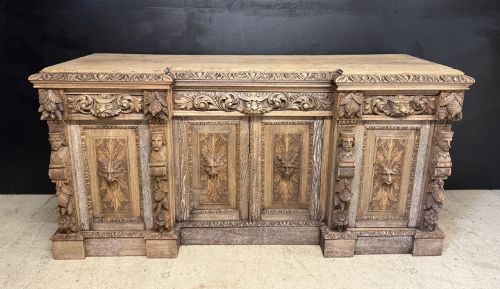
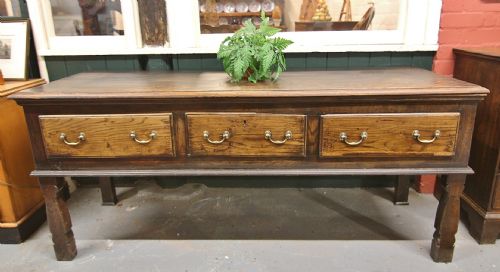
A heavy oak server encompasses large sideboards, dresser bases, serving tables, and side cabinets designed for domestic service. These pieces emerge primarily from the Victorian era and the nineteenth century, alongside examples from the early nineteenth century up to the nineteen thirties. Buyers searching for a heavy oak server find items predominantly styled in Jacobean Revival, Victorian Renaissance Revival, and Flemish Baroque.
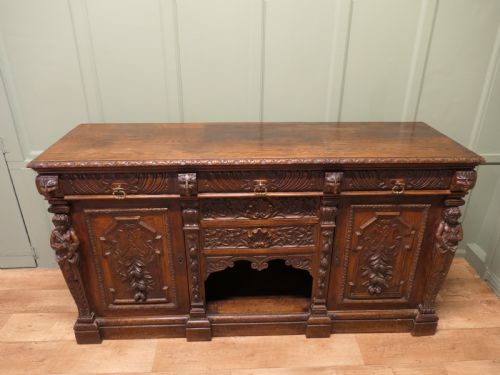
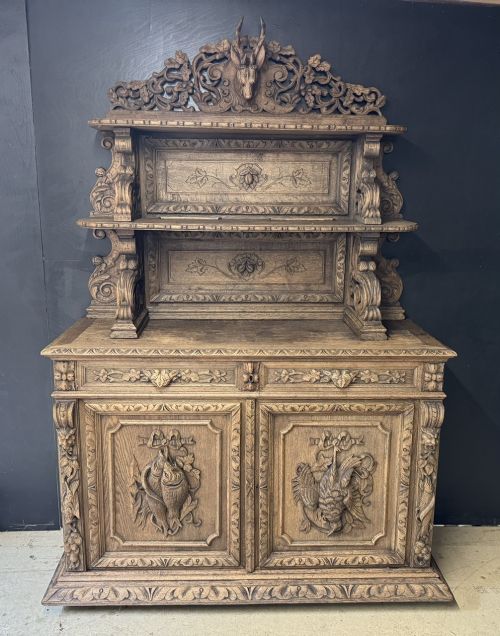
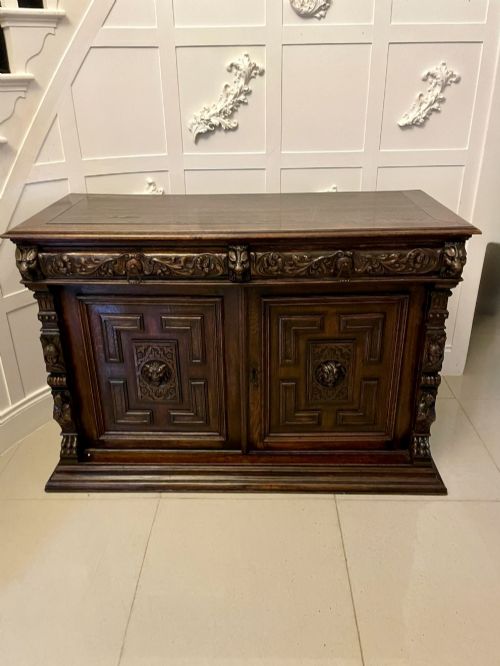
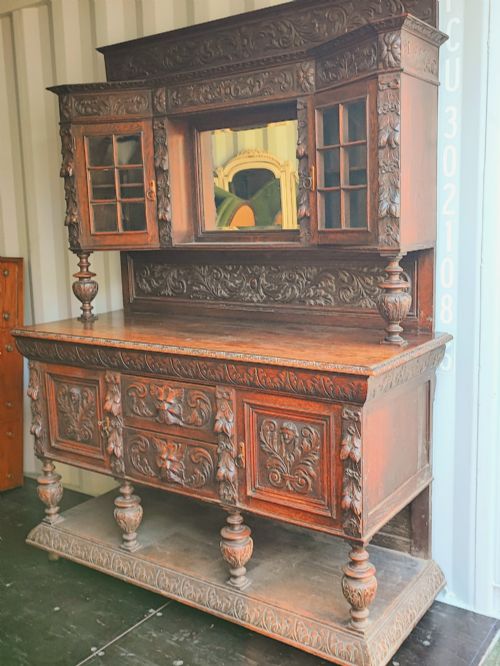
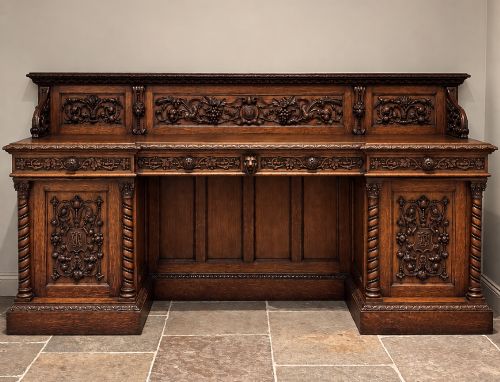
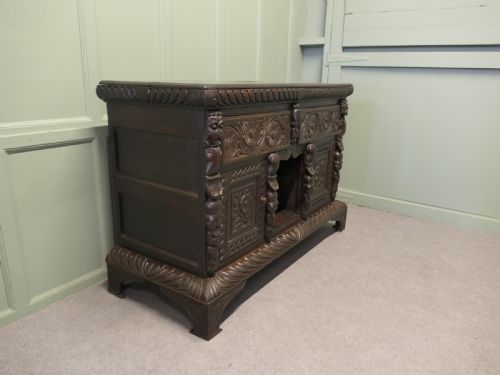
The physical presence of these forms relies on grand proportions and robust timber construction. Many examples incorporate elaborate carvings, such as Green Man motifs, stretcher bases, and mirrored superstructures. Sideboards and buffets dominate the selection, offering deep cupboards and wide surfaces suited to formal dining.
How they were made
Makers constructed these servers using solid oak boards, framing them to support heavy loads of crockery and silver. Craftsmen applied deep hand carving to drawer fronts, cupboard doors, and structural uprights, creating pronounced relief work. Secondary materials such as brass fittings and bevelled mirror glass appear in the architectural backs of the grander nineteenth century sideboards.
Joinery techniques relied on pegged mortise and tenon joints to ensure stability across large side cabinets and dresser bases. French and Flemish influences introduced baroque scrollwork and turned legs, whilst stretcher bases provided additional rigidity to heavy tables and sideboards.
Heavy Oak Server Retail Price Guide 2026
Typical asking prices for heavy oak server among the pieces listed under this phrase on Sellingantiques today, from the lower quarter to the upper quarter. They describe what is for sale here now, not the wider market.
Keep an eye out for the watchful gaze of the Green Man peering from the carved oak foliage on these Victorian server doors.
What varies in quality
The standard of a heavy oak server rests upon the depth and crispness of the timber carving. Superior examples display spirited Green Man masks and intricate foliage rendered with high artistic confidence, whereas simpler pieces rely on shallow mechanical stamping or plain mouldings.
Proportion and structural ambition also dictate the tier of a piece. Grand mirrored sideboards with extensive architectural framing command greater presence than modest side cupboards, though both depend on the careful selection of figured oak grain and sound joinery.
The Heavy Oak Server Glossary
- Green Man
- A sculptural face carved from foliage or branches, frequently found on nineteenth century oak furniture. This motif symbolises rebirth and appears prominently on Victorian dresser bases and sideboards.
- Stretcher Base
- A system of horizontal timber rails connecting the lower legs of a table or sideboard for added strength. These members often feature central turnings or decorative brackets.
- Flemish Baroque
- An ornate style of decoration characterised by heavy scrolls, high relief carving, and dramatic movement. It heavily influenced nineteenth century revival sideboards and cabinets.
- Dresser Base
- A low rectangular cabinet fitted with drawers and cupboards beneath a serving top, lacking the upper plate racks of a traditional dresser. These items served as functional preparation surfaces in large dining rooms.
- Bevelled Glass
- Glass panes featuring an angled edge ground down to a decorative taper. This technique adds depth and light reflection to the mirrored backs of grand sideboards.
Heavy Oak Server: Frequently Asked Questions
Where should a heavy oak server go?
These servers suit dining rooms or large entrance halls where their scale can anchor the room. They provide functional surface space and substantial interior storage for tableware.
Because of their weight and proportions, they require adequate floor space and steady walls if paired with mirrored superstructures.
How do I care for oak furniture?
Maintain the timber by dusting regularly with a dry cloth and occasionally applying natural beeswax to nourish the grain. Keep the wood away from direct heat sources and strong sunlight to prevent splitting.
Avoid excessive moisture on the surface and wipe spills promptly to protect the polished finish.
Are these servers practical for daily use?
Their deep cupboards and wide surfaces make them exceptionally practical for storing heavy crockery, linens, and serving dishes. The sturdy construction handles daily domestic demands with ease.
Drawers provide convenient storage for cutlery and smaller dining accessories whilst keeping surfaces clear.