

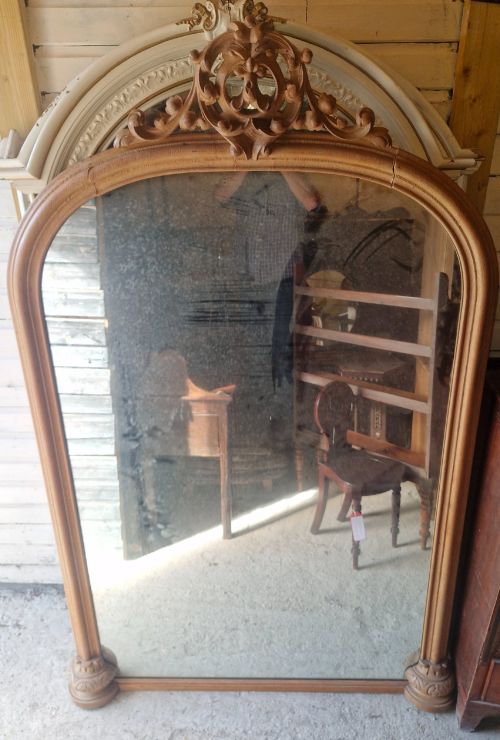
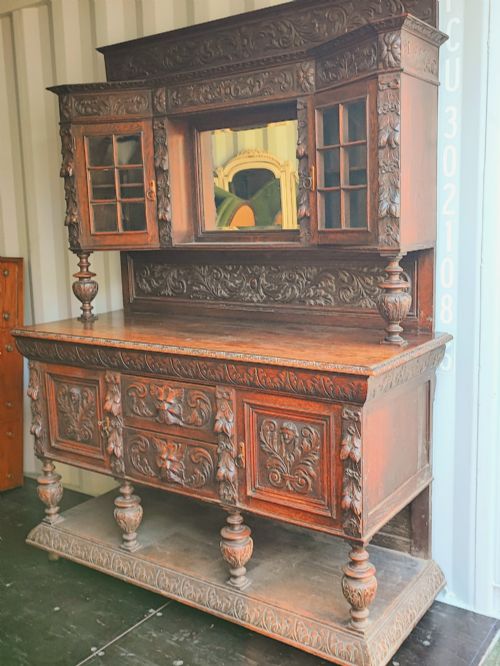
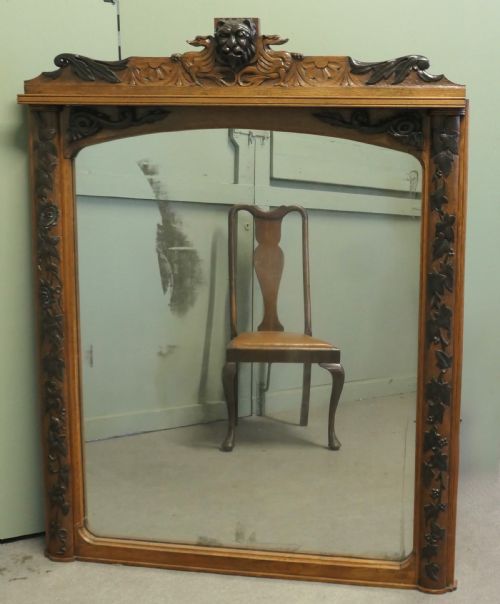


Heavy Oak Mirror
These heavy oak mirror pieces bring substantial timber frames and deep carving into a room, offering both practical reflection and architectural weight.
Heavy Oak Mirror
A heavy oak mirror provides a substantial wooden frame enclosing a reflective glass plate, often appearing as wall-hung pieces, overmantels designed for fireplaces, or as components integrated into larger furniture like sideboards and hall stands. These items emerge from the nineteenth century and early twentieth century, spanning Victorian, Edwardian, and revivalist eras.
You are most likely to encounter large wall mirrors and overmantels featuring carved oak work, alongside smaller hanging frames and mirrored furniture pieces. The styles draw heavily on Jacobean, Gothic, and Renaissance revivals, showing deep moulding and rich surface texture.
The physical presence of these objects relies on solid timber construction and generous proportions. They suit hallways, principal reception rooms, and dining spaces where a strong architectural focal point is required.
How they were made
Construction relies on solid oak timbers, frequently carved by hand to form cushion frames, strapwork, and figural details such as Green Man motifs. Brass hardware, zinc elements, and bevelled glass plates are integrated into the heavier frames to complete the design.
The glass plates are set within thick wooden rebates, sometimes retaining original plates that show the slight imperfections and weathering characteristic of nineteenth-century manufacture. Frames are joined with traditional cabinet-making techniques to support the considerable weight of the wood and glass.
Heavy Oak Mirror Retail Price Guide 2026
Typical asking prices for heavy oak mirror among the pieces listed under this phrase on Sellingantiques today, from the lower quarter to the upper quarter. They describe what is for sale here now, not the wider market.
Keep watch for the occasional Green Man peering out from the oak leaves.
What varies in quality
The depth and crispness of the carving separate standard production from exceptional pieces, particularly where figures, foliage, and Renaissance-style strapwork are executed by skilled hands. The proportion of the frame to the mirror plate dictates the visual balance and architectural impact of the object.
The condition and originality of the mirror plate itself, whether flat or bevel-edged, influence the integrity of the piece. Superior examples maintain their original framing timbers and glass without inappropriate modern replacements.
The Heavy Oak Mirror Glossary
- Overmantel mirror
- A large mirror designed specifically to be hung or placed upon the mantelpiece above a fireplace. These frequently display grand proportions and elaborate carved frames.
- Cushion frame
- A frame profile that swells outwards in a rounded, convex shape resembling a stuffed cushion. This style is typical of seventeenth-century revival designs.
- Bevelled glass
- Mirror glass with edges cut and polished at an angle to create a framed border effect within the plate itself. This technique adds depth to the reflection.
- Renaissance Revival
- A nineteenth-century design movement borrowing motifs from the fifteenth and sixteenth centuries. It incorporates heavy classical details, columns, and strapwork into furniture and mirror frames.
Heavy Oak Mirror: Frequently Asked Questions
Where should I hang a heavy oak mirror?
These pieces require solid structural support such as masonry walls or heavy stud work due to their substantial weight and timber construction. They anchor a room effectively above a fireplace or in a generous hallway.
Ensure the fixings match the scale and load capacity of the frame to secure the piece safely.
How do I date an oak mirror?
Dating relies on examining the timber preparation, the style of the carved ornamentation, and the characteristics of the mirror glass. Revival styles from the Victorian and Edwardian periods often mimic earlier Jacobean or Renaissance motifs.
Backboards, screw types, and assembly methods further help distinguish nineteenth-century examples from later twentieth-century reproductions.
Are the mirror plates original?
Many pieces retain their original glass plates, which can exhibit light foxing, minor silvering losses, or subtle distortion. These age marks confirm the historical integrity of the object.
Replacement plates are sometimes fitted if the original glass suffered damage over the decades of use.
How do I care for the oak frame?
Maintain the timber by dusting regularly with a dry cloth and occasionally applying a traditional beeswax to nourish the oak surface. Avoid modern silicone polishes that build up and attract dirt.
Keep the mirror away from direct heat sources and damp environments to prevent the wood from splitting or warping.