

Heavy Oak Carving
Heavy oak carving brings substantial domestic woodwork into a room, spanning 17th century chests to Victorian revival furniture.
Heavy Oak Carving
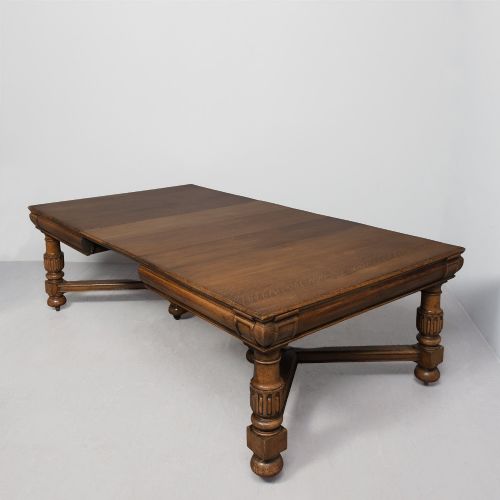
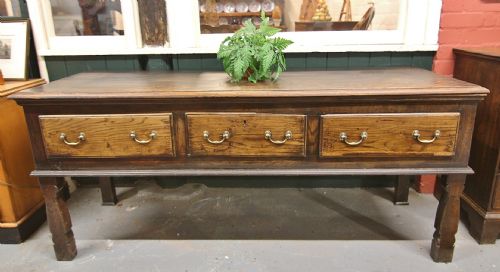
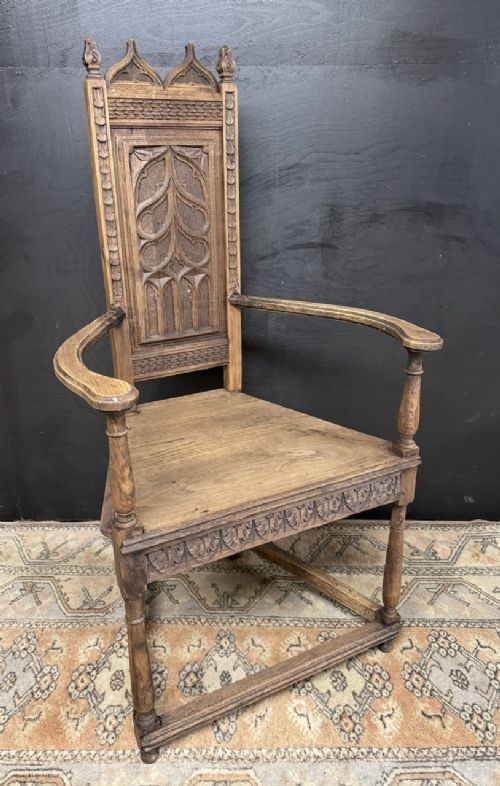
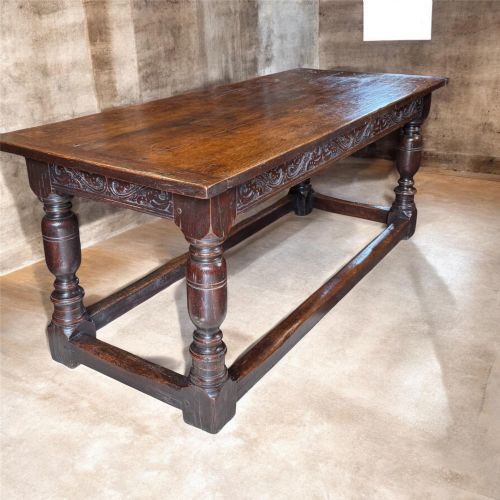
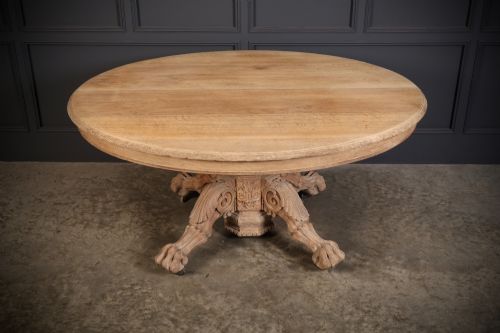
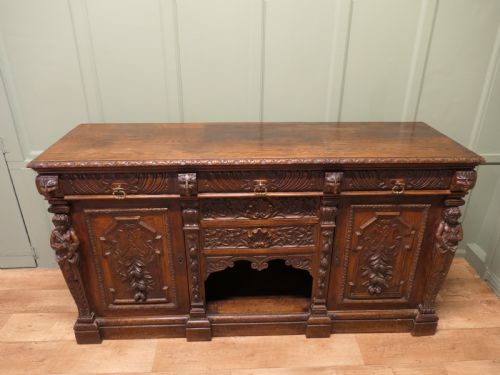
Heavy oak carving encompasses robust furniture and fittings built from solid timber, dominated by large storage pieces like sideboards, coffers, and cupboards alongside refectory dining tables and high-backed chairs.
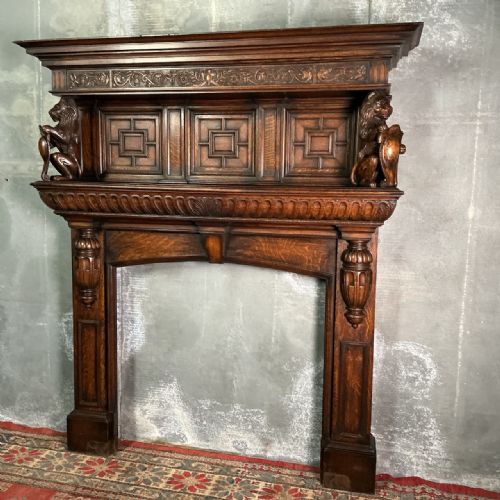
The pieces on this page lean heavily towards Victorian interpretations and later revivals, alongside authentic 17th century examples featuring deep relief work and vernacular joinery.
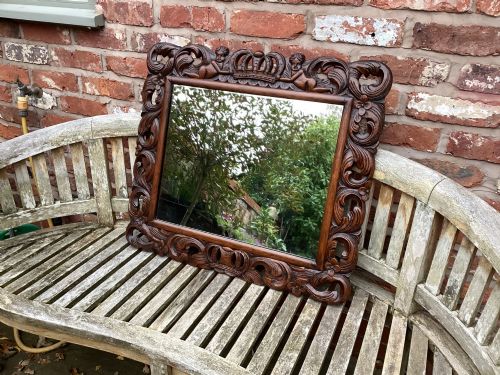
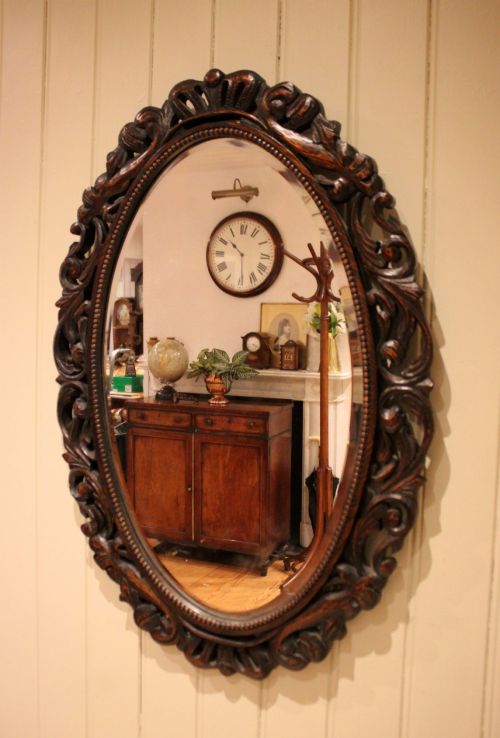
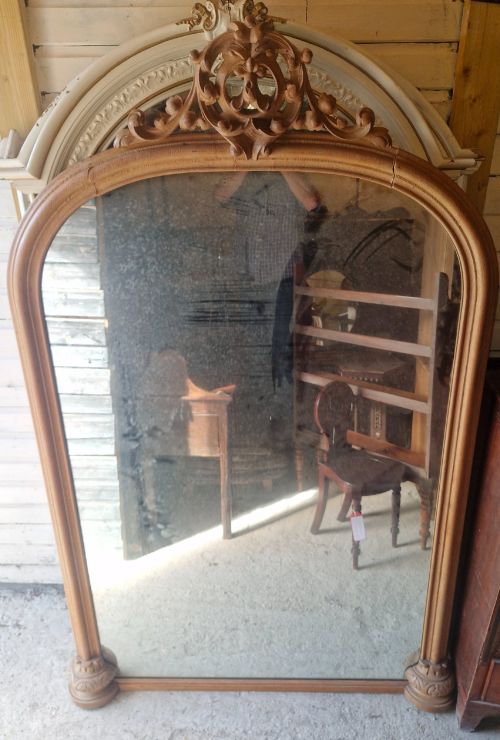
Forms range from wall mirrors and display pedestals to substantial desks, benches, and bookcases, reflecting centuries of domestic utility combined with ornamental ambition.
Materials and Construction
Solid oak provides the primary structural and decorative substance, occasionally paired with elm for specific tabletops or supplemented by brass, iron, leather, and glass fittings.
Carpenters utilised traditional joints and heavy framing to support deep chisel work, panels, stretcher bases, and turned stretchers without relying on modern adhesives.
Heavy Oak Carving Retail Price Guide 2026
Typical asking prices for heavy oak carving among the pieces listed under this phrase on Sellingantiques today, from the lower quarter to the upper quarter. They describe what is for sale here now, not the wider market.
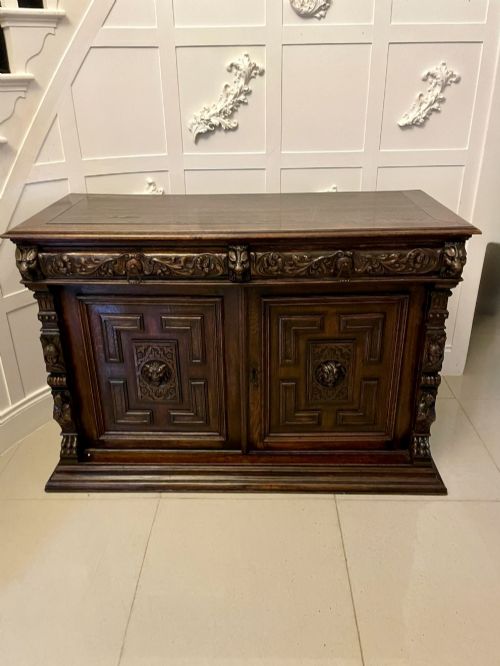
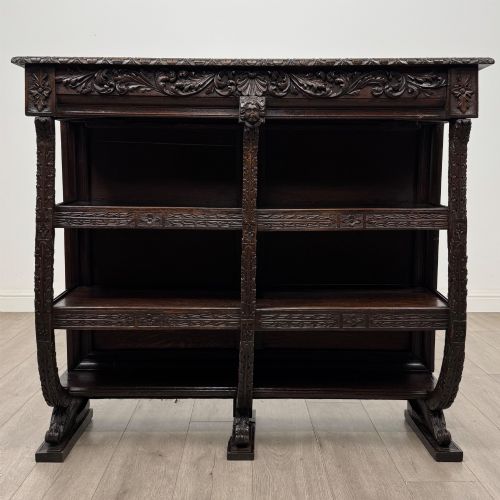
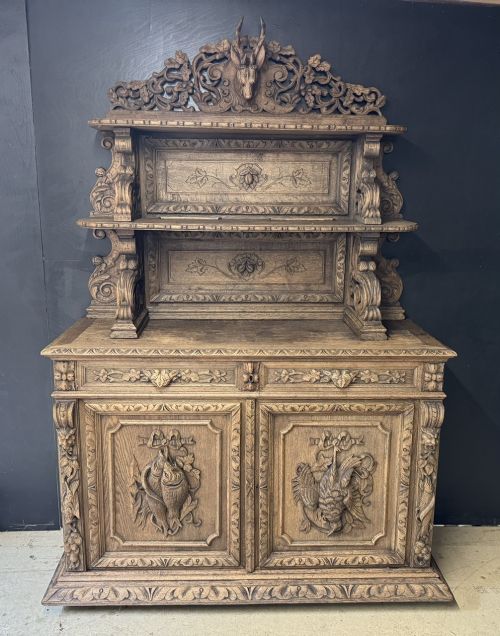
Several heavy oak cupboards and dresser bases keep watch over rooms by incorporating carved Green Man faces peering through leafy foliage.
Assessing Quality and Execution
Quality rests upon the crispness and depth of the chisel work, distinguishing master carvers who brought Green Man motifs and figural scenes to life from more mechanical, repetitive workshops.
The integrity of the timber framing, the selection of figured grain, and the preservation of original stretcher bases and panel work separate standard vernacular items from exceptional cabinet maker commissions.
The Heavy Oak Carving Glossary
- Wainscot
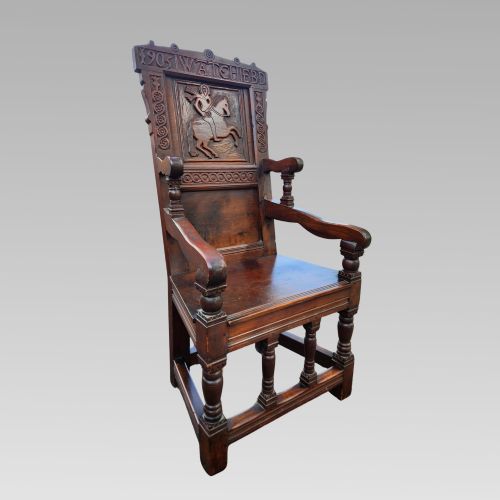
- An early type of wooden armchair constructed with panelled backrests and solid wooden seats. These pieces typically date to the seventeenth century and display robust carpentry.
- Coffer
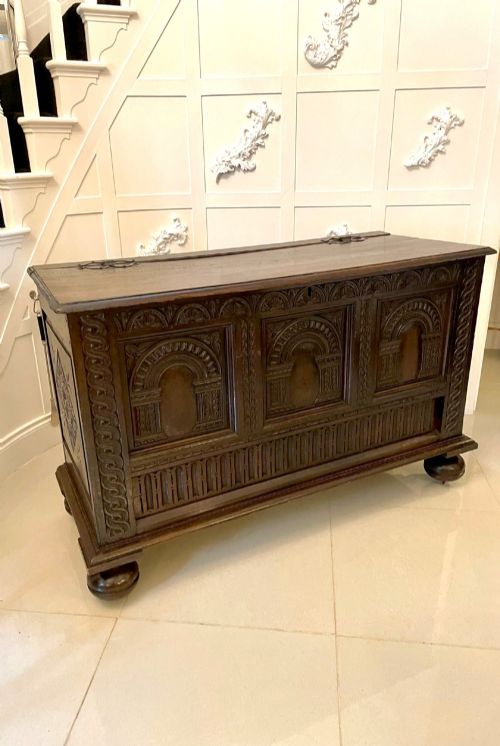
- A large heavy box used for storage, constructed from thick oak planks and often decorated with carved panels on the front. They served multiple domestic purposes including seating and safe storage.
- Refectory table
- A long dining table supported by heavy legs connected with floor-level stretchers. Versions often utilise draw leaves or single plank elm tops.
- Green Man
- A sculptural architectural ornament depicting a human face emerging from or entwined with foliage and vines. This motif appears frequently on nineteenth century revival cupboards and sideboards.
- Stretcher base
- A system of horizontal wooden bars connecting the lower legs of a table, chair, or sideboard to provide structural rigidity. These elements are frequently turned or carved.
Heavy Oak Carving: Frequently Asked Questions
What is a wainscot chair?
A wainscot chair is an early form of wooden seating constructed with solid panelled backs and heavy armrests. They represent some of the earliest domestic furniture surviving today.
These chairs rely on frame and panel construction rather than upholstery. Their heavy proportions made them permanent fixtures in early English households.
How do I care for heavy oak furniture?
Heavy oak furniture requires stable indoor humidity levels to prevent the timber from splitting or warping. Natural waxes applied periodically help maintain the finish.
Keep these pieces away from direct heat sources and strong sunlight. Regular dusting with a dry cloth protects the carved recesses from accumulating debris.
What distinguishes Jacobean style from Victorian revival pieces?
Jacobean style pieces date from the seventeenth century or follow those strict geometric and strapwork designs precisely. They exhibit authentic period tool marks and construction methods.
Victorian revival pieces reinterpret these earlier motifs with heavier proportions and often machine assistance. They reflect nineteenth century historicism rather than seventeenth century domestic necessity.
Where were refectory tables used?
Refectory tables originally served communal dining halls in monasteries and large country houses. Their long proportions accommodated many diners simultaneously.
Over time, similar heavy forms transitioned into domestic farmhouses and grand dining rooms. Their sturdy stretcher bases supported daily family meals and food preparation.