


Heavy Iron Storage Box
A heavy iron storage box is a utilitarian trunk built to secure valuables for travel or domestic service.
Heavy Iron Storage Box
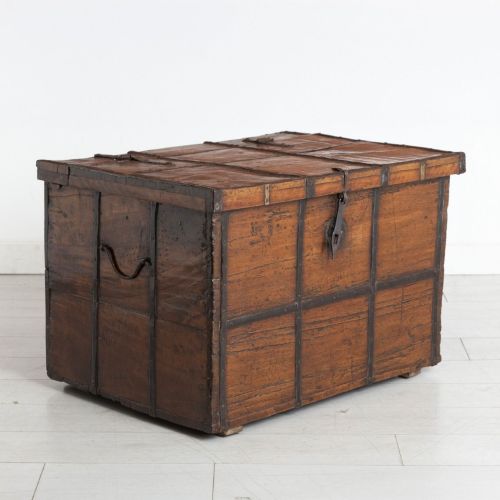
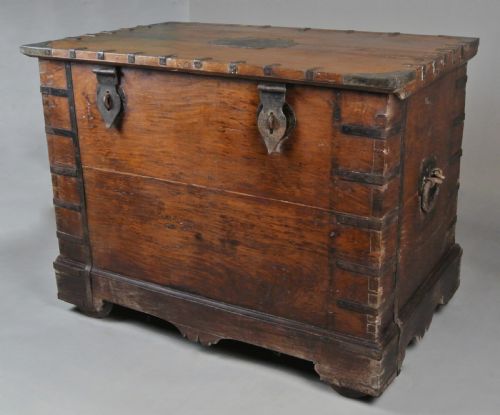
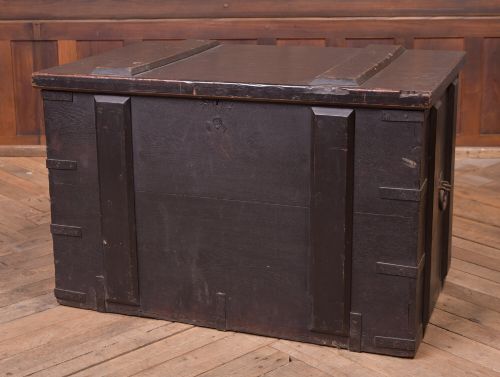
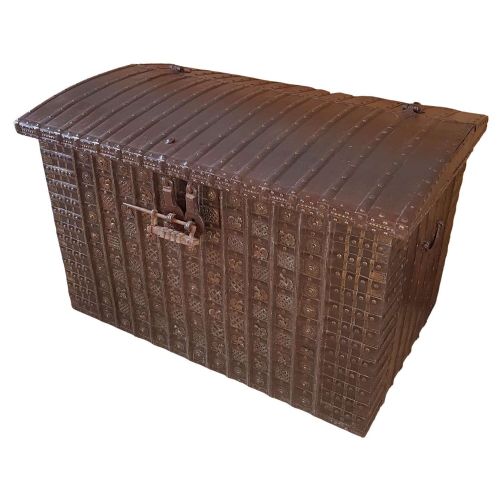
A heavy iron storage box on this page typically takes the form of a robust silver chest, a campaign military case, or an iron-banded dowry chest. These pieces originate from domestic country houses, colonial postings, and international trade routes.
The forms span large oak silver chests with cast iron strapping, teak and hardwood trunks from India, and pine blanket boxes intended for heavy use. Buyers encounter pieces designed for the secure transport of plate, documents, and personal belongings.
Origins stretch from Georgian and Victorian England to Anglo-Indian workshops and Rajasthani traditions. The unifying characteristic is a sturdy timber carcass heavily reinforced with iron bands, straps, and secure locking mechanisms.
How they were made
Construction relies on durable domestic and exotic timbers such as oak, teak, mahogany, pine, and elm, assembled with sturdy joints to withstand heavy loads and rough transit. The wooden carcasses are then reinforced with structural iron bands, straps, and corner plates.
Makers utilised forged and wrought iron or cast iron for hinges, hasps, carrying handles, and complex locking mechanisms that required dedicated keys. Many examples incorporate internal linings of baize, leather, or paper to protect silver and textiles from abrasion.
Listings feature periods from the sixteenth century through the nineteenth century, alongside styles spanning Victorian, Georgian, and Anglo-Indian traditions.
What varies in quality
Quality in a heavy iron storage box rests upon the integrity of the timber framing and the substance of the ironwork. Substantial oak or teak carcasses paired with heavy, hand-forged iron banding indicate a high standard of construction intended for serious service.
The sophistication of the locking mechanism and the presence of original internal fittings distinguish utilitarian packing cases from bespoke silver chests. Complete and operational locks, original carrying handles, and intact linings elevate the standing of a piece.
Allen of London·Elkington·H D Dean
The Heavy Iron Storage Box Glossary
- Silver chest
- A heavy timber trunk lined to store flatware and hollowware securely. These containers were built with robust iron bands to protect valuable family plate during transport.
- Campaign case
- A portable chest made for military officers or travellers on long journeys. They often feature recessed brass or iron handles and robust construction for frequent movement.
- Strongbox
- A secure container built primarily from iron and dense wood to hold currency and vital documents. They rely on heavy straps and complex internal locking systems.
- Dowry chest
- A traditional trunk used to assemble household goods for a marriage. Examples from regional workshops often combine native hardwoods with decorative iron banding.
Heavy Iron Storage Box: Frequently Asked Questions
What were heavy iron storage boxes used for?
These boxes served primarily to transport and protect valuable possessions such as family silver, uniforms, and documents during travel. Their robust construction kept contents secure from theft, moisture, and rough handling on ships and carriages.
In domestic settings, they transitioned to stationary storage within country houses and offices. Their heavy timber and iron build ensured long-term durability for generations of household use.
How do I identify a Victorian silver chest?
Victorian silver chests typically feature a heavy oak carcass bound with thick iron strapping and fitted with sturdy side carrying handles. They often bear maker plaques or stamps on the locks and interior lining.
Inside, you will frequently find fitted trays or baize-lined compartments designed specifically to hold cutlery and hollowware in place. The combination of oak and iron creates a distinctively heavy piece built for domestic service.
How do I live with a heavy iron storage box?
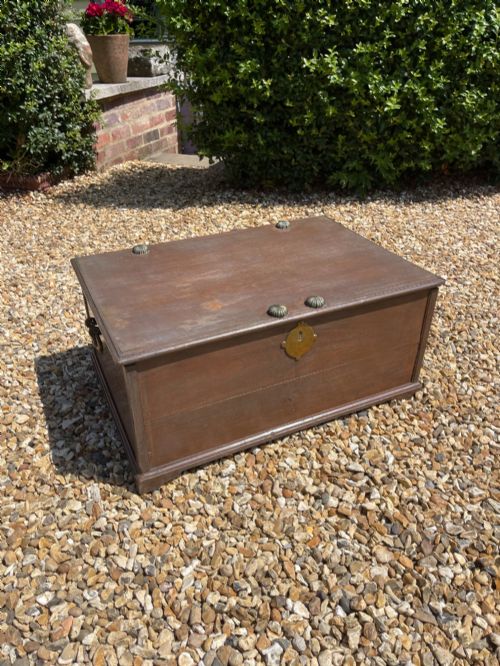
These boxes make robust coffee tables, end tables, or blanket storage at the foot of a bed. Their flat tops and sturdy construction allow them to function as practical furniture while providing hidden storage space.
Due to their substantial weight, positioning them carefully before filling is recommended. Maintenance involves occasional treatment of the timber and light oiling of the ironwork to prevent corrosion.