

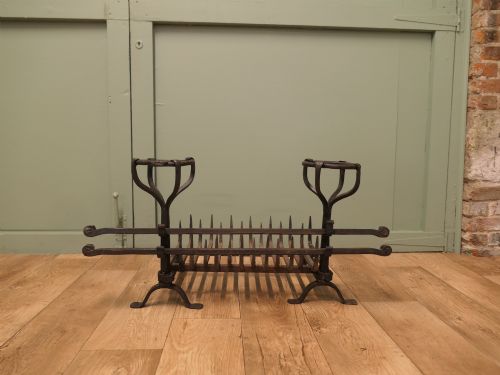
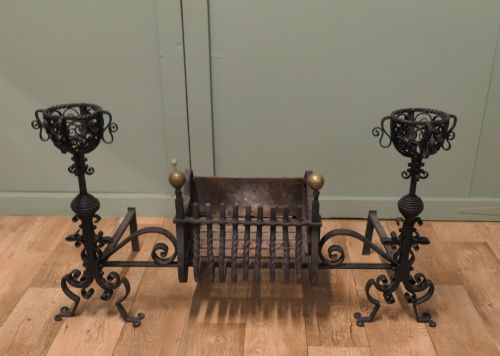


Heavy Hearth Basket
A heavy hearth basket anchors the open fire with substance, bringing functional weight and enduring utility to period chimney pieces.
Heavy Hearth Basket
A heavy hearth basket provides a robust home for fuel within open fireplaces and inglenooks. You encounter these primarily as sturdy iron fire baskets, grates, and accompanying andirons dating from the nineteenth century.
The selection includes substantial wrought and cast iron fire grates alongside large copper log bins and vessels. Pieces range from straightforward Victorian utilitarian designs to decorative Gothic Revival and Arts and Crafts examples.
Many items incorporate matching fire backs, fenders, and fire dogs designed to manage coal or wood safely. The variety spans functional nineteenth century hearth furniture and rustic country storage baskets.
How they were made
Forged iron and cast metal form the structural core of these hearth pieces, utilising traditional blacksmithing techniques for heavy bars and durable fire backs. Wrought iron elements provide resilience against sustained high temperatures.
Heavy Hearth Basket Retail Price Guide 2026
Typical asking prices for heavy hearth basket among the pieces listed under this phrase on Sellingantiques today, from the lower quarter to the upper quarter. They describe what is for sale here now, not the wider market.
Listings feature robust nineteenth century materials including cast iron, wrought iron, heavy copper, and sturdy cane.
What varies in quality
The distinction lies in the heft of the metalwork and the integrity of the blacksmith's construction. Thicker cast plates, substantial wrought iron bars, and heavier copper gauges denote superior manufacture designed for rigorous service.
Design complexity also defines the range, moving from plain utilitarian grates to elaborate Victorian Gothic Revival and Arts and Crafts pieces with integrated back plates and matched andirons.
The Heavy Hearth Basket Glossary
- Fire basket
- A metal container designed to hold coal or wood within a hearth. It sits upon legs or andirons to allow air circulation beneath the fuel.
- Andirons
- Supporting metal fire dogs placed on either side of the hearth. They often hold the front of a fire basket or support logs directly.
- Fire back
- A heavy cast iron plate placed at the back of an open fireplace. It radiates heat forward and protects the masonry wall.
- Inglenook
- A large recessed fireplace space designed to accommodate seating alongside the fire. Baskets built for these areas feature extra scale and heavy iron construction.
- Log bin
- A large vessel used for storing firewood near the hearth. Examples are fashioned from heavy copper or woven cane.
Heavy Hearth Basket: Frequently Asked Questions
How do I choose the right heavy hearth basket?
Measure the width and depth of your fireplace opening carefully to ensure proper clearance around the iron frame. Consider whether your hearth requires a standalone basket with andirons or an integrated unit with a back plate.
Match the scale of the piece to the proportions of the chimney breast. Larger inglenook settings demand substantial nineteenth century ironwork, while standard openings accommodate more compact grates.
Can I use these antique fire baskets for burning wood?
Many of these heavy cast and wrought iron baskets are built to handle solid fuel and high heat. Inspect the thickness of the metal bars to gauge their current structural capability.
Some decorative or lighter nineteenth century examples function better for display or holding modern gas fire elements. Verify the condition of the base grids before lighting any traditional fire.
What maintenance do copper log bins require?
Copper vessels benefit from occasional dusting and gentle cleaning to preserve the natural metal surface. Avoid abrasive cleaners that strip the historic patina accumulated over decades.
Keep cane and willow storage baskets dry and away from direct moisture to maintain the integrity of the natural fibres. Regular light brushing removes dust from the woven crevices.
How do I date an antique iron fire grate?
Examine the manufacturing marks, surface texture, and construction methods visible on the iron or copper components. Nineteenth century pieces often display hand-forged wrought iron details or early cast iron grain.
Stylistic indicators such as Gothic Revival pointed arches or Arts and Crafts linear motifs help narrow the period. Compare the weight and assembly style with documented examples from the Victorian era.