



Heavy Gold Chain Necklace
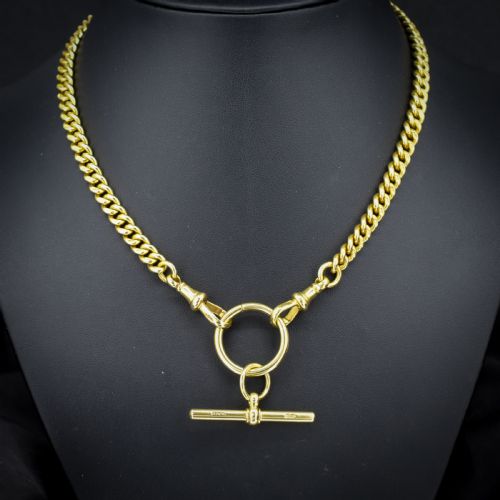
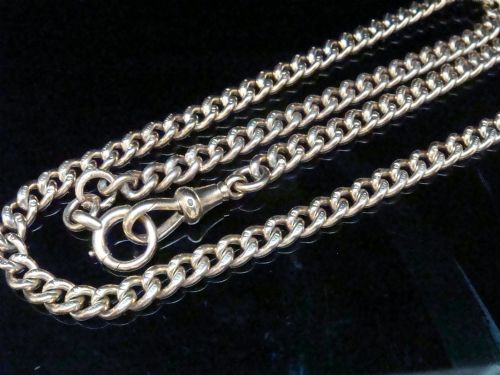
A heavy gold chain necklace carries substantial presence, designed to be worn alone or fitted with a pocket watch attachment.
Heavy Gold Chain Necklace
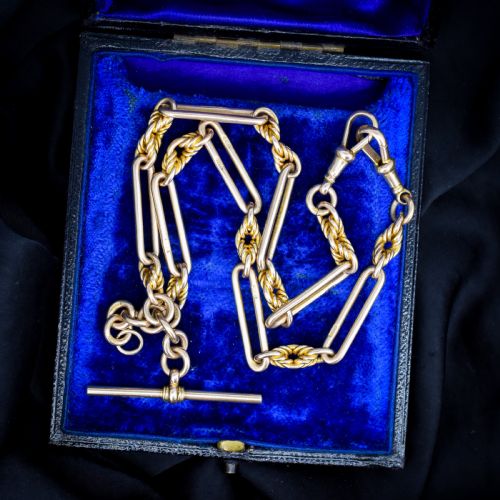
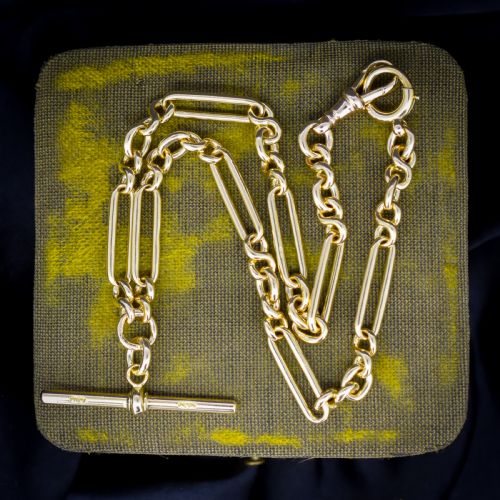
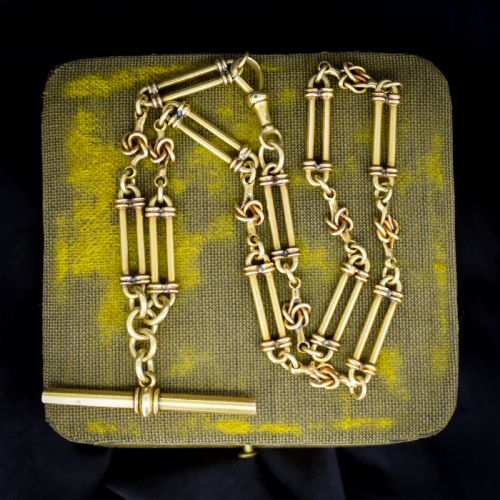
A heavy gold chain necklace encompasses versatile neckwear adapted from nineteenth-century pocket watch chains and long guards. When you search for a heavy gold chain necklace, you encounter robust link designs originating across the Victorian, Edwardian and mid-century eras.
Originating primarily from the nineteenth century, 1900, Edwardian period and 1950, these pieces display considerable weight and distinct link construction. Buyers find everything from simple fourteen-inch lengths to seventy-inch guard chains.
How they were made
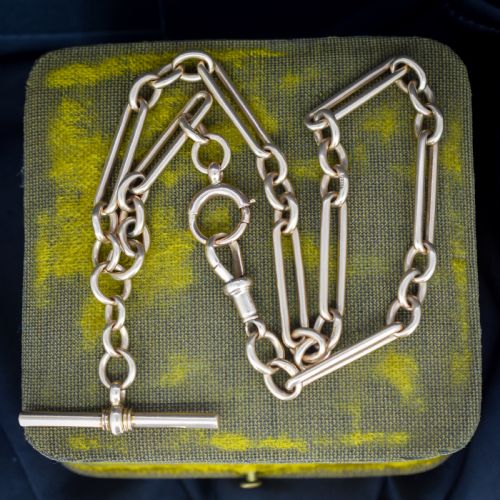
Goldsmiths constructed these pieces using 9ct gold, 15ct yellow gold, 18ct gold and rose gold, working metals down into distinct link formations like trombone, love knot, figaro and curb patterns. Every individual link in certain pieces received full hallmarks, showing the rigorous standards of British assay offices.
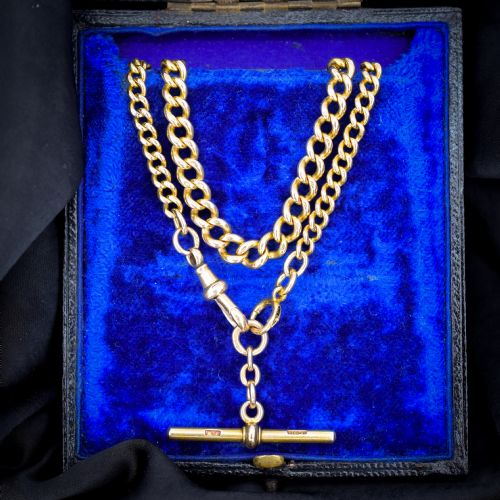
Craftsmen integrated functional hardware directly into the metalwork, attaching secure dog clips, swivel connectors and bolt rings to anchor pocket watches or pendants securely. Structural heft was achieved through solid link fabrication rather than hollow stamping, ensuring durability across decades of wear.
Listings feature items from the 19th Century, Edwardian era, 1900 and 1950, fashioned in 9ct, 15ct and 18ct yellow and rose gold.
What varies in quality
Quality rests upon the integrity of the individual links and the presence of complete, crisp hallmarks stamped across the metal. Pieces where every single link bears a hallmark demonstrate superior manufacturing care compared to partially marked examples.
The calibre of the chain is further elevated by the robustness of its fastening mechanisms, such as fully functioning dog clips and secure bolt rings. Weight and metal purity, ranging from 9ct up to 18ct yellow and rose gold, dictate the foundational grade of the piece.
The Heavy Gold Chain Necklace Glossary
- Albert chain
- A pocket watch chain designed to be secured through a waistcoat buttonhole, featuring a T-bar at one end and a dog clip at the other. These are frequently worn today as heavy necklaces.
- Dog clip
- A spring-loaded snap hook originally used to secure a pocket watch to an Albert chain. They provide a secure and decorative clasp for modern necklace wear.
- Trombone link
- An elongated rectangular metal link interspersed with smaller circular or oval connectors, resembling the slide of a trombone. This geometric style offers a distinct visual rhythm along the length of the chain.
- Belcher link
- A type of chain formed from uniform, slightly wider-than-thick links that create a smooth, rounded profile. It remains a durable and classic foundation for heavy gold neckwear.
- Bolt ring
- A circular spring ring clasp operated by pulling a small internal tab against tension. It serves as a reliable closure on many antique watch chains.
Heavy Gold Chain Necklace: Frequently Asked Questions
What is an Albert chain necklace?
An Albert chain necklace is a piece originally manufactured as a pocket watch chain during the Victorian or Edwardian eras. These items feature sturdy links, dog clips and T-bars that lend themselves naturally to being worn around the neck today.
They offer substantial weight and historical character that sets them apart from contemporary manufactured chains.
How do I wear a watch chain as a necklace?
You wear a watch chain necklace by fastening the dog clip directly to any loop, ring or link along the chain to create a custom drop length. The original T-bar often hangs decoratively as a pendant feature at the front.
Alternatively, the T-bar can be tucked through a link to secure the piece in a classic choker or princess length.
What is the difference between 9ct and 18ct gold chains?
The difference lies in the proportion of pure gold alloyed into the metal, with 18ct containing a higher gold content than 9ct gold. This higher purity imparts a richer, deeper yellow colour to the metal.
Both purities were widely used by period goldsmiths to ensure the durability required for heavy daily wear.
How do I date an antique gold chain?
You date an antique gold chain by examining the hallmarks stamped onto the links, which indicate the assay office, metal purity and year of creation. Stylistic clues such as trombone links or Edwardian figaro patterns also point to specific manufacturing decades.
Original components like dog clips and T-bars help confirm the period of origin.