


Heavy Copper Vessel
A heavy copper vessel brings warmth and honest utility to a room, forged to endure generations of daily work.
Heavy Copper Vessel
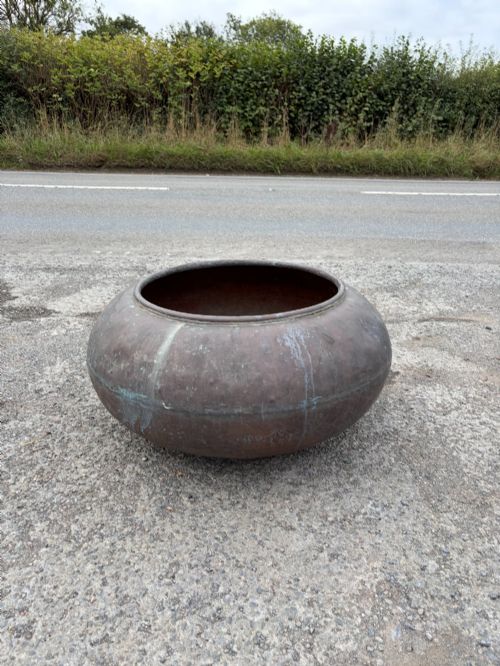
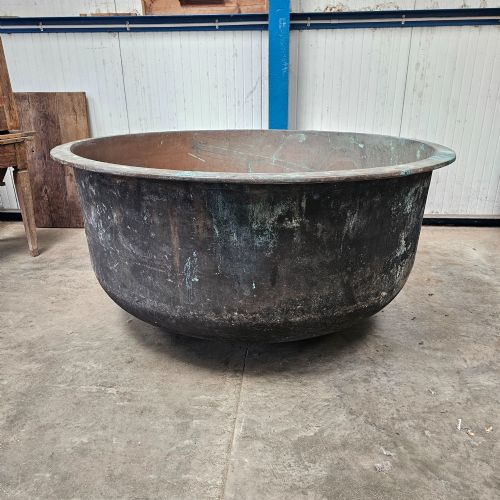
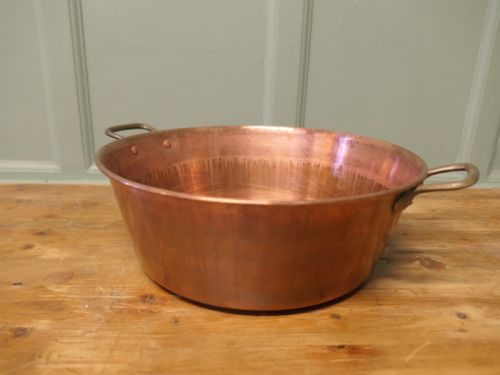
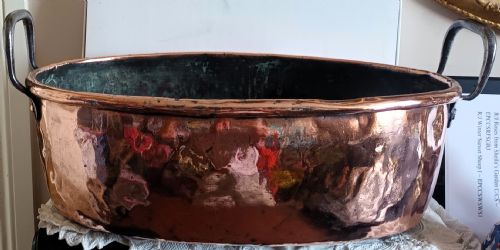
When you search for a heavy copper vessel, you encounter robust domestic and utilitarian items forged primarily during the nineteenth century. The selection spans generous cooking pots, preserving pans, dairy setting pans, and large fireside log bins designed for practical labour. Georgian and Victorian examples dominate, often showing the generous scale and utilitarian strength required by large households and commercial kitchens.
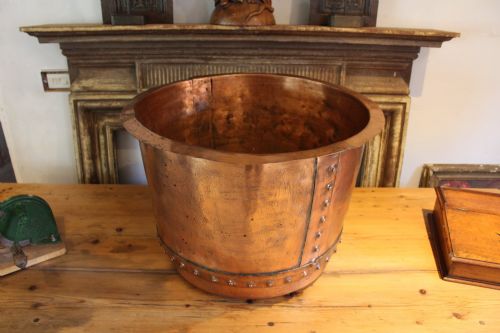
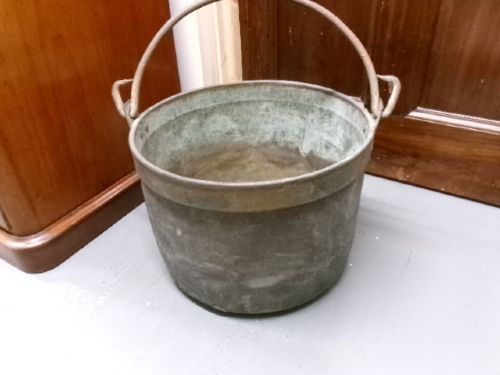
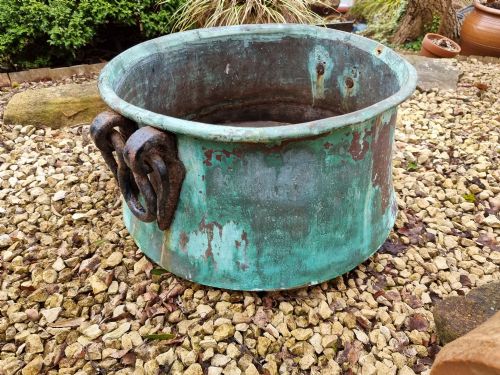
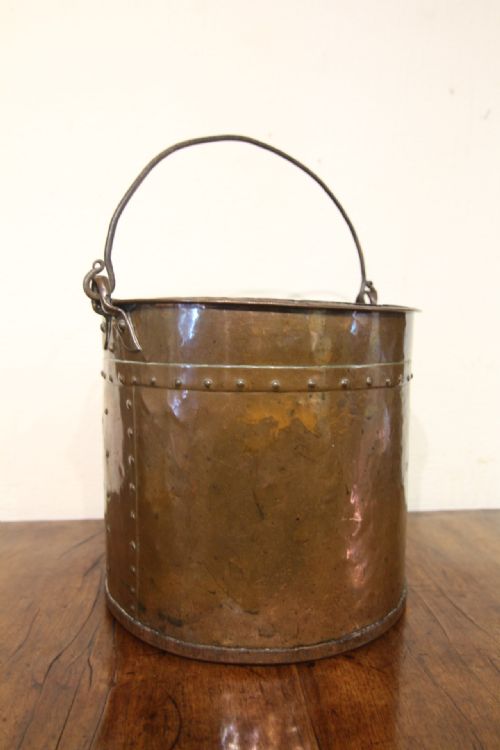
You are most likely to meet French cheese vats, English dairy pans, and riveted coal buckets alongside massive cauldrons fitted with wrought iron swing handles. These objects transition easily from historical kitchenware to decorative planters and hearth accessories in contemporary interiors. Their substantial weight and scale reflect an era when metalware was built for heavy, sustained use rather than mere display.
Materials and construction
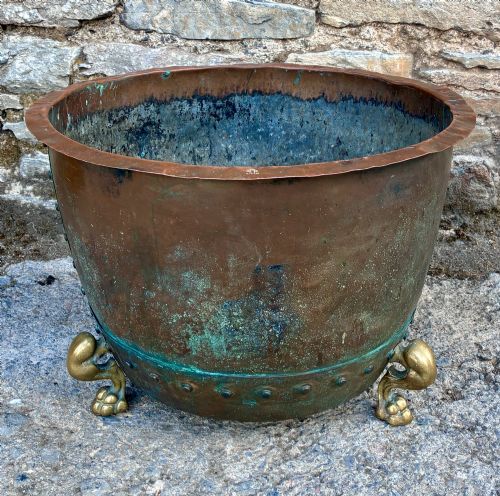
The construction relies heavily on hammered or sheet copper joined by visible hand-beaten rivets, creating seams that ensure structural integrity under heavy loads. Wrought iron and cast iron frequently provide contrasting strength for swing handles, bases, and rims, while occasional brass attachments add functional detail. Artisans shaped these metals by hand, leaving subtle surface undulations and tool marks that evidence individual craftsmanship.
Many items develop a natural verdigris finish or retain a deep, aged patina over decades of exposure to heat, moisture, and air. This oxidation layer protects the underlying metal while offering distinct visual depth that machine-made modern pieces lack. Interiors often show traces of tinning, applied originally to prevent copper toxicity during food preparation.
Listings feature items spanning the Georgian and Victorian eras, predominantly utilising copper, brass, and wrought iron across domestic and agricultural forms.
Distinctions in quality
Quality rests in the original gauge of the metal and the integrity of the riveting rather than superficial surface shine. Vessels retaining their substantial original thickness resist denting and warping under weight, maintaining their structural form over centuries of shifting utility. The proportion of the piece, particularly the harmonious relationship between body and handle, separates standard utility items from finer workshop output.
Superior examples exhibit carefully finished seams and robust ironwork that integrates seamlessly with the copper body. The presence of authentic maker marks, capacity stamps, or regional characteristics elevates a piece from a generic utilitarian tool to a distinct historical artefact.
The Heavy Copper Vessel Glossary
- Verdigris
- A green patina formed naturally on copper through atmospheric oxidation over long periods. This surface layer acts as a seal and is prized by collectors for its authentic coloration.
- Dinanderie
- An umbrella term for European brass and copper hollowware, encompassing decorative vessels and utilitarian containers. The name originates from the Belgian town of Dinant, a historic centre of metalworking.
- Baluster
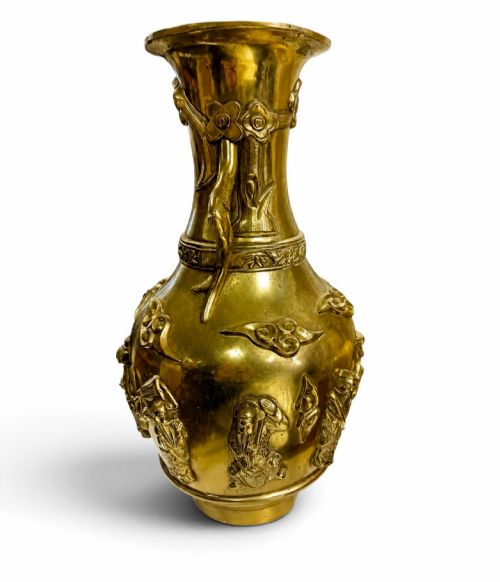
- A vase or column shape characterised by a rounded lower body tapering to a narrower neck. This classical form appears in heavier decorative vessels.
- Setting pan
- A wide, shallow container historically used in dairies for skimming cream from milk. Their broad surface area allowed the cream to rise efficiently.
Heavy Copper Vessel: Frequently Asked Questions
How do I clean a heavy copper vessel?
Maintenance depends entirely on whether you prefer a bright polished finish or a dark, historic patina. Gentle washing with mild soap and warm water removes dust without disturbing the underlying oxidation.
Avoid harsh chemical abrasives that strip away the centuries of character accumulated on the metal surface. Keeping the vessel dry prevents active corrosion and preserves the stability of iron handles.
Are these old copper vessels food safe?
Original nineteenth-century cooking pans and dairy vessels were typically lined with a thin layer of tin to prevent direct contact between food and copper. Over long periods of use, this tin lining frequently wears away entirely.
Modern culinary use requires re-tinned interiors by a specialist artisan to ensure safety. Many owners prefer to display them as decorative items or planters rather than utilising them for active cooking.
How can I date an antique copper pot?
Dating relies on observing construction techniques, handle attachments, and rivet styles across the piece. Hand-hammered bodies joined with irregular copper rivets typically point toward Georgian and early nineteenth-century production.
Later Victorian manufacturing introduced more standardised machinery and different handle reinforcements. Comparing the weight, form, and overall patina against known period examples helps narrow the decade of origin.
How do I use a log bin indoors?
A large nineteenth-century copper bucket or coal bin makes a robust container for firewood beside an active fireplace. Placing a protective mat underneath prevents moisture transfer to delicate flooring.
They also function effectively as large indoor planters for substantial houseplants when fitted with a suitable inner liner. The dark metal contrasts attractively against green foliage and natural wood interiors.