


Heavy Cast Iron Fire Grate
These heavy cast iron fire grate pieces anchor an open hearth with solid weight, built to hold burning logs safely season after season.
Heavy Cast Iron Fire Grate
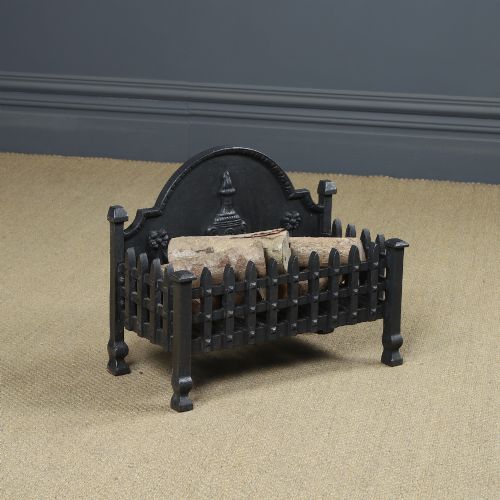
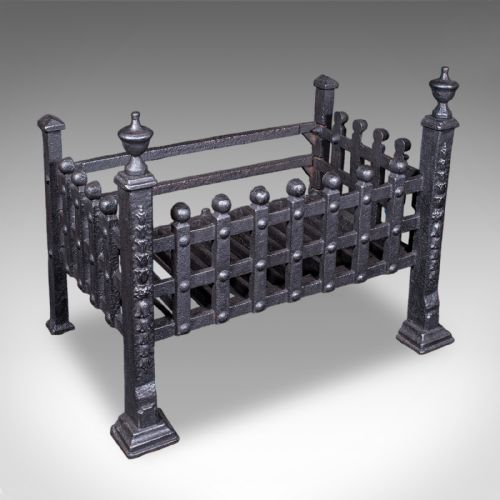
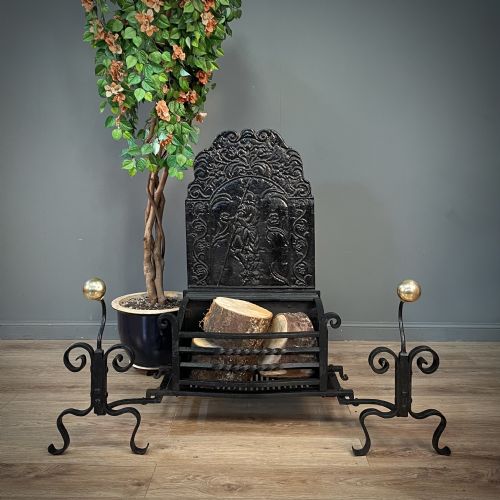
When you search for a heavy cast iron fire grate, you encounter robust hearth furnishings designed to contain solid fuel within an open fireplace. The listings show formats spanning freestanding baskets, inglenook sets with andirons, and combinations incorporating a fireback.
Victorian and twentieth-century examples dominate the selection, often drawing on Gothic Revival, Neoclassical, and Arts and Crafts design idioms. Pieces range from small proportions suited to bedroom hearths to very large units built for deep inglenooks.
Materials and construction methods
The primary material is cast iron, chosen for its ability to withstand intense heat without warping, frequently paired with wrought iron for structural bars and fire baskets. Selected items incorporate brass details or internal firebrick linings to protect the metal surround and reflect warmth.
Foundries cast these heavy components in moulds, producing thick metal walls with substantial load-bearing capacity. Wrought iron elements are hand-forged and joined to the cast portions, creating rigid assemblies capable of supporting large logs.
Listings feature materials including cast iron, wrought iron, brass, and firebrick across Victorian and twentieth-century periods.
Evaluating build and design quality
Quality rests upon the thickness of the metal casting and the integrity of the structural joints uniting the grate to its andirons or back. Superior items display clean lines in revival styles, whether Neoclassical, Gothic, or Arts and Crafts, with robust bars that resist thermal stress.
The distinction between standard utility grates and finer decorative examples lies in the crispness of the cast ornamentation and the integration of matching components such as fenders and firebacks.
The Heavy Cast Iron Fire Grate Glossary
- Cast iron
- An iron-carbon alloy poured into moulds to form rigid shapes. It provides high heat resistance and mass for hearth furniture.
- Wrought iron
- Iron beaten and worked by hand into shapes. It offers fibrous strength for structural fire baskets and andirons.
- Andirons
- Horizontal bars supported on legs, also known as fire dogs, used to raise logs off the hearth floor to improve airflow.
- Fireback
- A heavy iron plate placed at the back of a fireplace. It protects the masonry and radiates heat back into the room.
- Inglenook
- A large recessed hearth space designed to accommodate seating alongside the fire grate.
Heavy Cast Iron Fire Grate: Frequently Asked Questions
Will a heavy grate fit my standard fireplace opening?
These pieces vary significantly in scale, from compact nineteenth-century grates to very large inglenook assemblies. Measure the width, depth, and height of your hearth space carefully before selecting a basket.
Larger sets paired with andirons require substantial depth and clearance. Check whether the design includes an attached fireback or separate components that allow flexible placement.
How do I maintain a cast iron fire grate?
Regular removal of ash prevents moisture retention and subsequent corrosion of the metal. Brushing the surface with a suitable grate polish maintains the dark finish.
Avoid using water or harsh chemical cleaners on hot iron. Allow the metal to cool completely before undertaking any maintenance.
What is the difference between a fire basket and a grate?
A fire basket is an open container, typically forged from wrought iron or cast elements, designed specifically to hold logs or coal. The term grate often describes a broader category including flat bottom grids and integrated fireplace inserts.
Many examples listed combine both forms, featuring a heavy basket mounted upon dedicated andirons or fire dogs.
How can I tell a Victorian grate from a later revival piece?
Victorian and nineteenth-century pieces often exhibit heavy casting marks and specific Gothic or Neoclassical motifs popular during the period. Twentieth-century reproductions or later interpretations, such as those from the nineteen-twenties and thirties, incorporate Arts and Crafts or medieval revival styles with distinct construction traits.
Examining the weight, joinery, and wear patterns helps determine the era of manufacture.