

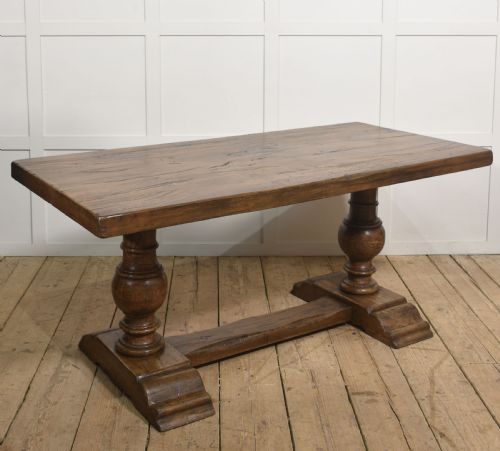


Heavy Carved Table
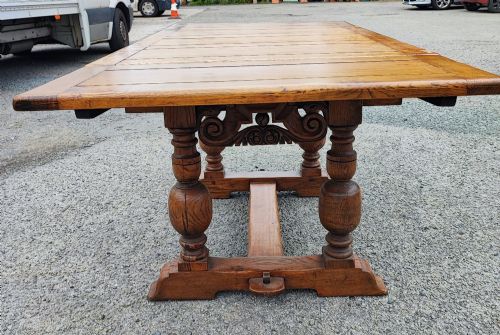
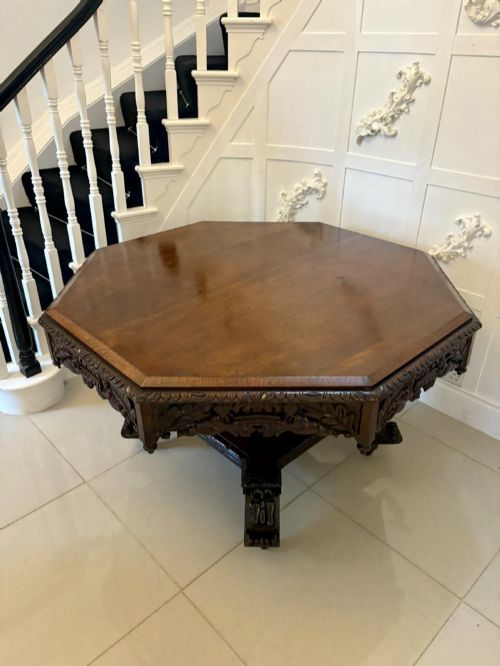
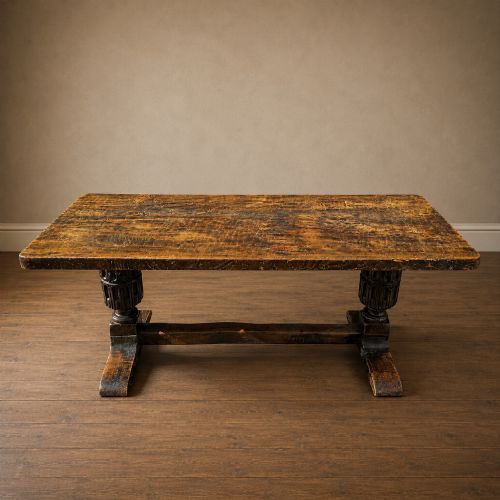
A heavy carved table anchors a room with solid oak timbers and deep chisel work.
Heavy Carved Table
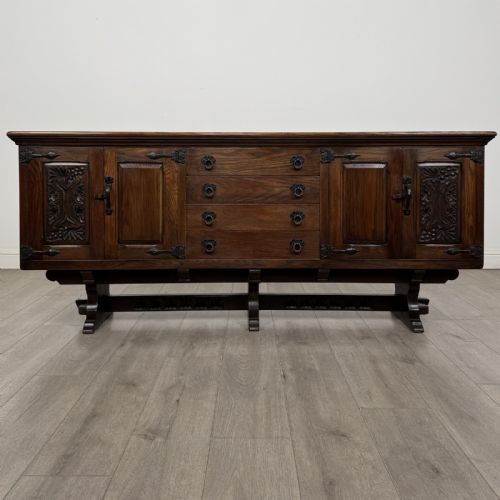
A heavy carved table is built for communal dining or central display, taking the form of refectory tables, centre tables, and sideboards. When you search for a heavy carved table, you encounter substantial furniture designed to command a space through sheer mass and presence.
The materials and construction lean heavily towards robust hardwoods, with oak dominating alongside walnut, elm, and teak. Pieces span from the seventeenth century through the Victorian era and into twentieth-century revivals.
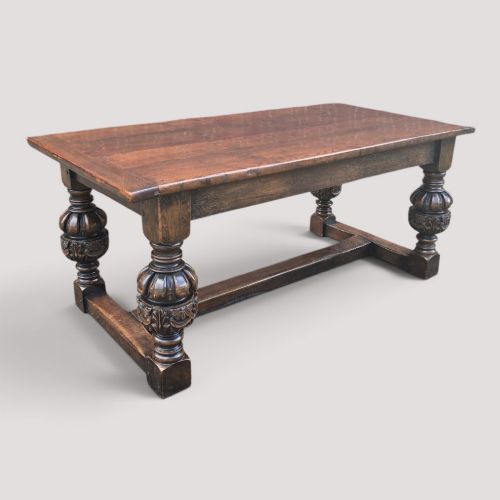
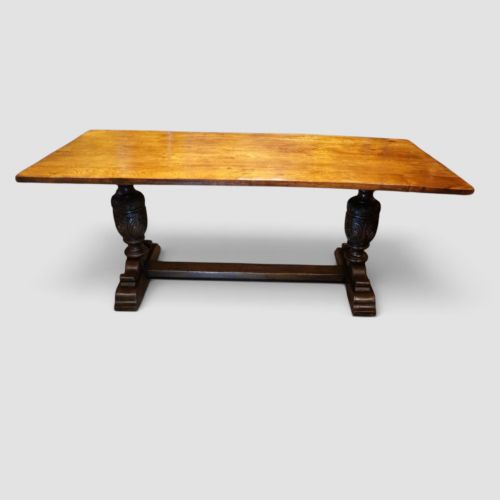
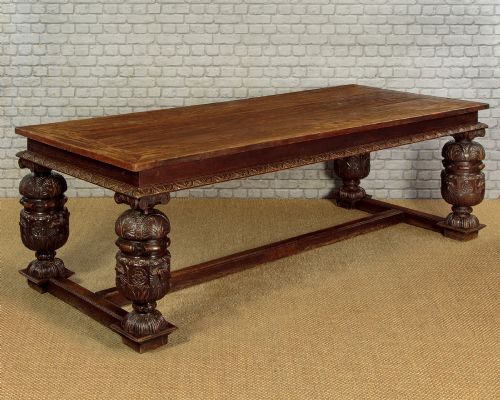
The most common examples on this page are refectory and dining tables featuring sturdy stretchers and thick timber tops. These items bridge utilitarian dining functions and decorative display through intricate relief carving.
Materials and Construction Methods
Makers constructed these tables from thick planks of oak, elm, or walnut, sometimes combining woods like oak and elm in a single top. Carpenters joined these massive timbers using traditional pegged mortise and tenon joints to ensure long-term stability under heavy use.
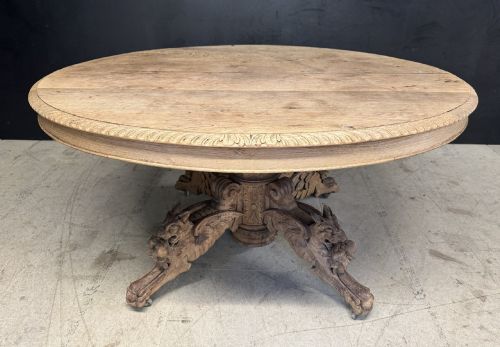
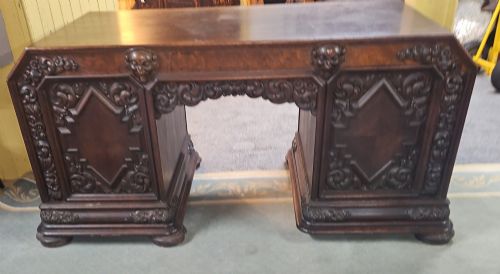
Surface ornamentation relied entirely on hand chisel work, producing deep relief carving along friezes, legs, and stretcher bases. Structural iron or brass mounts occasionally reinforced joints and high-stress areas on specific French and industrial forms.
Object forms on this page range from refectory dining tables and writing desks to butchers blocks and occasional tables.
Evaluating Mass and Carving Depth
Quality rests in the integrity of the timber, particularly where single plank tops or thick multi-plank assemblies show consistent grain and minimal structural movement. The depth and crispness of the hand carving separate competent workshop output from ordinary production.
Proportion and scale dictate the success of the piece, as heavier frames require balanced stretcher placement and solid footing to avoid visual heaviness. Original surfaces and patination achieved through decades of use elevate an example far above heavily stripped or overly sanded specimens.
The Heavy Carved Table Glossary
- Refectory table
- A long, narrow dining table originally built for monastic dining halls and characterised by sturdy legs connected by a low wooden stretcher. These items form the backbone of early oak dining furniture.
- Stretcher base
- A horizontal wooden beam connecting the legs of a table near the floor to provide additional structural rigidity. This feature is essential for supporting heavy timber tops.
- Draw leaf table
- A table equipped with underleaves that pull out from beneath the main top to extend the surface area. This mechanism allows a compact form to double its seating capacity.
- Relief carving
- A sculptural technique where figures or patterns are carved to project from a background flat surface. This method creates the shadows and depth seen on Jacobean and Renaissance revival pieces.
- Plank top
- A table surface constructed from joining multiple long boards side by side. Single and triple plank variants are common markers of early construction.
Heavy Carved Table: Frequently Asked Questions
How do I clean a heavy oak table?
Dust the surface regularly with a dry, soft cloth to prevent particulate buildup in the deep chisel work. Avoid modern silicone polishes that leave a sticky residue, opting instead for a traditional microcrystalline wax applied sparingly.
Protect the timber from direct heat sources and sudden humidity shifts to prevent the thick planks from splitting. Wipe up spills immediately using a damp cloth followed by thorough drying.
Can I use these tables daily?
These tables were originally built for heavy daily use in farmhouses, refectories, and manor halls, making them exceptionally durable. Their solid hardwood construction handles regular family meals and gatherings without issue.
Use coasters and heat mats to protect the aged finish from water rings and thermal shock. Embracing minor operational wear ensures the piece continues to develop its natural patina.
How do I identify a revival piece?
Revival furniture from the Victorian and Edwardian periods often utilises earlier seventeenth-century motifs like strapwork and lunettes on newly milled oak. Inspect the underside and joinery for machine-cut marks or modern fixings that distinguish nineteenth-century production from older work.
Examine the patination and wear patterns around the edges and stretcher bases for consistency. Authentic older pieces display uniform oxidation that matches the age of the structural joints.
What rooms suit a refectory table?
Refectory tables fit naturally into spacious dining rooms, large kitchens, or open-plan living areas where their length commands the floor space. Their narrow profile allows them to seat multiple diners comfortably without blocking surrounding pathways.
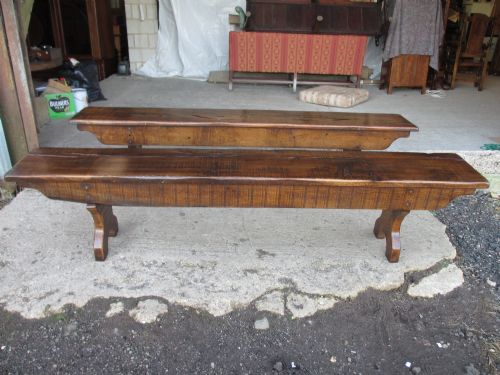
Pair them with benches or robust chairs that match the timber tone and period style. Ensure you measure the room clearance around the table to account for pulling out seating.