
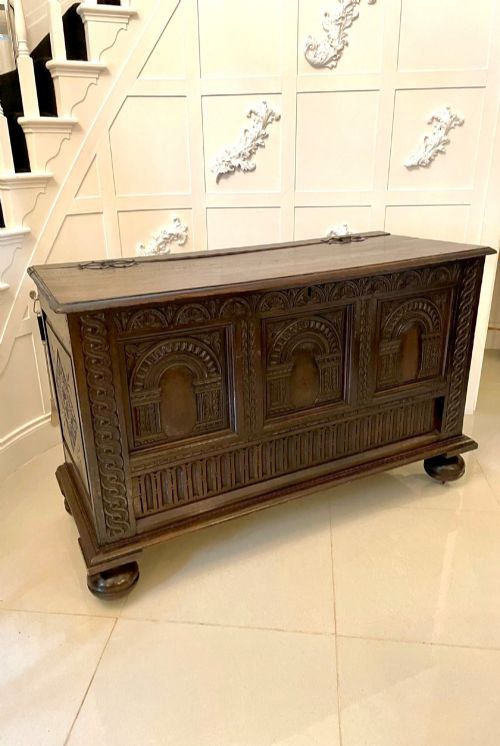
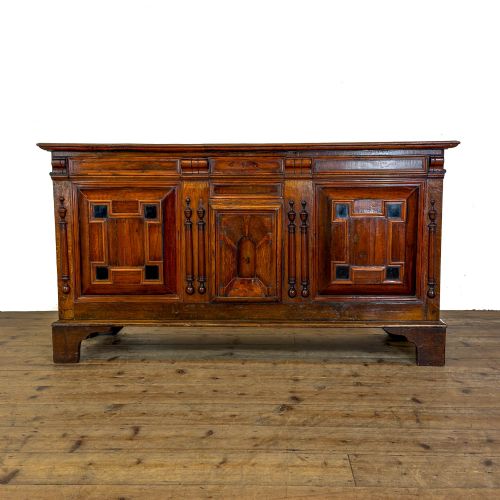
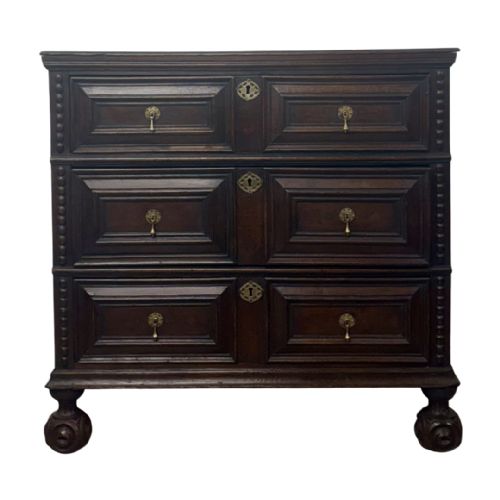
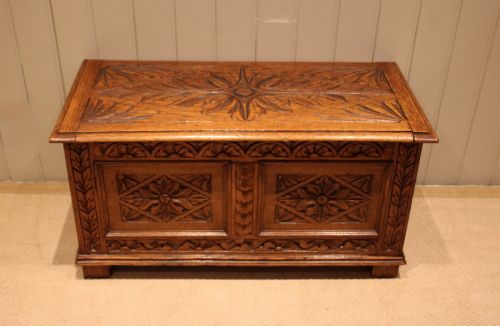
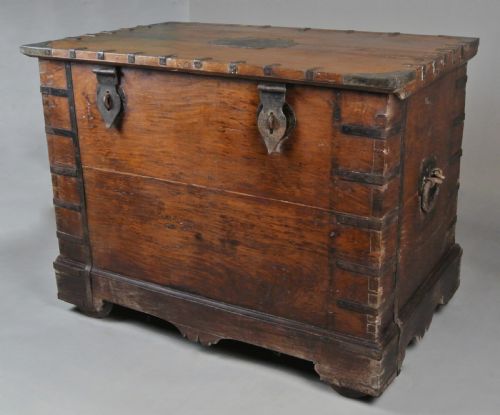
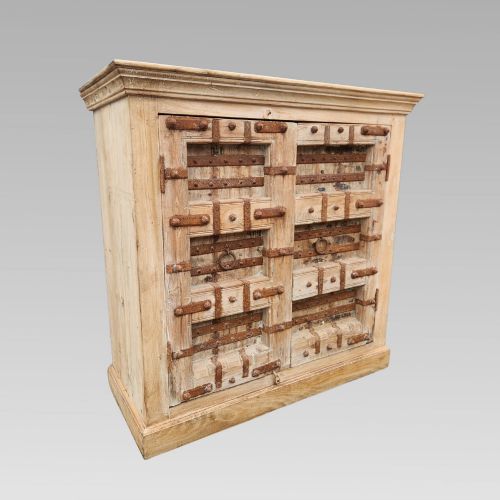
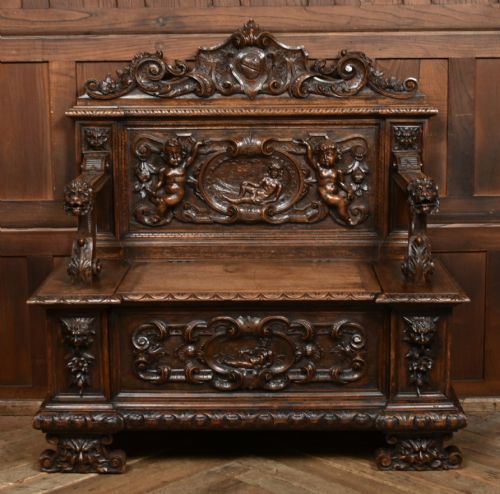
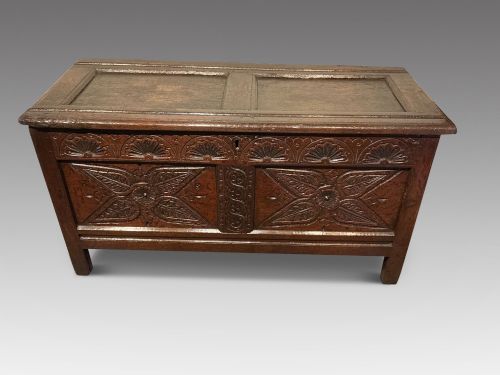

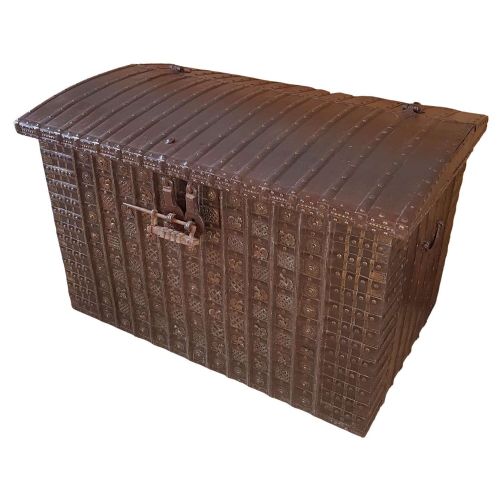


Heavy Carved Chest
A heavy carved chest brings weight and texture to a room, offering robust storage built from solid oak, teak, or walnut.
Heavy Carved Chest
A heavy carved chest serves primarily as a sturdy storage vessel, taking the form of a coffer, trunk, dowry chest, or cassapanca bench. When searching for a heavy carved chest, buyers encounter substantial pieces designed to anchor a room while concealing household goods.
The selections available span multiple centuries, including genuine seventeenth-century examples alongside nineteenth-century revivals and regional Indian or Spanish works. Oak coffers and iron-bound teak trunks dominate the forms, reflecting centuries of utilitarian domestic and regional storage requirements.
How they were made
Construction relies heavily on solid timber, with oak, teak, walnut, and hardwood forming the structural foundations of these pieces. Carpenters and joiners utilised thick panels joined by framing, complemented by hand-carved surface decoration.
Metalwork plays a functional and structural role, incorporating iron bands, braces, and brass elements to reinforce the heavy timber bodies. Locks and hinges are forged or cast by hand, securing lids and doors on trunks and dowry chests.
Regional variations represented include Spanish commodes, Italian cassapanca benches, and Indian dowry chests alongside traditional British oak coffers.
What varies in quality
Quality rests upon the integrity of the primary timber and the depth and execution of the hand-carved ornamentation. Pieces fashioned from solid oak or dense teak with crisp, deep relief carving represent higher tiers of craftsmanship.
The survival of original iron mounts, hinges, and functioning locks distinguishes superior examples. Furthermore, the proportion of original timber versus later replacement boards influences the overall integrity of the piece.
The Heavy Carved Chest Glossary
- Coffer
- A large wooden chest used for storing valuables or household goods. These typically feature a hinged lid and robust panel construction.
- Cassapanca
- An Italian wooden bench featuring a built-in chest beneath the seat. This form combines seating with substantial storage capacity.
- Damchiya
- A traditional Indian dowry chest or storage cabinet, often fitted with iron banding and intricate surface detailing. These trunks served practical storage functions in regional households.
- Ebonised wood
- Timber treated with a chemical or stain to resemble ebony. This dark finish appears on decorative furniture to create high-contrast surfaces.
Heavy Carved Chest: Frequently Asked Questions
What were heavy carved chests used for?
Historically, these chests secured valuable textiles, documents, and household provisions against theft, damp, and pests. Their robust construction allowed them to double as seating or tables in domestic interiors.
Over time, specific regional forms like dowry chests also functioned as repositories for a bride's personal belongings and wealth when entering a marriage.
How do I care for antique oak and teak chests?
Maintain these wooden surfaces by applying a traditional beeswax polish occasionally to nourish the grain. Keep the timber away from direct heat sources and dramatic humidity fluctuations to prevent warping.
Avoid harsh chemical cleaners on both the wood and any original iron or brass mounts. Gentle dusting with a soft cloth protects the aged surface patination.
How can I tell a seventeenth-century chest from a later revival?
Examine the construction methods and tool marks visible on the interior and underside of the piece. Seventeenth-century items display hand-riven timber and older joinery techniques distinct from later machinery.
Wear patterns around the handles, feet, and keyholes also provide clues to genuine age. Revival pieces from the nineteenth or twentieth century often exhibit uniform tooling and cleaner internal surfaces.
Where should I place a large chest in my home?
A heavy chest acts as a natural focal point at the foot of a bed or along an expansive hallway wall. Their flat lids make them suitable display surfaces for lamps, books, or textiles.
Ensure the floor structure can support the substantial weight of solid oak or iron-bound teak before positioning the piece.