




Heavy Carved Chair
A heavy carved chair anchors a room with substantial timber and deep relief work, offering solid seating rooted in historical revival styles.
Heavy Carved Chair
When you search for a heavy carved chair, you encounter robust seating built primarily from oak and hardwood, spanning forms from high back dining sets to imposing throne armchairs. These pieces draw heavily on historical vocabularies, presenting substantial timber frames designed to command attention in a hall, library or dining room.
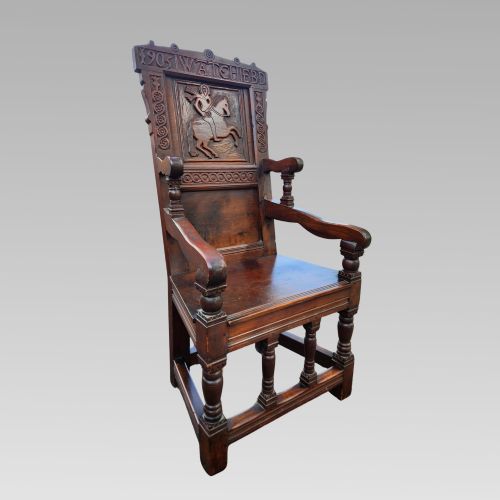
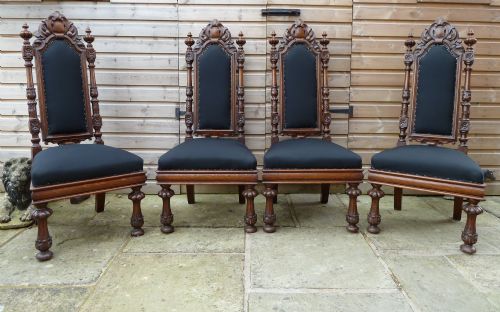
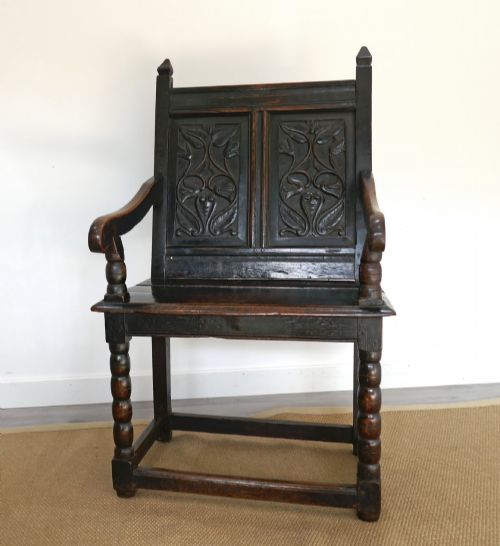
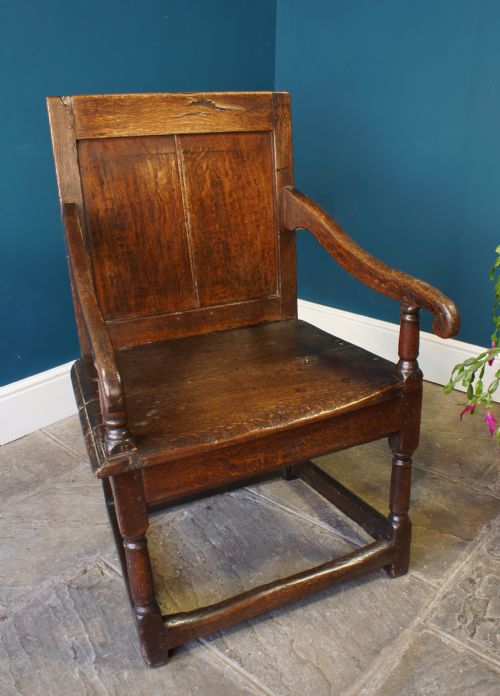
The version you are most likely to meet on this page is the Victorian or nineteenth century oak armchair, often channeling Gothic or Jacobean revival motifs through elaborate surface work. Wainscot chairs, ceremonial seats and high backed dining variants appear frequently, showing deep chisel marks and structural gravity.
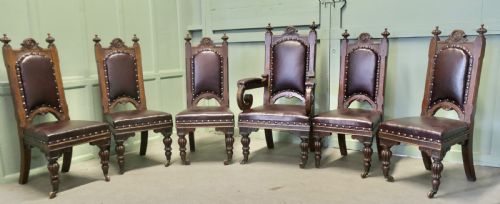
Origins stretch from seventeenth century English regional workshops to nineteenth century revival iterations, alongside twentieth century pieces and occasional examples originating from the Philippines or India. Forms encompass armchairs, elbow seats, corner chairs and sets of dining chairs sharing a dense, substantial footprint.
How they were made
Joinery relies heavily on solid oak and dense hardwoods, providing the structural mass necessary for deep chisel work and substantial frames. Timber selection prioritises mature wood capable of supporting pronounced relief carving without compromising structural integrity.
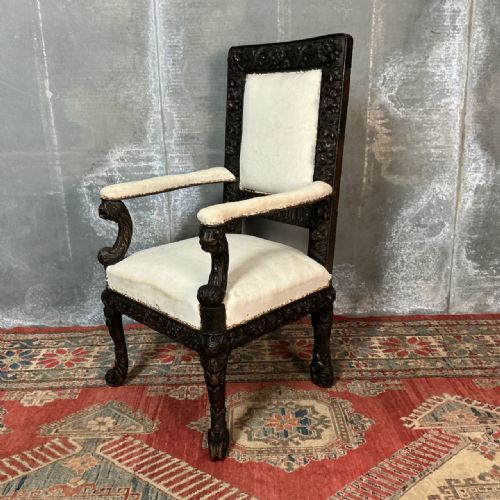
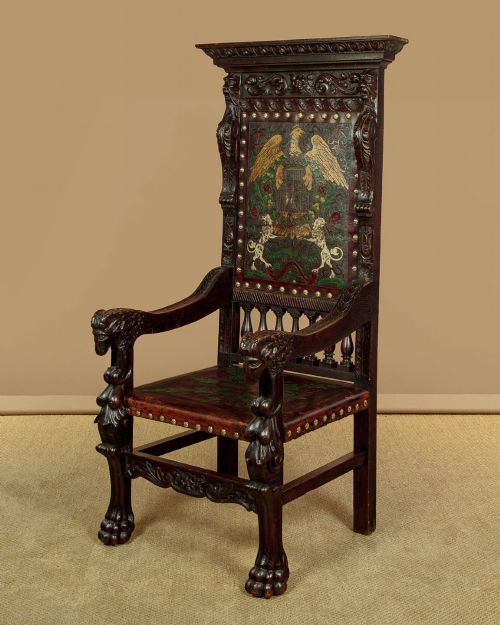
Surface embellishment involves manual carving directly into the timber, executed with gouges and chisels to create strapwork, foliate patterns, and figurative details such as hounds. Upholstery elements incorporate brass studding alongside leather, velvet, and various textiles fixed to the wooden armature.
Heavy Carved Chair Retail Price Guide 2026
Typical asking prices for heavy carved chair among the pieces listed under this phrase on Sellingantiques today, from the lower quarter to the upper quarter. They describe what is for sale here now, not the wider market.
Some nineteenth century examples incorporate carved hounds peering out from the woodwork, keeping a perpetual watch over the morning room.
What varies in quality
The depth and crispness of the chisel work separates ambitious execution from routine production, distinguishing sharp relief from softened or mechanical pressing. Master carvers achieve clean undercut details and rhythmic consistency across complex geometric or figurative panels.
Structural heft and timber selection dictate the fundamental grade of the piece, favouring dense, well-figured oak with tight grain over lighter secondary woods. The integration of the joints within heavy frames determines long term stability under daily use.
S&H Jewell
The Heavy Carved Chair Glossary
- Wainscot chair
- An early wooden armchair constructed with panelled backboards and solid timber arms, originating when wood panelling lined domestic walls.
- Gothic Revival
- A nineteenth century architectural and decorative movement resurrecting medieval pointed arches, tracery, and heavy ecclesiastical motifs in furniture.
- Jacobean Revival
- A style looking back to the early seventeenth century, characterised by geometric moulding, strapwork, and dark, heavy turned oak components.
- Throne chair
- An imposing, high backed armchair elevated in scale and ornamentation, designed to serve as a focal point rather than standard seating.
- Elbow chair
- A traditional term for an armchair with low arms, often used in dining rooms or studies alongside matching side chairs.
Heavy Carved Chair: Frequently Asked Questions
What is a wainscot chair?
A wainscot chair is an early form of wooden armchair constructed with panelled backs and solid timber seats. These pieces date from the seventeenth century and later revival periods.
They derive their name from wainscot oak used in interior panelling. Their rigid construction offers a direct link to early domestic interiors.
How do I identify Gothic revival furniture?
Gothic revival pieces display architectural motifs borrowed from medieval churches, including pointed arches, trefoils, and tracery. Carved details often incorporate religious symbols or heraldic beasts.
Heavy oak construction and dark finishes reinforce the medieval aesthetic. This style gained immense popularity during the Victorian era.
Where should I place a throne chair?
Throne chairs suit spaces with high ceilings and substantial proportions, such as entrance halls, libraries, or large dining rooms. Their imposing scale demands sufficient clearance to display the carved back and arms.
Pairing them with simpler side chairs creates a balanced interior arrangement. They function primarily as statement pieces rather than casual seating.
How do I care for heavy oak furniture?
Heavy oak furniture benefits from regular dusting with a soft, dry cloth to prevent grit accumulation in deep carvings. Avoid placement near direct heat sources to protect the dense timber from splitting.
Occasional application of appropriate wax feeds the wood and maintains the finish. Leather or fabric elements require specialised cleaning depending on their specific composition.