



Heavy Brass Hardware
Heavy brass hardware comprises robust functional fittings for doors and walls, offering tactile solidity and enduring metalwork for period interiors.
Heavy Brass Hardware
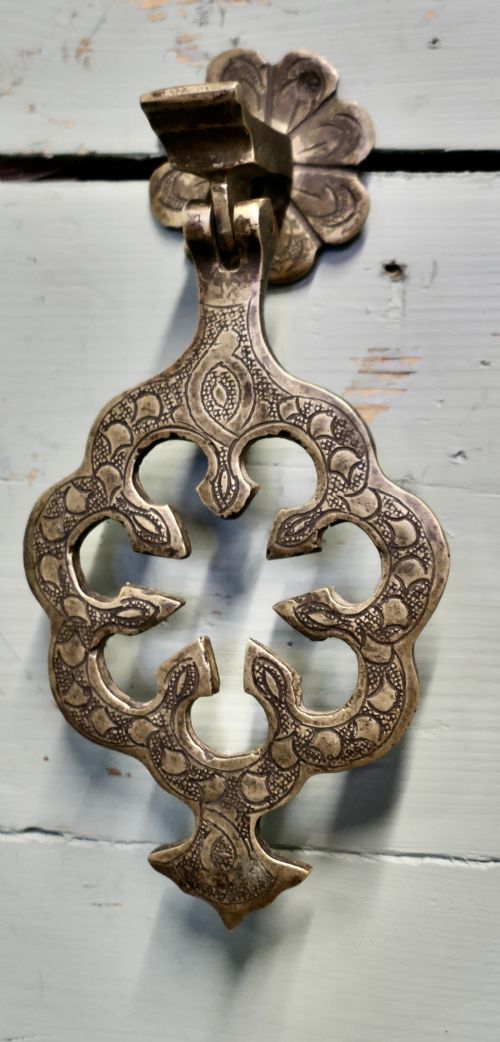
Heavy brass hardware encompasses utilitarian and decorative metal objects designed for architectural use, including door knockers, handles, finger plates, coat hooks, hinges, and padlocks. When searching for heavy brass hardware, buyers encounter substantial items built to withstand daily use in domestic and commercial settings.
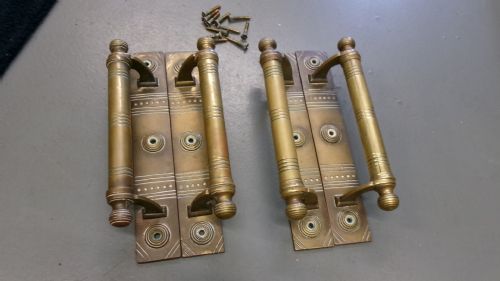
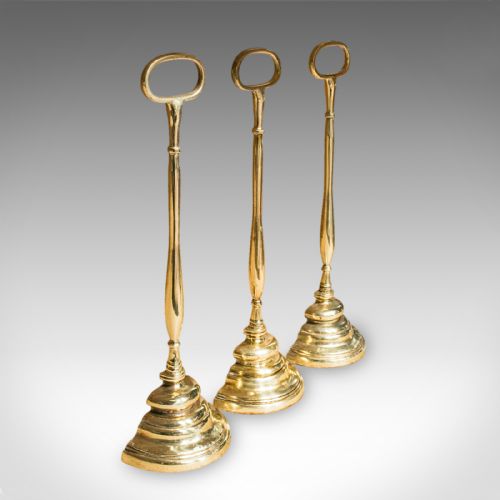
The pieces available originate primarily from the Victorian and Edwardian eras, alongside examples from the 19th century and the 1920s to 1930s. Door knockers and door stops feature prominently in the selection, alongside pairs of matching door handles and robust hinges with decorative finials.
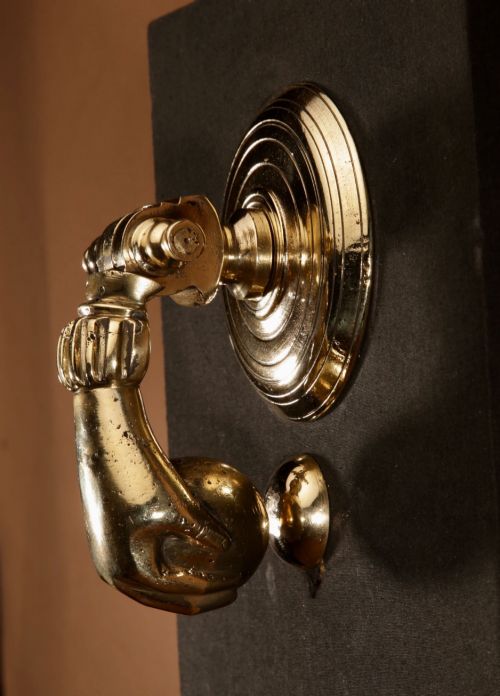
Makers and designers utilised enduring metal alloys to produce functional items shaped as hands, anchors, lions, and dolphins, alongside geometric forms like octagonal pulls. These objects combine practical utility with distinct period styling, ranging from Victorian Gothic and Arts and Crafts to Art Deco and maritime motifs.
Materials and production methods
Items in this category are fashioned predominantly from solid brass, cast brass, and bronze, often utilising heavy-gauge metal to achieve substantial weight and physical presence. Iron components also appear in specific functional mechanisms, while crystal is integrated into select pulls for decorative contrast.
Casting is the primary manufacturing technique evident in the listings, allowing makers to produce complex forms such as lion masks, hands, and Maltese dolphins with deep relief. Piercing and polishing techniques further refine the metal surfaces, creating smooth operational handles alongside textured or polished bronze finishes.
Heavy Brass Hardware Retail Price Guide 2026
Typical asking prices for heavy brass hardware among the pieces listed under this phrase on Sellingantiques today, from the lower quarter to the upper quarter. They describe what is for sale here now, not the wider market.
Object types span door knockers, coat hooks, hinges, padlocks, and finger plates across the 19th and early 20th centuries.
Evaluating quality and construction
Quality in heavy brass hardware rests upon the thickness of the metal gauge and the crispness of the casting. Pieces displaying deep, well-defined relief work and substantial physical weight represent superior craftsmanship compared to thinner, lighter pressings.
The integrity of original mechanisms and fixings, such as accompanying keys for padlocks or matching sets of hinges and handles, distinguishes exceptional survivals from isolated components. The quality of the finish, whether polished bronze or patinated brass, reflects the original ambition of the design and subsequent preservation.
The Heavy Brass Hardware Glossary
- Cast brass
- Metal poured into a mould to form solid, three-dimensional objects. This technique enables intricate detailing like figural knockers and decorative hinges.
- Finger plate
- A flat protective plate fitted behind a door handle or knob. It prevents the door surface from becoming soiled through frequent touching.
- Doctors knocker
- A specific style of brass door knock featuring a separate knocker ring and striking plate. Originally associated with medical professionals, these items allowed for clear signaling.
- Finial
- A decorative terminal ornament attached to the end of a hinge or architectural fitting. They provide a finished aesthetic accent to functional hardware.
- Door butler
- A heavy weighted object designed to keep a door propped open. These pieces combine domestic utility with sculptural form.
Heavy Brass Hardware: Frequently Asked Questions
How do I date Victorian door hardware?
Dating relies on stylistic markers combined with manufacturing methods typical of the 19th century, such as sand-casting and heavy-gauge brass composition.
Examining the screw types, wear patterns, and specific design motifs like Gothic revival or lion masks helps narrow the period of production.
Can antique brass hardware be polished?
Polishing depends on the desired appearance and the presence of historic patina. Many collectors prefer to maintain the darkened surface oxidation accumulated over decades.
If polishing is desired for bright brass items, gentle metal cleaners preserve the underlying cast details without removing surface definition.
Are these items suitable for modern doors?
Most heavy brass hardware retains standard mechanical dimensions suitable for installation on standard interior and exterior doors. Ensuring correct backset measurements and weight capacity prevents sagging.
Care should be taken with antique fixings to match wood screw sizes safely without stripping existing screw holes.
What is the difference between brass and bronze hardware?
Brass is an alloy primarily composed of copper and zinc, producing a bright golden tone when polished. Bronze consists mainly of copper combined with tin, yielding a darker, reddish-brown hue.
Both materials offer exceptional durability, but bronze frequently displays a deeper, warmer natural patina over time.