

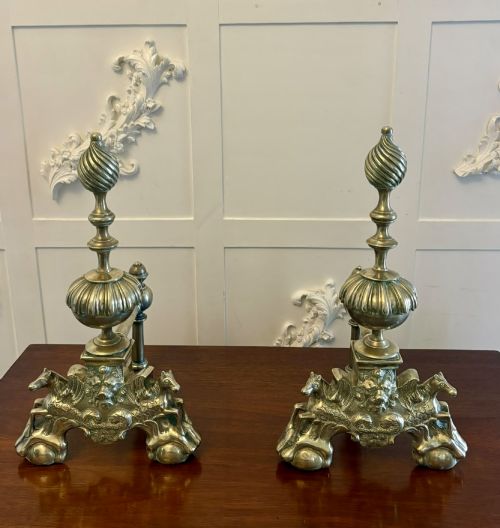


Heavy Brass Firedogs
Heavy brass firedogs anchor an open hearth with substantial weight and presence, offering both structural support for logs and a distinct decorative focus.
Heavy Brass Firedogs
Heavy brass firedogs, also known as andirons or fire dogs, form a matching pair placed within an open fireplace to elevate logs for better airflow and combustion. The selection centres on Victorian and early twentieth-century examples, ranging from simple nineteenth-century brass forms to ornate revivals.
The inventory demonstrates various historical revivals including seventeenth-century, Dutch Baroque, and Victorian classical styles. These pieces function as both practical hearth accessories and decorative objects designed to catch the firelight.
How they were made
Makers utilised casting techniques to shape molten brass and cast iron into robust structural components and decorative finials. Iron often forms the underlying billet or horizontal bar that endures direct heat, while brass provides the visible ornamental front.
Gilt brass surfaces appear alongside polished cast brass, requiring careful foundry work to achieve crisp detailing in styles spanning from Victorian Gothic Revival to Neo-Classical.
Heavy Brass Firedogs Retail Price Guide 2026
Typical asking prices for heavy brass firedogs among the pieces listed under this phrase on Sellingantiques today, from the lower quarter to the upper quarter. They describe what is for sale here now, not the wider market.
What varies in quality
Quality rests in the crispness of the casting and the sheer heft of the metalwork, distinguishing monumental or finely cast pairs from standard utility items. Substantial weight indicates thick walls and robust construction capable of supporting heavy fuel logs.
Artistic execution in the decorative motifs, such as Baroque scrolling or classical detailing, marks the difference between mass production and superior foundry craftsmanship.
The Heavy Brass Firedogs Glossary
- Firedog
- An alternative name for an andiron used to support logs in an open hearth. These pairs stand on legs with a horizontal bar extending backward.
- Gilt brass
- Brass treated with a gold-coloured finish or gilding to enhance its appearance. This material reflects firelight brightly in a hearth setting.
- Billet bar
- The horizontal iron bar that extends back from the firedog to hold the logs. It bears the direct heat and weight of the firewood.
Heavy Brass Firedogs: Frequently Asked Questions
How do you use firedogs?
Firedogs sit in pairs inside the fireplace hearth to elevate logs above the floor of the grate or brickwork. This elevation permits air to circulate underneath the wood for a cleaner and hotter burn.
The horizontal bars extending backward support the fuel, while the decorative fronts remain visible outside the fireplace opening.
What is the difference between firedogs and andirons?
Firedogs and andirons are simply different terms for the exact same hearth furniture. Both words describe the paired metal supports used for burning wood in an open fireplace.
Regional preferences and historical dealer terminology typically determine which word appears on a specific listing.
How do you clean brass firedogs?
Cleaning depends on the desired finish, as some collectors prefer an aged patina while others favour a bright polish. Warm soapy water removes soot and surface grime accumulated from hearth use.
Harsh chemical abrasives should be avoided to protect antique metal surfaces and any historical gilt finishes.
Can these be used in a working fireplace?
Most antique pairs incorporate durable cast iron and brass components designed to withstand hearth conditions. The iron billet bars endure the direct heat of burning logs.
Checking the structural integrity of the iron components ensures safe usage in an active open hearth.