



Hearth Log Store Bin
A hearth log store bin keeps dry fuel close to the fire in brass, copper, iron, or wood.
Hearth Log Store Bin
A hearth log store bin serves as a fireside receptacle for fuel, keeping timber and coal contained beside the fireplace. When searching this phrase, you encounter practical vessels designed for domestic utility in various historic periods.
The pieces on this page span the eighteenth, nineteenth, and early twentieth centuries, encompassing Victorian, Edwardian, and Arts and Crafts examples. You will frequently meet copper pots, brass buckets, and oak or mahogany coal boxes.
Forms range from coopered wooden buckets with metal bands to heavy metal bins and carved wooden purdoniums. They originate from British, French, and Belgian workshops, serving both functional fuel storage and decorative hearthside enhancement.
How they were made
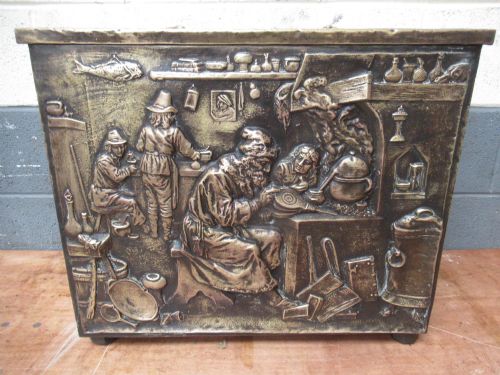
Makers utilised durable metals such as brass, copper, and iron, often shaping them through hammering, spinning, or riveting. Metal bins frequently feature applied brass bands, handles, and decorative mounts.
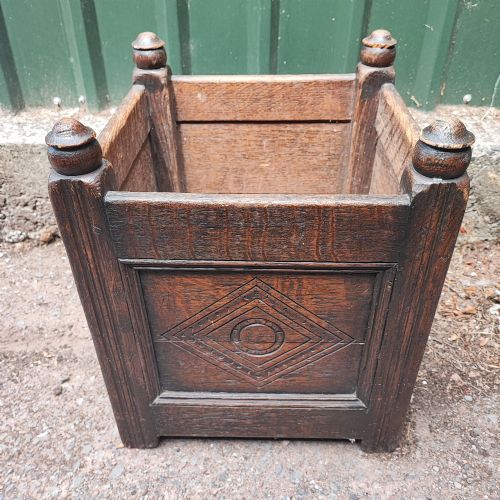
Wooden versions rely on traditional cabinetmaking and cooperage techniques, employing solid oak, mahogany, walnut, pine, and country woods. Staves are held together with iron or brass hoops, while others utilise carved panels and dovetailed joints.
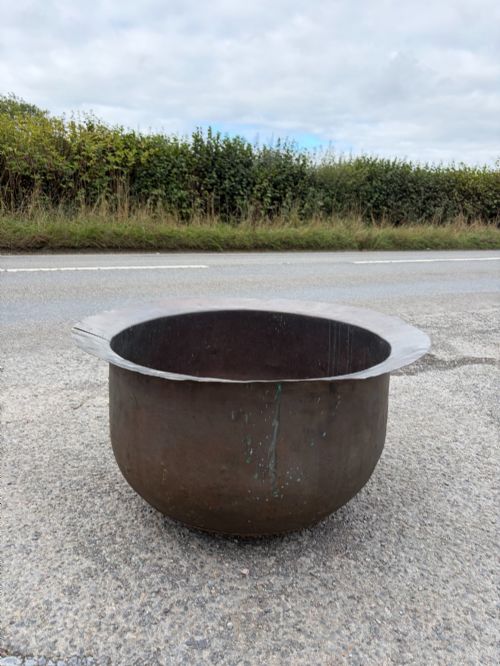
Some copper bins started life measuring grain before retiring permanently to a warm life by the hearth.
What varies in quality
The calibre of a hearth log store bin rests upon the weight of the metal and the selection of timber. Heavier gauge copper and brass combined with dense, figured oak or walnut denote superior construction.
Execution of detail separates standard utility items from finer examples. Hand-beaten work, secure dovetailing, and original cast brass handles or decorative embossing elevate the piece.
The Hearth Log Store Bin Glossary
- Purdonium
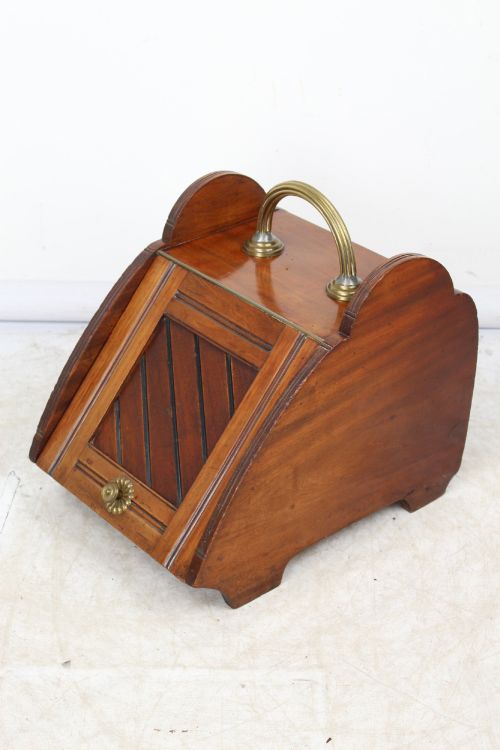
- A specialised coal box or cabinet, often featuring a sloping front or tipping mechanism to dispense fuel. These units frequently incorporate a built-in compartment for a shovel.
- Coopered
- A method of construction where curved wooden staves are fitted together and bound with metal hoops, traditionally used for buckets and barrels.
- Arts and Crafts
- A design movement emphasising handcraftsmanship, simple forms, and honest materials, often seen in hammered copper and ironwork on this page.
- Grain measure
- A cylindrical agricultural container, sometimes repurposed as a heavy copper or wooden fireside bin.
- Coal scuttle
- A portable container with a handle, designed for carrying coal from an exterior store to the hearth.
Hearth Log Store Bin: Frequently Asked Questions
What is a hearth log store bin?
A hearth log store bin is a functional container designed to hold firewood, kindling, or coal safely beside a fireplace.
These vessels keep domestic fuel tidy and accessible, constructed from durable materials like copper, brass, iron, and timber to withstand daily fireside use.
How were these bins used originally?
They served to transport and store solid fuel such as logs, peat, or coal directly beside the hearth for immediate burning.
Many designs included drop-down fronts, hinged lids, or internal metal liners to contain ash, dust, and debris while loading fuel onto the fire.
How do I date a wooden log box?
Dating relies on timber selection, construction methods, and prevailing decorative styles seen across different periods.
Solid oak, mahogany, and pine construction combined with hand-cut dovetails or coopered staves help align pieces with Georgian, Victorian, or Edwardian eras.
Are brass and copper bins authentic?
Authentic period bins exhibit the natural weight, patina, and construction techniques typical of nineteenth and early twentieth-century metalworking.
Old fixings, hand-beaten surfaces, and historic wear distinguish genuine antique copper pots and brass buckets from modern reproductions.
How do I care for antique metal bins?
Maintenance involves gentle cleaning to preserve the historic surface and natural verdigris or polished metal finish.
Avoid abrasive chemicals that strip age, and ensure timber or metal interiors remain dry to prevent corrosion of the historic structure.