



Hearth Fire Back
These heavy iron hearth fire back plates protect the masonry and radiate heat into the room.
Hearth Fire Back
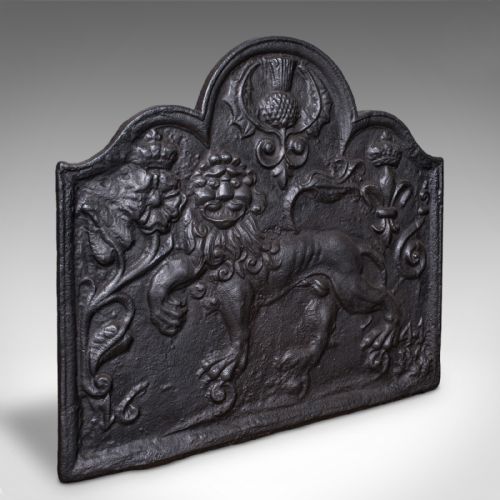
A hearth fire back is a heavy cast or wrought iron plate placed against the rear wall of an open fireplace. When you search for a hearth fire back, you are looking at functional Victorian and Georgian ironwork designed to absorb and throw heat forward into the room.
The pieces you meet most often on this page date from the nineteenth century, including Late Victorian and Georgian examples. They range from simple utilitarian reflectors to decorative panels featuring classical motifs.
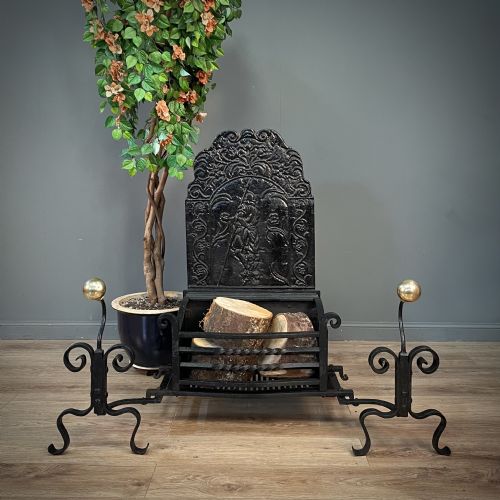
Many of these items appear alongside related fireplace accessories such as grates, fenders, and andirons. They form the structural and decorative core of a traditional open hearth.
Materials and construction
These pieces are predominantly made from cast iron, utilising the sand casting method common in British foundries of the nineteenth century. Molten metal was poured into moulds to create solid panels with raised relief designs.
Some examples incorporate wrought iron components, particularly in associated grates, fire baskets, and structural frames. Brass elements occasionally appear as decorative highlights on specific period hearth fittings.
Hearth Fire Back Retail Price Guide 2026
Typical asking prices for hearth fire back among the pieces listed under this phrase on Sellingantiques today, from the lower quarter to the upper quarter. They describe what is for sale here now, not the wider market.
Tree of life motifs on these iron plates brought a touch of woodland folklore right into the nineteenth-century parlour.
Assessing quality and weight
The distinction between standard utility items and finer examples rests on the crispness of the cast relief work and the thickness of the metal. Superior pieces display deep, well-defined moulding in styles such as Neoclassical Revival and Tudor Revival.
Weight and solidity determine the structural substance of the piece. Heavier castings indicate greater durability and a more substantial presence within the fireplace opening.
The Hearth Fire Back Glossary
- Fireback
- A heavy metal plate placed at the back of a fireplace to protect the wall and reflect heat. They often feature cast coats of arms, historical scenes, or botanical motifs.
- Cast Iron
- An iron-carbon alloy poured into a mould in a molten state. It is the primary material used for heavy fireplace plates due to its resistance to high temperatures.
- Wrought Iron
- Tough, malleable iron beaten into shape by a smith rather than cast in a mould. It is typically found in accompanying fire baskets, grates, and andirons.
- Andirons
- Horizontal metal bars supported by legs, used to hold logs in an open fireplace. They frequently sit directly in front of the fire back plate.
- Neoclassical Revival
- A nineteenth-century style drawing inspiration from classical Greek and Roman architecture and ornamentation. Pieces in this style often feature urns, swags, and symmetrical geometric borders.
Hearth Fire Back: Frequently Asked Questions
What is a hearth fire back used for?
A hearth fire back serves two main purposes in an open fireplace. It absorbs heat from the flames and radiates it back into the room long after the fire dies down.
Additionally, it acts as a thermal barrier that protects the vulnerable brick or stone masonry at the back of the chimney breast from intense direct heat.
How do I measure for a fire back?
You need to measure the width, height, and depth available inside your fireplace opening before selecting a plate. Ensure the back fits comfortably against the rear wall without interfering with the grate or andirons.
Consider the weight of the piece as well, ensuring your hearth and rear wall can adequately support a heavy iron casting.
Are these pieces suitable for active fires?
Cast iron fire backs are specifically designed to withstand high temperatures and direct exposure to flames. They perform reliably in active daily hearths.
Regular use requires minimal maintenance, though you should check periodically for thermal stress or cracking in older, thinner plates.
How do I date a Victorian fire back?
Dating relies on stylistic clues such as Gothic revival motifs, neoclassical symmetry, or specific maker marks where present. Victorian examples often show distinct nineteenth-century industrial casting techniques.
Comparing the border decoration and relief depth with known period patterns helps narrow down the decade of manufacture.