


Hearth Ash Bucket
These hearth ash bucket pieces are robust metal containers designed to store fuel and clear grates, bringing period character to a working fireplace.
Hearth Ash Bucket
A hearth ash bucket takes several distinct shapes across the periods represented, ranging from traditional helmet scuttles to cylindrical bins and open buckets. The pieces span the Georgian, Victorian, and Edwardian eras, alongside Arts and Crafts and Art Nouveau designs.
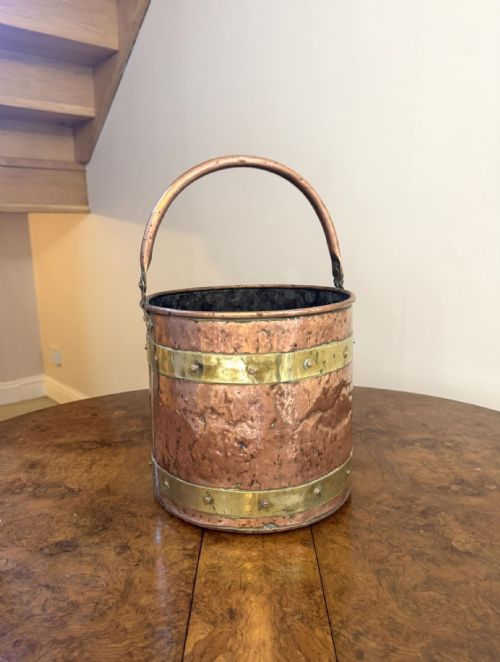
The most common survival on this page is the copper helmet scuttle, often bolstered with brass handles, rims, and paw feet. These vessels served beside the hearth to hold coal, logs, or kindling before moving into domestic retirement.
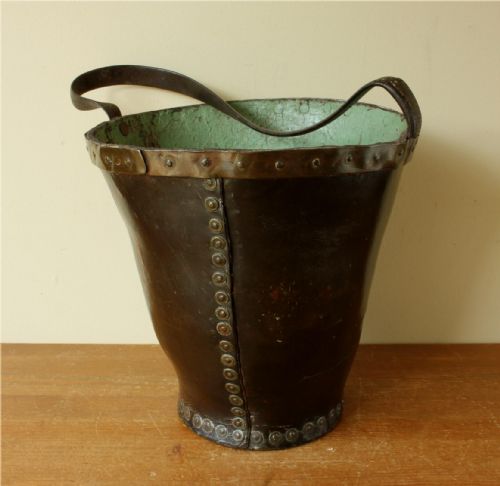
Earlier Georgian examples favour thick leather with copper studding or hammered sheet copper, while late nineteenth-century items embrace the hand-beaten surfaces typical of the Arts and Crafts movement.
Materials and construction
Makers relied primarily on sheet copper and brass, joining heavy panels with visible rivets and reinforcing the rims with sturdy bands of metal. Handles were cast in brass and secured firmly to the body to bear the heavy weight of coal.
Leather construction appears in early fire buckets, shaped and stitched before being studded with copper nails for strength and longevity. Wooden accents, including ebonised elements and swing handles, provide contrast against the polished metal surfaces.
Listings span the Georgian, Victorian, and Edwardian periods, featuring materials from riveted copper and brass to ebonised wood and leather.
Build and finishing
Quality rests in the thickness of the metal sheet and the integrity of the riveted joints, which indicate how much daily heavy work a vessel was built to withstand. Finer pieces display crisp hand-hammering and carefully cast brass mounts rather than mass-produced stamped fittings.
Proportion and balance dictate the aesthetic success of a bucket, with superior examples maintaining clean lines and secure, well-fitted swing handles that show little wear at the pivot points.
Benham & Froud
The Hearth Ash Bucket Glossary
- Helmet scuttle
- A coal container featuring a high, sloping rim reminiscent of a classical helmet, designed to pour fuel cleanly into the grate. This shape dominated Victorian and Edwardian firesides.
- Coal hod
- A deep metal container with a flat base and a single handle, built specifically for carrying fuel from the cellar to the hearth.
- Riveted
- Joined together using short metal pins hammered flat at the ends. This technique provides immense structural strength to copper and iron vessels.
- Ebonised wood
- Timber treated with a dark finish to imitate ebony. It frequently appears on handles and knobs of late nineteenth-century metalwork.
Hearth Ash Bucket: Frequently Asked Questions
What is a hearth ash bucket?
A hearth ash bucket is a durable metal or leather container used historically to tend fires, clear out ash, and store coal or kindling near the fireplace.
Today, these vessels are frequently repurposed as log bins, umbrella stands, or waste paper baskets in traditional and modern interiors alike.
How do I date an antique coal bucket?
Dating relies on observing the materials, manufacturing methods, and stylistic cues present in the construction. Georgian pieces often utilise thick leather and hand-forged iron, while Victorian and Edwardian examples lean heavily on bright polished copper and cast brass.
Arts and Crafts pieces from the late nineteenth and early twentieth centuries display distinct hand-beaten textures and tavern motifs.
Were these buckets used for ash or coal?
Many vessels served dual purposes depending on their build, acting as coal scuttles to feed the fire or as robust fire buckets to transport water in emergencies.
Leather examples with thick pitch linings were strictly intended for fire safety, whereas copper and brass iterations held dry fuel.
How should I clean a copper bucket?
Maintenance depends entirely on the desired finish, as many collectors prefer to leave a dark, undisturbed historical patina rather than a bright shine.
If polishing is desired, use a mild metal cleaner suitable for copper and brass, avoiding abrasive pads that can scratch the vintage surface.