





Hardwood Display Shelving
Hardwood display shelving brings together versatile tiered furniture designed to showcase prized objects with the rich warmth of dense timbers.
Hardwood Display Shelving
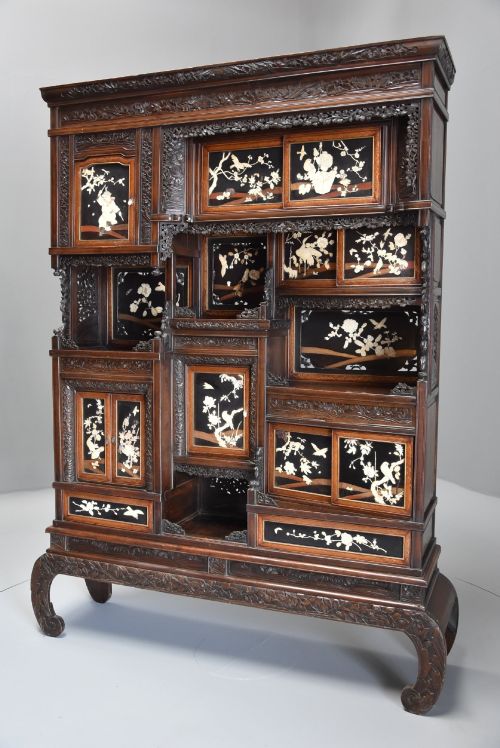
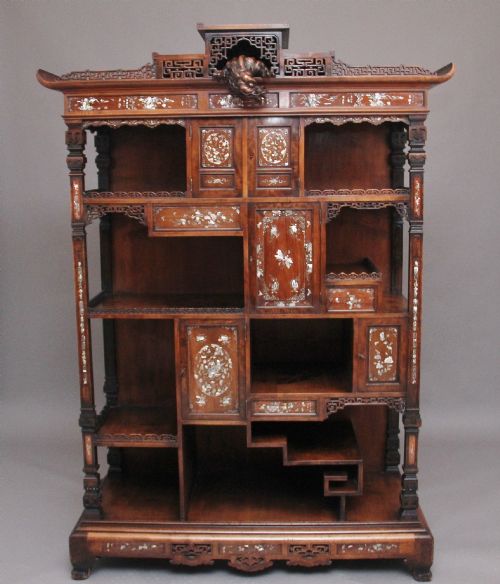
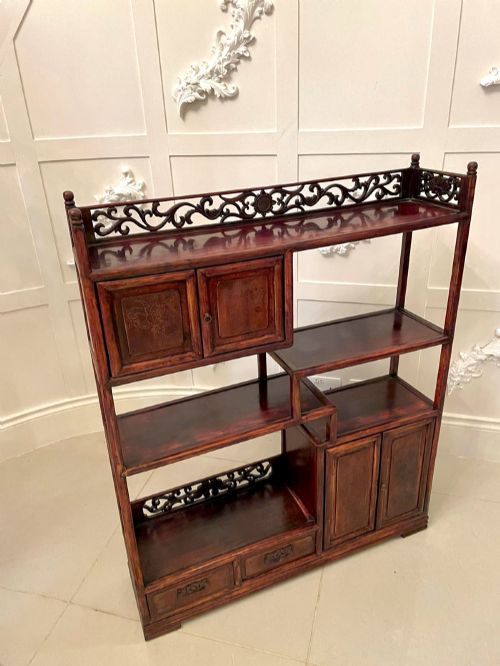
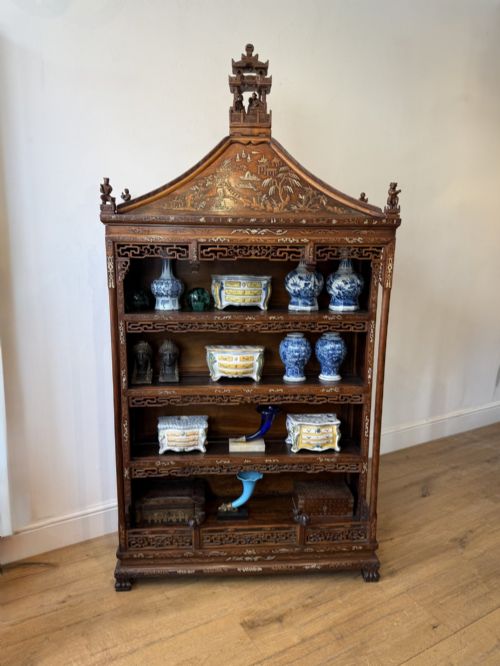
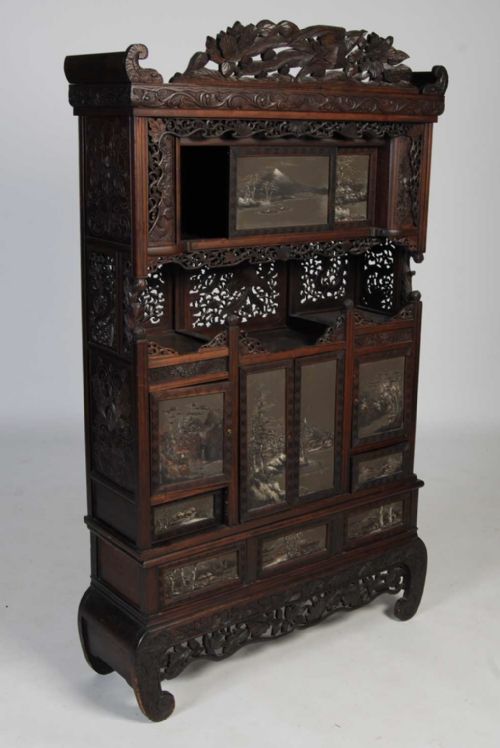
When you search for hardwood display shelving, you are looking at open and closed tiered furniture designed to hold decorative objects and curiosities. The pieces on this page span the nineteenth and early twentieth centuries, drawing heavily upon Chinese export, Qing Dynasty, and Japanese Meiji period traditions alongside Indian and French interpretations.
Origins stretch across Asian and European workshops influenced by global trade, including Anglo-Indian colonial pieces and French Japonisme designs. Each piece reflects the functional need to display collections while serving as a focal point in a room.
Materials and Construction
Makers utilised heavy timbers such as rosewood and elm to build sturdy frames capable of supporting tiers of shelves without sagging. These hardwoods were chosen for their deep natural grain and structural integrity under intricate carving.
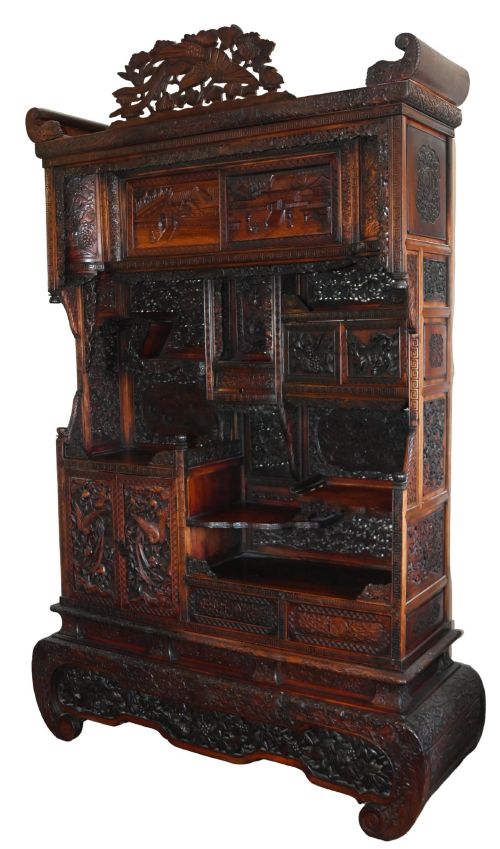
Surface decoration frequently involved intricate relief carving, contrasting bone inlay, and mother of pearl detailing set directly into the wood. Lacquer finishes and brass hardware also appear, providing structural reinforcement and visual contrast against the dark timber.
Hardwood Display Shelving Retail Price Guide 2026
Typical asking prices for hardwood display shelving among the pieces listed under this phrase on Sellingantiques today, from the lower quarter to the upper quarter. They describe what is for sale here now, not the wider market.
The listings span the nineteenth and early twentieth centuries, featuring materials like rosewood, brass, and mother of pearl across Chinese and Japanese styles.
Variations in Quality
Quality in these pieces rests upon the depth and precision of the carving, particularly where panels meet and joints are formed. Profusely carved surfaces require immense skill from the maker to maintain crisp edges and balanced symmetry across multiple tiers.
The selection of timber and the stability of the joinery dictate the longevity of a display piece. Denser rosewoods and well-seasoned hardwoods hold complex geometric or floral motifs far better than softer alternatives over decades of use.
The Hardwood Display Shelving Glossary
- Shodana
- A traditional Japanese display cabinet featuring asymmetrical shelving, sliding doors, and small compartments. These pieces were designed to exhibit art objects and ceramics.
- Étagère
- A piece of furniture consisting of open shelves rising one above the other for displaying ornaments. Originating in France, the form was adopted globally during the nineteenth century.
- Whatnot
- A freestanding piece of furniture with multiple tiers of shelves used for books or ornaments. They typically stand in corners or against walls to maximise vertical display space.
- Hongmu
- A traditional Chinese term denoting dense, dark hardwoods used for fine furniture making. It translates literally to red wood and encompasses several heavy timber species.
Hardwood Display Shelving: Frequently Asked Questions
What is hardwood display shelving used for?
These pieces were historically built to display treasured collections of ceramics, bronzes, and curiosities within a formal interior.
Today, they serve the exact same purpose, offering structured vertical space to exhibit objects while adding architectural interest to a room.
How do I identify a Meiji period cabinet?
Meiji period Japanese cabinets often display intricate carved motifs, asymmetrical shelving arrangements known as shodonas, and fine attention to detail.
They frequently incorporate regional timber work and traditional joinery methods distinct from European furniture of the same era.
Where were Chinese export cabinets made?
Chinese export cabinets were produced in workshops across China specifically for international markets in Europe and America during the nineteenth and early twentieth centuries.
These pieces often blend traditional Qing Dynasty forms with Western spatial requirements for display furniture.
How do I care for antique hardwood furniture?
Antique hardwood benefits from consistent indoor humidity levels and protection from direct sunlight to prevent the timber from drying out or splitting.
Dusting with a dry, soft cloth is usually sufficient for maintenance, avoiding harsh chemical polishes that can damage the original finish.