




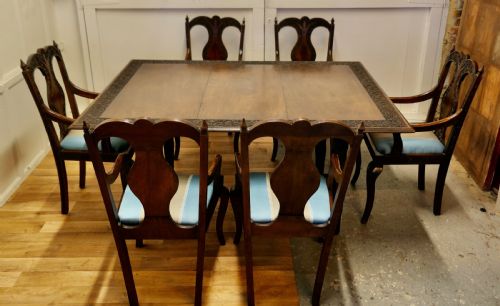


Hardwood Dining Furniture
Hardwood dining furniture brings together robust timbers and regional carving traditions from distant colonial outposts and oriental workshops.
Hardwood Dining Furniture
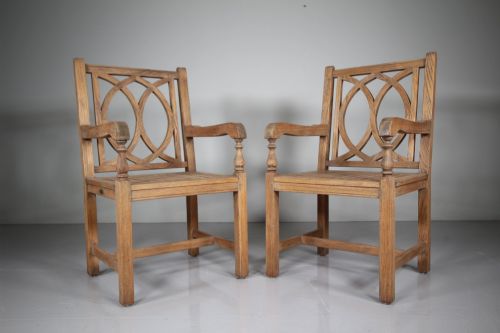
Hardwood dining furniture encompasses large tables, trestles, benches, and substantial chairs created to withstand formal meals and daily use. These pieces reflect diverse international aesthetics, including Anglo-Indian colonial designs, Chinese Qing Dynasty style, and Cape Dutch forms.
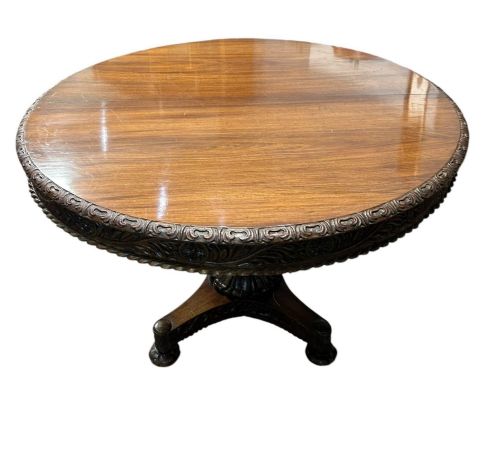
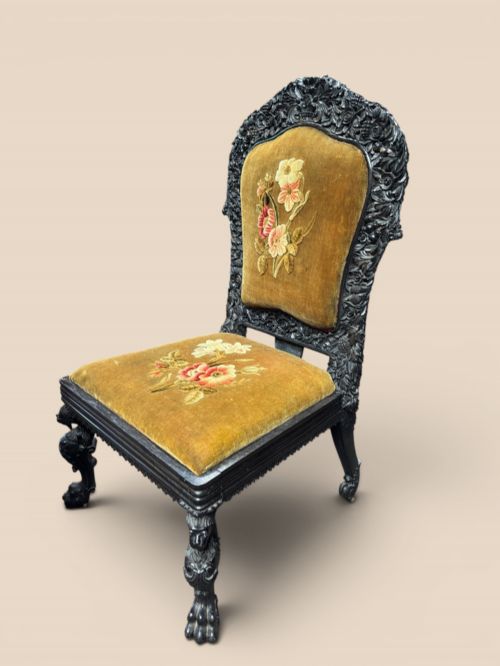
Buyers browsing this selection will frequently encounter side chairs, centre tables, and dining suites originating from the nineteenth century. Common configurations range from heavy carved side chairs to round dining tables accompanied by seating.
The regional origins span British India, Burma, South Africa, and China, bringing together heavy tropical timbers and intricate indigenous craftsmanship. Each object represents a distinct chapter of international trade and local cabinet-making traditions.
How they were made
Makers utilised dense exotic timbers such as padauk wood, teak, and ebony, valued for their durability and deep natural grain. These heavy lumbers required skilled hand-working to shape sturdy frames and support substantial table tops.
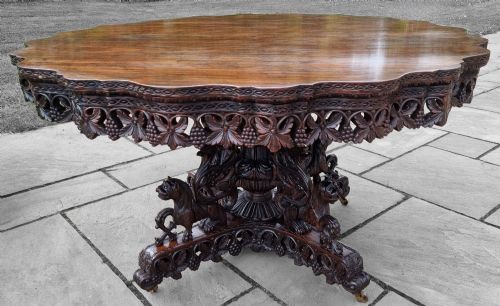
Carvers decorated surfaces with detailed motifs using hand chisels and gouges, cutting deep relief patterns directly into the solid wood. Joints were pegged or dowelled to handle the expansion and contraction of dense tropical hardwoods in changing climates.
Upholstery elements occasionally incorporated silk or velvet fabrics to soften seating, secured with traditional tacks. Metal components such as brass hardware appeared on campaign-style pieces designed for disassembly and transport.
Hardwood Dining Furniture Retail Price Guide 2026
Typical asking prices for hardwood dining furniture among the pieces listed under this phrase on Sellingantiques today, from the lower quarter to the upper quarter. They describe what is for sale here now, not the wider market.
Materials appearing across current listings include teak, padauk wood, brass, ebony, and velvet upholstery.
What varies in quality
Quality rests upon the depth, sharpness, and symmetry of the hand carving across structural elements and table aprons. Superior items display crisp undercut details on floral scrolls, dragons, or foliage, whereas lesser examples show shallow, uniform stamping.
The choice and selection of timber significantly influence the standing of a piece, with richly figured padauk or dark ebony commanding greater presence than standard mixed hardwoods. The integrity of plank construction and the weight of the timber dictate the structural resilience over decades of use.
The Hardwood Dining Furniture Glossary
- Padauk
- A heavy, durable tropical hardwood with a reddish hue that darkens with age. It was a favoured material for fine nineteenth-century Anglo-Indian colonial furniture.
- Trestle table
- A table consisting of two or more support frames connected by a horizontal beam holding a long plank top. This form offers stability for large dining settings.
- Settle
- A wooden bench with a high back, solid arms, and enclosed storage or seating base. These sturdy forms served communal dining spaces.
- Anglo-Indian
- A style describing furniture made in India by local craftsmen for British residents, combining European forms with intricate oriental carving. This aesthetic defines many pieces in the current selection.
- Campaign furniture
- Portable pieces designed to be easily dismantled and packed into chests for travel. These items incorporate brass mounts and folding frames.
Hardwood Dining Furniture: Frequently Asked Questions
How do I clean hardwood dining tables?
Dust surfaces regularly with a soft, dry cloth to prevent dirt accumulation in carved recesses. Avoid commercial silicones, using instead a light application of natural beeswax to nourish the timber.
Keep tables away from direct heat sources and strong sunlight to prevent the dense wood from splitting. Spills should be blotted immediately with a damp cloth rather than wiped.
Can I use antique chairs daily?
Most nineteenth-century chairs are constructed from heavy tropical hardwoods designed for robust service. Their sturdy joints handle normal sitting well when placed on even floors.
Periodic checking of joints ensures stability over years of domestic use. Avoid rocking back on two legs to protect the traditional peg and dowel construction.
What is Cape Dutch furniture?
Cape Dutch furniture refers to pieces made in South Africa during the colonial period using local timbers. These items combine European functional forms with distinct regional interpretations.
The style prioritises functional durability and straightforward lines adapted to colonial homesteads. Local hardwoods provided the necessary strength for these large domestic forms.
How do I identify Chinese export pieces?
Chinese export furniture often displays traditional motifs such as dragons or geometric lattice work carved into dense woods like ebony or mixed hardwoods. Workshops produced these items specifically for Western markets during the nineteenth and early twentieth centuries.
The construction methods merge traditional Chinese joinery techniques with European dining furniture forms. Planks and frames are frequently assembled without modern metal fasteners.