
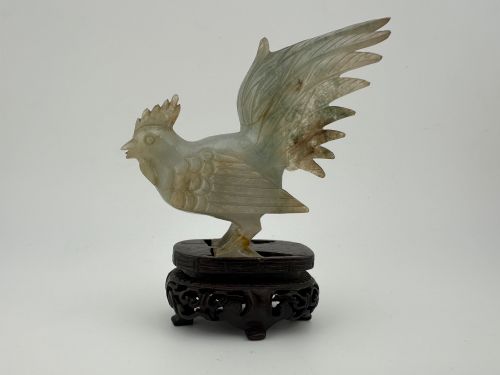
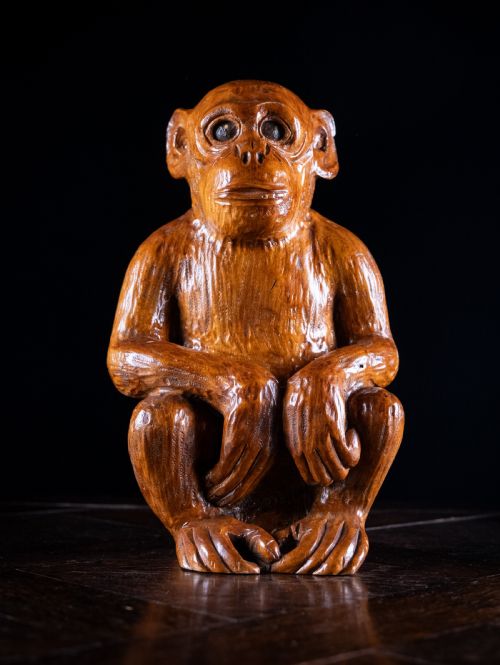
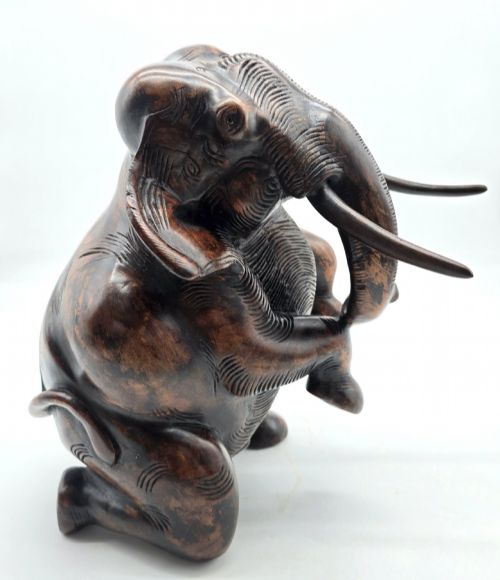


Hardwood Animal Statue
These hardwood animal statue pieces range from nineteenth century elephants to Art Deco panthers, offering tactile character for a mantelpiece.
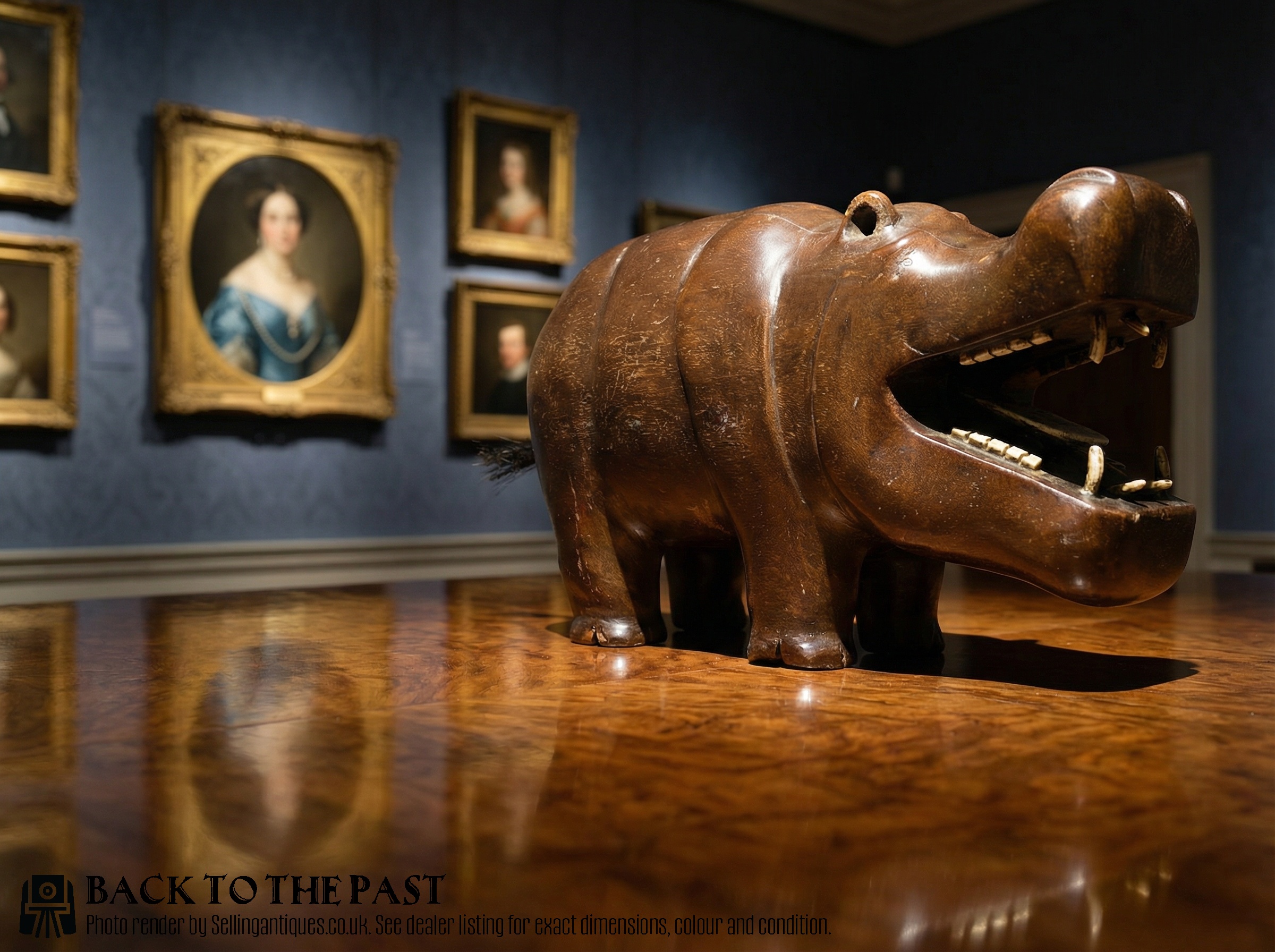
Hardwood Animal Statue
A hardwood animal statue represents sculpted fauna carved from dense timbers, most frequently appearing in forms like elephants, water buffaloes, monkeys, and panthers. These objects span periods from the nineteenth century through the early twentieth century, reflecting diverse global workshops and traditions.
Buyers will frequently encounter pairs of elephants, bookends, and individual animal figures on this page. The listings encompass styles such as Anglo-Indian, Chinese Qing Dynasty, African tribal art, and Art Deco.
Originating from makers across India, China, Africa, and Japan, these sculptures utilise dense woods to capture the physical traits of various creatures. Each piece functions as a decorative carving or figurine, often mounted on integrated stands or presented as studies.
Materials and carving methods
Carvers shaped these figures from dense hardwoods, including ebony and timber, sometimes applying a dark stain to enhance the grain. Certain pieces incorporate bone details, such as inlaid tusks or eyes, adding textural contrast to the dark wood.
The making process relies entirely on hand carving techniques to render muscles, folds of skin, and feathers. Artisans from different regions utilised local timbers and specific chiselling methods, resulting in distinct surface textures ranging from smooth polished ebony to deeply grooved animal pelts.
A pair of auspicious Mandarin ducks sits alongside formidable panthers and rhinos, proving that wood carvers loved domestic quirkiness just as much as grand majesty.
Distinctions in craftsmanship
Quality in a hardwood animal statue rests upon the naturalism of the carving and the fidelity of the animal's anatomy. Finer sculptures display careful attention to posture and muscle tension, whereas simpler pieces rely on basic silhouettes.
The choice of material and the condition of the carved surface also dictate the standing of a piece. Dense, heavy woods like ebony carry a sharper definition in fine details than softer timbers, while integrated stands and matched pairs elevate the cohesion of the work.
The Hardwood Animal Statue Glossary
- Hardwood
- Dense timber derived from broad-leaved trees, used for durable carvings. These woods provide the weight and fine grain necessary for detailed animal sculptures.
- Ebony
- A dense black or very dark hardwood prized for its smooth finish and heavy weight. It appears frequently in nineteenth century animal studies from India.
- Raj Period
- The era of British rule in the Indian subcontinent lasting from eighteen fifty-eight to nineteen forty-seven. Carvings from this time often depict ceremonial elephants and local wildlife.
- Qing Dynasty
- The last imperial dynasty of China, ruling from sixteen forty-four to nineteen twelve. Sculptures from this period include auspicious Mandarin ducks and hardwood figures on stands.
Hardwood Animal Statue: Frequently Asked Questions
What animals are usually depicted in these statues?
The listings show a strong preference for large fauna, particularly elephants, water buffaloes, panthers, and horses. You will also find hippopotamuses, iguanas, tigers, and Mandarin ducks.
Most pieces focus on solitary subjects or pairs, occasionally accompanied by human figures such as keepers alongside ceremonial elephants.
How do I date a hardwood animal statue?
Dating relies on stylistic markers tied to regional periods like the Raj period, Qing Dynasty, or Art Deco era. Material choice, such as ebony or dark stained timber, also guides chronological placement.
Inspect the tool marks and wear patterns on the underside of the sculpture or its stand for clues regarding its nineteenth or early twentieth century origins.
Where were these wooden sculptures made?
Geographic origins span Asia and Africa, encompassing workshops in India, China, Japan, and various African regions. Each region contributed distinct regional styles and animal subjects.
Anglo-Indian pieces reflect nineteenth century British influence in India, while Qing Dynasty works showcase traditional Chinese carving motifs.
Are these statues heavy?
Yes, because they are carved from dense hardwoods like ebony and timber, these sculptures carry significant weight for their size. Larger examples and bookends are especially substantial.
This density ensures stability when placed on shelves or desks, though care must be taken when moving heavier pieces.