

Hanging Wall Shelving
Hanging wall shelving clears floor space while displaying books and ceramics across mahogany, walnut, and oak.
Hanging Wall Shelving
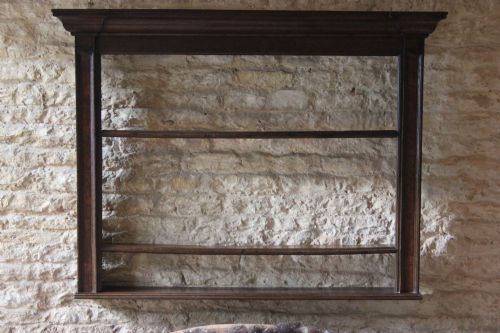
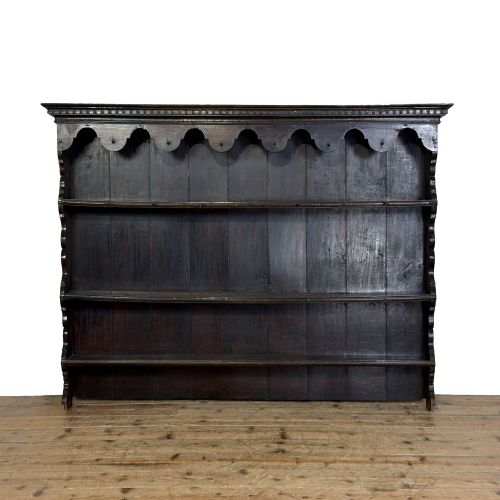
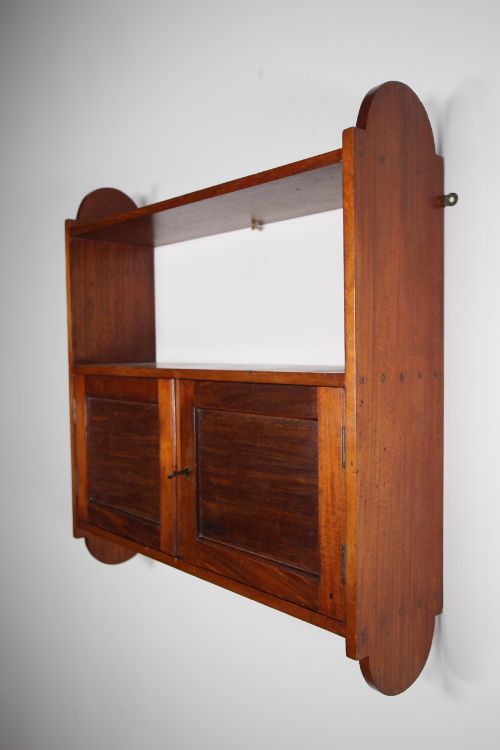
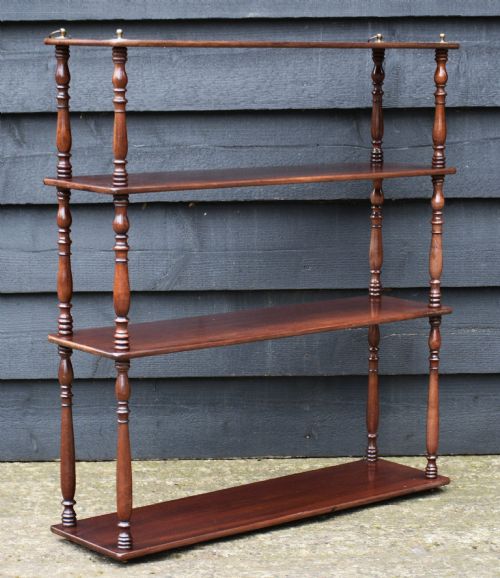
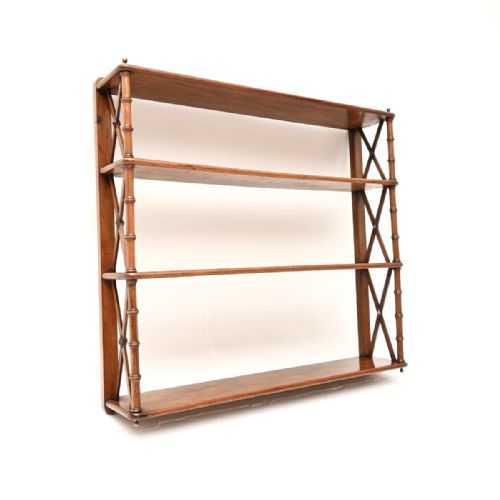
Hanging wall shelving brings vertical storage and display space into rooms without occupying the floor, appearing in forms from simple plate racks and corner shelves to multi-tiered bookcases and wall cabinets. Buyers seeking hanging wall shelving most frequently encounter nineteenth-century mahogany iterations alongside earlier Georgian and Regency designs.
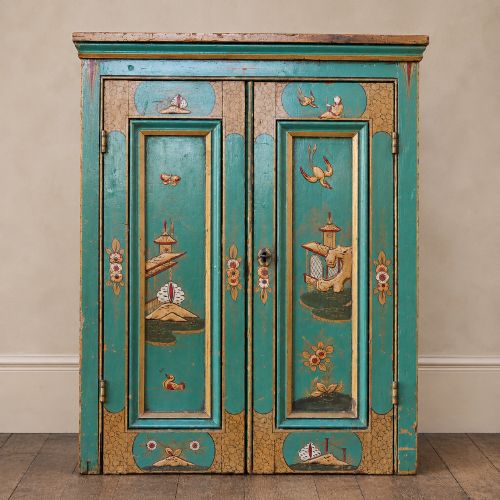
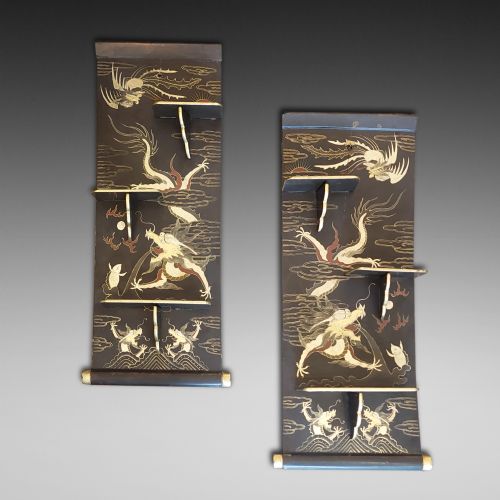
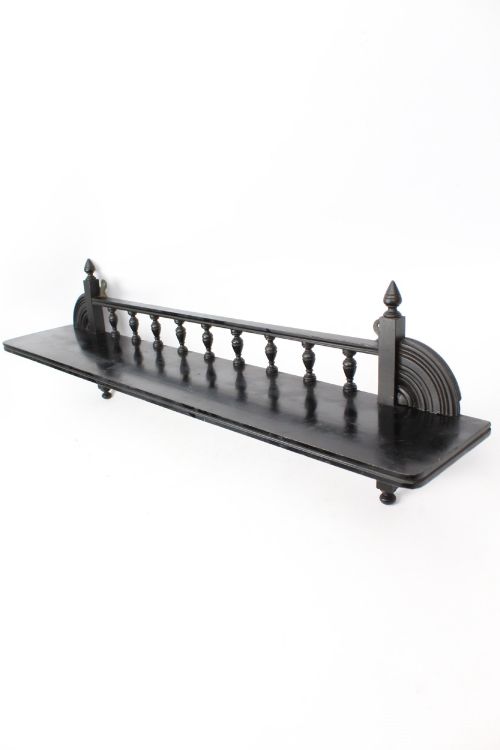
The selection ranges from compact country pine kitchen racks and painted display pieces to elaborate Victorian Gothic Revival ebonised bookcases and French walnut shelves. Pieces span multiple eras, including eighteenth-century cupboards, Edwardian decorative painted units, and Arts and Crafts constructions.
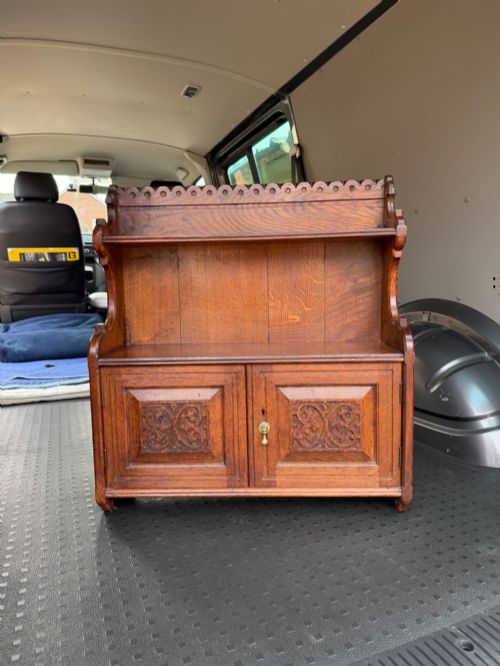
Makers and regional styles introduce further variety, from Sorrento inlaid olive wood corner shelves to pieces associated with known designers like Arthur Simpson and George Edmund Street. These structures serve domestic functions ranging from book storage to the exhibition of decorative ceramics.
Materials and construction
Makers utilised native and imported hardwoods like mahogany, walnut, oak, and satinwood, often pairing timber bodies with brass brackets, hinges, or hanging hardware. Certain regional or stylistic groups employ specific woods, such as ebonised wood for Gothic Revival pieces, olive wood for Sorrento inlay, and pine for country kitchen cupboards.
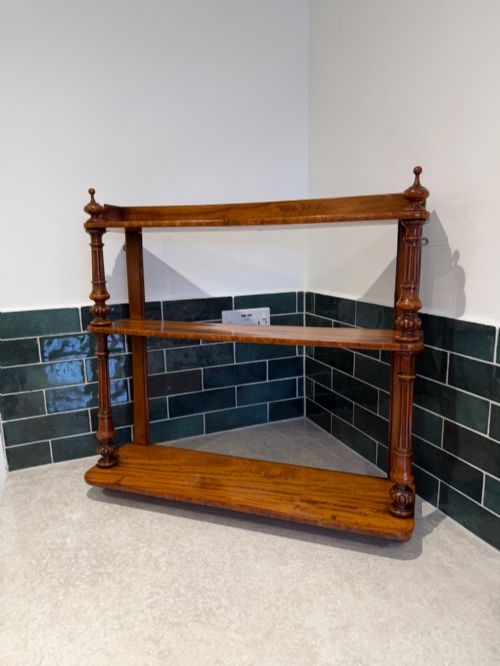
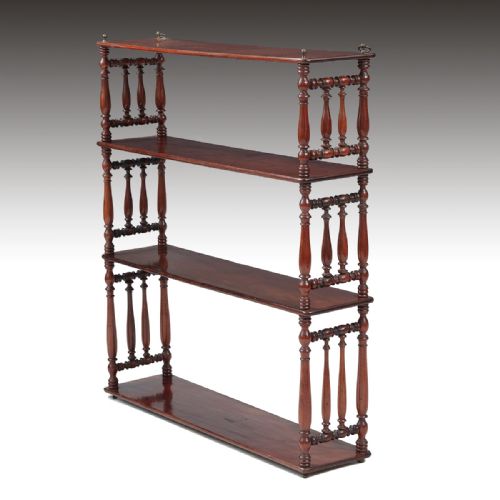
Joinery methods range from pegged joints on eighteenth-century oak and walnut carcases to dovetailed boards and turned components like bobbin turnings on nineteenth-century shelf supports. Surfaces receive various finishes, including clear wax polishes to show the grain, hand-painted decoration, lacquering, or gilding.
Hanging Wall Shelving Retail Price Guide 2026
Typical asking prices for hanging wall shelving among the pieces listed under this phrase on Sellingantiques today, from the lower quarter to the upper quarter. They describe what is for sale here now, not the wider market.
A set of wall shelves complete with tiny turned bobbins proves that someone once spent hours making furniture look like a sewing basket.
Distinctions in craftsmanship
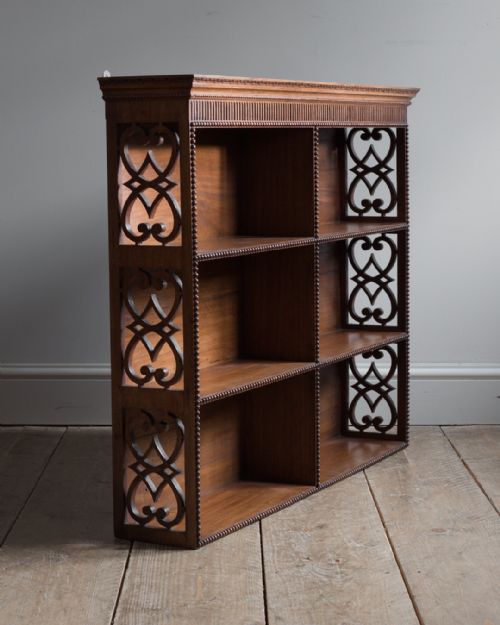
Quality reveals itself in the selection of timber figure, such as richly grained mahogany or burr walnut, and the crispness of applied mouldings, turned spindles, and carved details. Superior examples exhibit precise joinery that maintains structural integrity under the weight of books and display items over centuries.
The refinement of secondary elements like brass fixings, inlaid marquetry, and hand-painted motifs distinguishes standard utility pieces from exhibition-grade cabinet work. Original surface patination and untouched period finishes elevate the standing of a piece far above items stripped or heavily restored in later decades.
Heals·George Edmund Street·Arthur Simpson
The Hanging Wall Shelving Glossary
- Ebonised wood
- Timber stained or treated to imitate dense, black ebony. This finish appears frequently on Victorian Gothic Revival pieces.
- Waterfall bookshelves
- Tiered shelving units where each successive shelf steps back from the one below it. This form emerged during the eighteenth and nineteenth centuries.
- Bobbin shelves
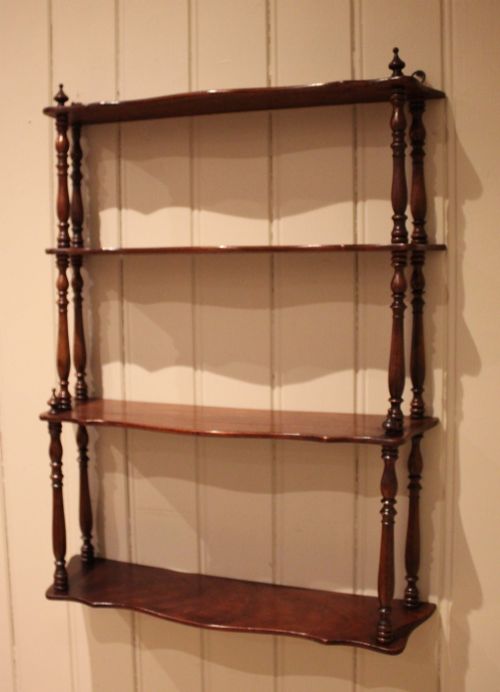
- Shelving supported by turned columns resembling wooden bobbins or spools strung together. The technique defines specific nineteenth-century aesthetic variants.
- Plate rack
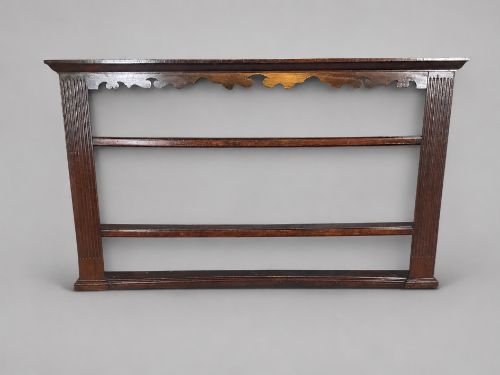
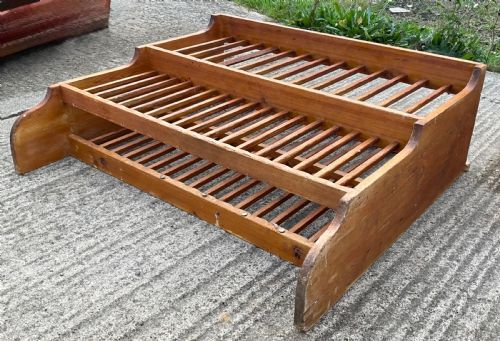
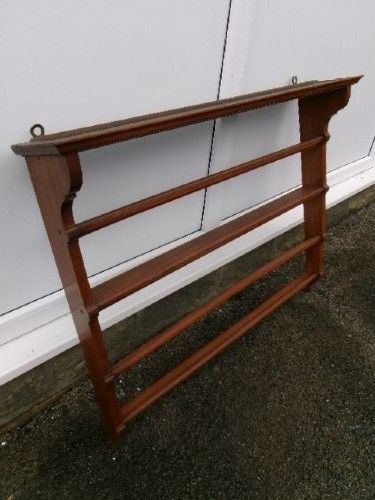
- A wall-mounted rack featuring wooden bars or grooves designed to hold ceramic plates upright. These utility items were standard in historic kitchens.
- Marquetry
- Decorative veneer work arranged in pictorial or geometric patterns using various woods. Sorrento pieces frequently employ this technique.
Hanging Wall Shelving: Frequently Asked Questions
How do I hang antique wall shelves safely?
Hanging wall shelving requires direct fixing into masonry walls or timber wall studs using appropriate heavy-duty brackets rather than simple plaster anchors. The substantial weight of historic hardwoods like oak and mahogany demands secure load-bearing support.
Ensure the hanging hardware integrated into the back of the shelf frame aligns with your wall fixings. Distribute weight evenly across the tiers once mounted to maintain stability.
Were these shelves meant for books or display?
Historic wall shelving served multiple domestic purposes, acting as portable bookshelves for study spaces or display cabinets for porcelain and ornaments in parlours. Deeper formats accommodate volumes, while shallow tiers and plate racks suit decorative ceramics.
Examination of the shelf depth and vertical clearance between tiers reveals the original intended cargo. Many versatile nineteenth-century examples handled both books and ornaments interchangeably.
How do I date an antique hanging shelf?
Dating relies on timber choices, construction techniques, and stylistic markers such as Regency reeding, Victorian Gothic tracery, or Edwardian painted decoration. Eighteenth-century pieces typically show hand-sawn timber marks and pegged joinery.
Later nineteenth-century examples often feature machine-sawn boards and standardised brass hanging plates. Comparing the secondary woods at the back of the carcase provides further chronological clues.
How should I care for polished wood shelves?
Maintain polished mahogany, walnut, and oak surfaces by applying traditional beeswax periodically and buffing with a soft cloth. Avoid placing shelves in direct sunlight or near heat sources to prevent the timber from warping or splitting.
Dust the carved details and turned spindle supports regularly with a dry brush. Keep moisture away from unsealed interior surfaces and antique painted finishes.