




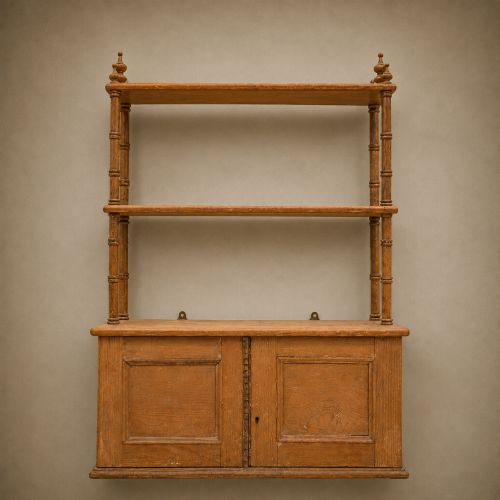
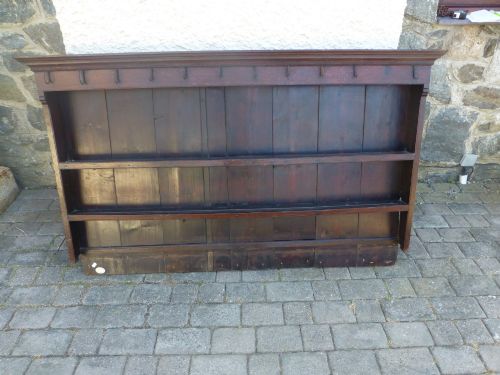
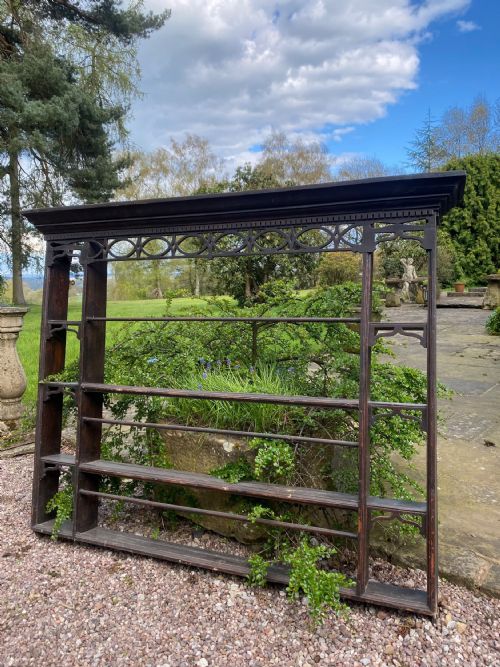

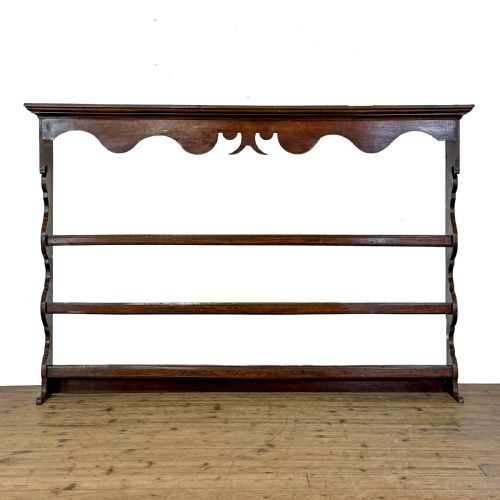


Hanging Plate Shelf
A hanging plate shelf is a practical wall display for ceramics, and oak and mahogany versions from the eighteenth and nineteenth centuries dominate this selection.
Hanging Plate Shelf
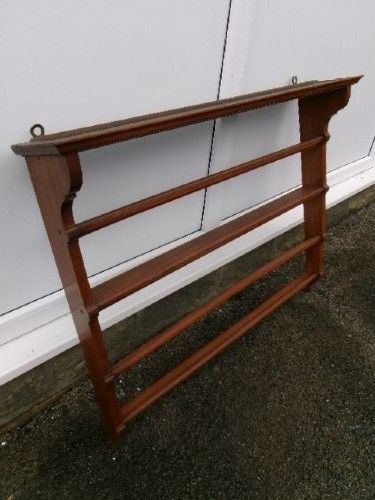
When you search for a hanging plate shelf, you encounter wall-mounted timber racks designed to display ceramics safely in kitchens and dining rooms. The pieces recorded here span from the seventeenth century through to the Edwardian period, incorporating vernacular country furniture as well as refined Georgian designs.
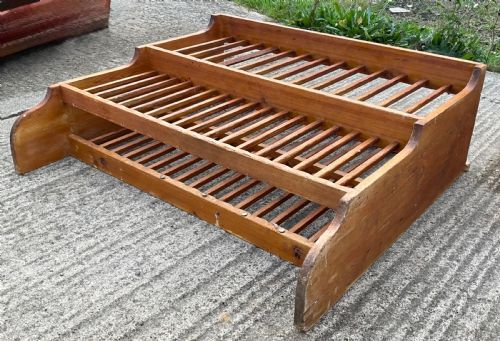
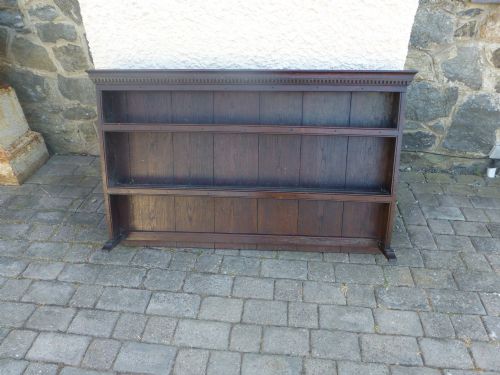
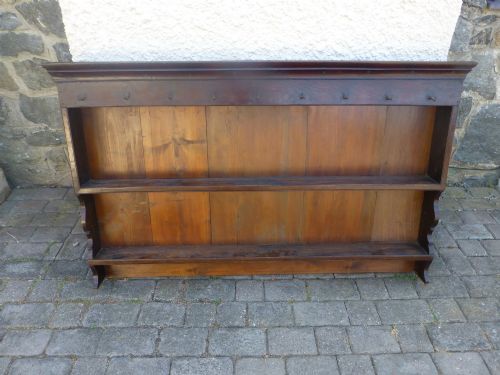
Oak and mahogany form the backbone of these listings, often described as delft racks or dresser plate racks intended to support plates upright against a backboard. Simpler pine and painted wood examples also appear, reflecting domestic utility in farmhouse and cottage settings.
Georgian and Victorian interpretations offer the most common encounters on this page, ranging from plain boarded construction to pieces featuring integrated small cupboards or marquetry detail.
Assessing the work
The distinction between standard utility items and finer pieces lies in the choice of timber and the restraint of decorative carving or inlay. Well-proportioned mouldings and sound structural timber separate superior examples from ordinary workshop output.
Age and originality dictate the character of each piece, where untouched patination on seventeenth and eighteenth-century oak carries more weight than heavily restored surfaces.
Hanging Plate Shelf Retail Price Guide 2026
Typical asking prices for hanging plate shelf among the pieces listed under this phrase on Sellingantiques today, from the lower quarter to the upper quarter. They describe what is for sale here now, not the wider market.
One cheerful 1900 display shelf arrives finished in Little Greene Pompeian Ash, proving historical kitchens loved a strong splash of colour.
The Hanging Plate Shelf Glossary
- Delft rack
- A wall-mounted wooden shelf specifically designed with wooden slats or rails to hold ceramic plates upright. These racks kept earthenware visible and accessible in domestic kitchens.
- George III
- The stylistic period spanning from 1760 to 1820, characterised by classical proportions and the frequent use of mahogany. Pieces from this era often display refined cabinetwork.
- Marquetry
- The art of applying thin veneers of different coloured woods to form decorative patterns on a surface. This technique appears on select nineteenth-century display pieces.
- Patina
- The surface sheen and colour acquired by wood over decades of handling, polishing, and exposure to light. Original patination is valued by collectors for its authenticity.
Hanging Plate Shelf: Frequently Asked Questions
How were hanging plate shelves used originally?
These shelves were mounted on kitchen and dining room walls to air-dry and display slipware, delftware, and pewter plates.
By standing plates on edge against the backboard, households saved table space whilst keeping daily tableware within reach.
What is the difference between an oak and mahogany shelf?
Oak shelves typically date from the seventeenth and eighteenth centuries, reflecting vernacular English country interiors and robust utility.
Mahogany versions usually align with Georgian and later periods, offering a smoother grain and a more formal appearance suited to polite rooms.
Can these shelves support modern heavy plates?
Most antique racks were built to hold earthenware and ceramics of their period, which can be surprisingly heavy.
However, wall mounting requires secure fixings into solid masonry or studs to ensure safety under modern load.
How do I identify a Georgian plate rack?
Georgian examples often feature mahogany or oak construction with restrained classical mouldings, sometimes incorporating shaped friezes or small spice drawers.
Their proportions follow eighteenth-century design rules, prioritising balance and functional symmetry.