
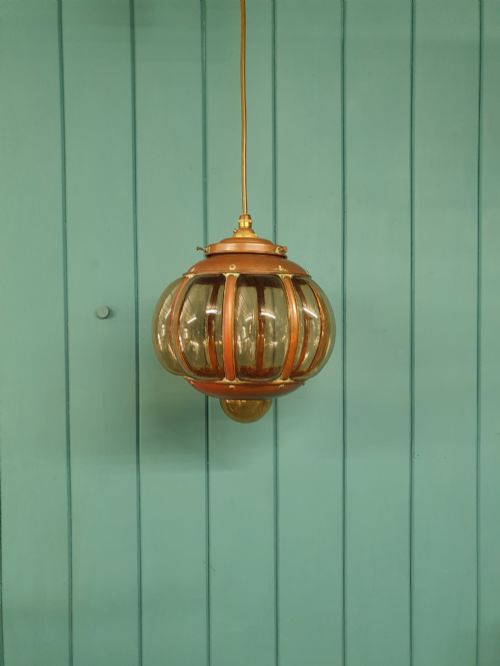


Hanging Industrial Lamps
These hanging industrial lamps bring heavy-duty utility and purposeful light from factories, railways and Edwardian workshops directly into domestic spaces.
Hanging Industrial Lamps
Hanging industrial lamps are utilitarian fixtures originating from factories, railways, ships and workshops, designed primarily to cast functional downward light over large working areas. When exploring hanging industrial lamps, you encounter pendant lights, ceiling lights and chandeliers spanning from Victorian and Edwardian eras through the 1920s, 1930s and 1940s.
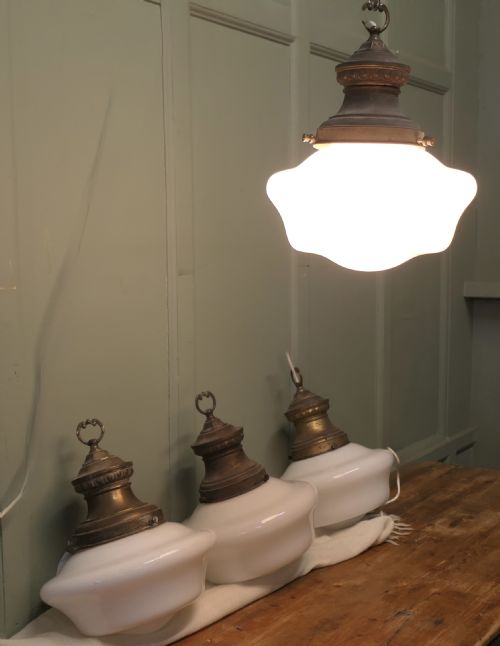
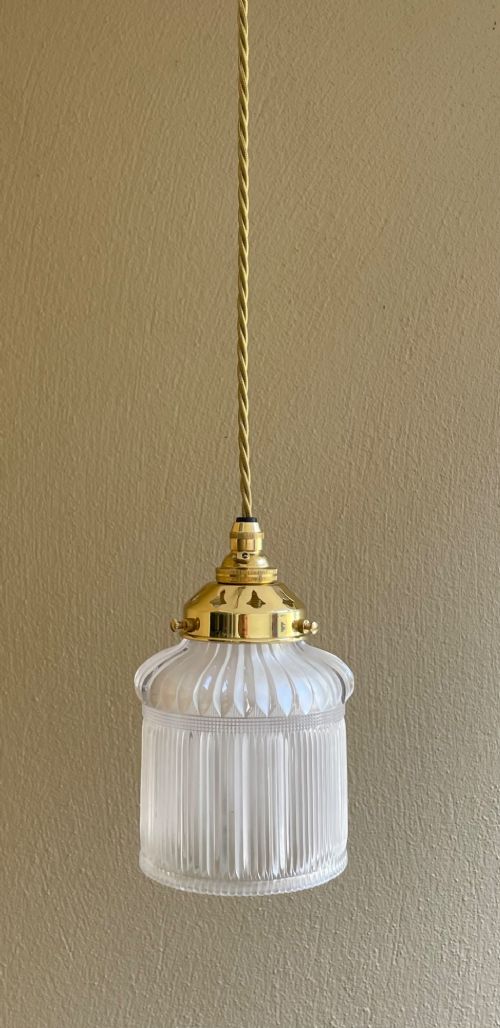
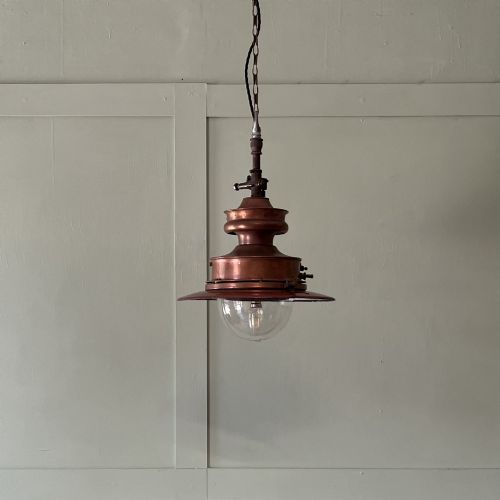
The selections here range from copper railway lanterns and green enamel factory fittings to prismatic glass shades and steel Art Deco lanterns. You are most likely to meet mid-century industrial pendants and early twentieth-century glass shades suspended from simple galleries.
Many examples retain the honest wear of their working past, including weathered metal surfaces and original maker galleries. These fixtures transform modern interiors by introducing genuine history and robust utilitarian character.
How they were made
Makers utilised spun or cast metals such as steel, brass, copper and iron to build sturdy shades and protective galleries that could withstand harsh workshop conditions. Enamel coatings were fused onto metal surfaces to create reflective, easy-to-clean interiors for maximum illumination.
Specialised glass techniques produced opaline, smoked, mercury mirrored and prismatic shades that diffused harsh bulb glare while directing optimal task lighting. Chrome galleries and iron fittings provided secure mechanical joints and robust suspension points.
The listings here span the Victorian era, Edwardian period, and the 1900s through to the 1940s, utilising brass, copper, steel, and prismatic glass.
What varies in quality
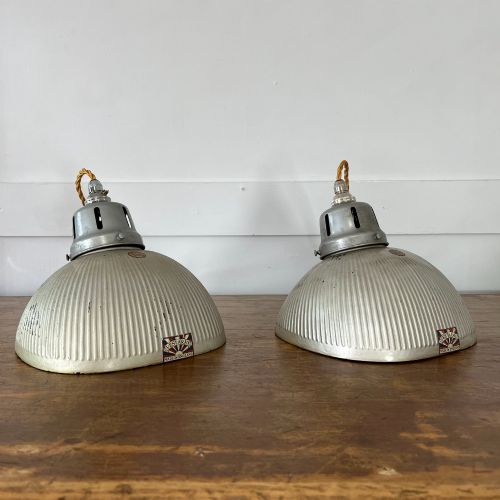
The distinction between ordinary and exceptional pieces lies in the integrity of the original components, such as intact prismatic glass diffusers and heavy-gauge metal galleries bearing authentic foundry marks. Finer examples display balanced proportions, substantial material weight and sophisticated optical glass designs by makers like Holophane.
Lesser items may feature mismatched replacement galleries or later adaptations that compromise the original industrial aesthetic. Superior survivals retain their genuine surface patination and undamaged glass shades without modern reproductions masking their pedigree.
VESTARAY·Holophane
The Hanging Industrial Lamps Glossary
- Gallery
- The metal collar or fitter at the top of a lampshade that holds the bulb holder and suspension cord. It often bears manufacturer stamps or patent details.
- Opaline glass
- A milky-white translucent glass that softens light diffusion and creates an even, glowing perimeter. It was widely utilised in early twentieth-century institutional and factory lighting.
- Prismatic glass
- Moulded glass featuring a series of geometric ridges and prisms designed to refract and distribute light efficiently. Holophane specialised in this optical innovation.
- Pendant light
- A single light fixture suspended from the ceiling by a cord, chain or metal rod. These units form the majority of factory and workshop survivals.
Hanging Industrial Lamps: Frequently Asked Questions
How do I clean an old enamel shade?
Wash the enamel surface gently with warm soapy water and a soft cloth to remove accumulated dust and grease.
Avoid abrasive scouring pads that might scratch the vitreous enamel finish or damage the underlying metal.
Can these lights be wired for modern homes?
Most hanging industrial lamps accept standard modern bulb holders and can be easily adapted by a qualified electrician.
Ensure the internal wiring complies with current safety regulations while preserving the original exterior hardware.
What rooms suit a factory pendant?
These fixtures provide striking focal points above kitchen islands, dining tables and high-ceilinged living spaces.
Their downward directional light makes them exceptionally practical for task-heavy work areas.
How do I identify a Holophane shade?
Genuine examples feature distinct exterior ribs or internal prisms designed to control and scatter light evenly.
Many bear moulded maker signatures or patent numbers directly into the glass rim.