
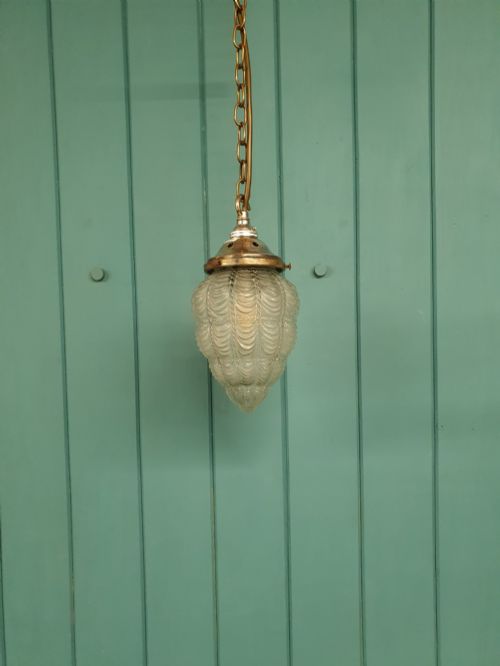
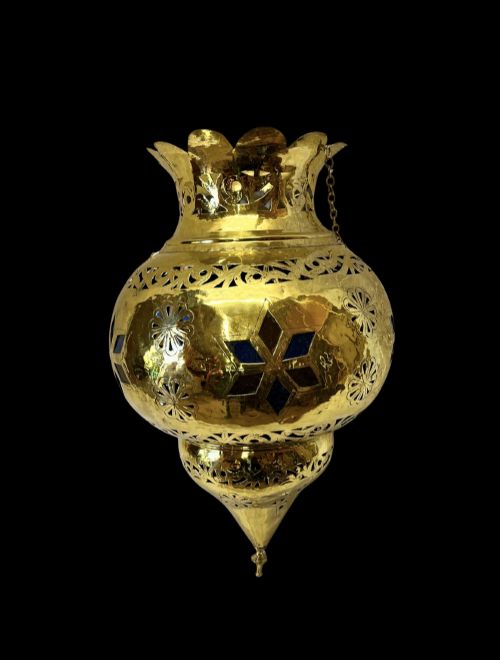


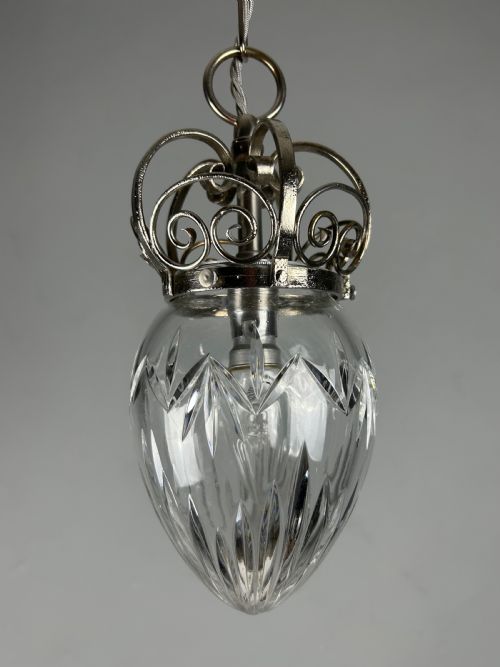
Hanging Glass Shade Lantern
A hanging glass shade lantern suspends light within a domestic space through a combination of metal frames and glass enclosures.
Hanging Glass Shade Lantern
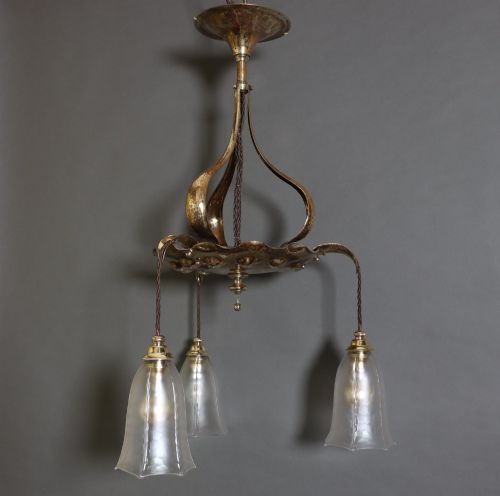
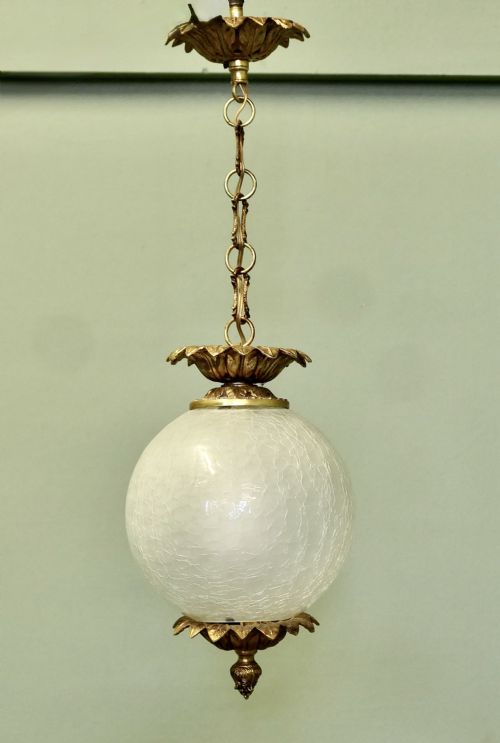
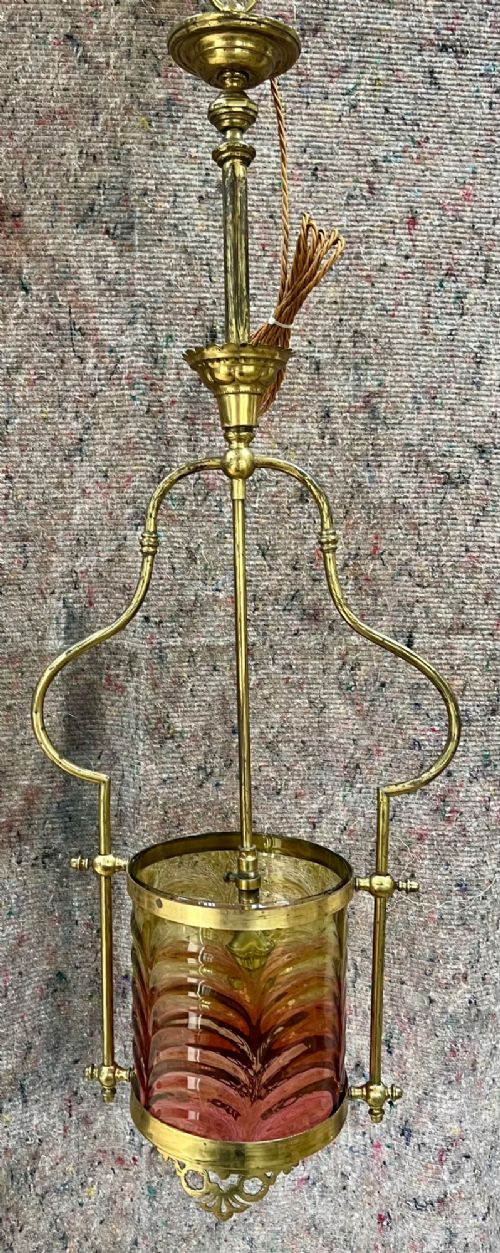
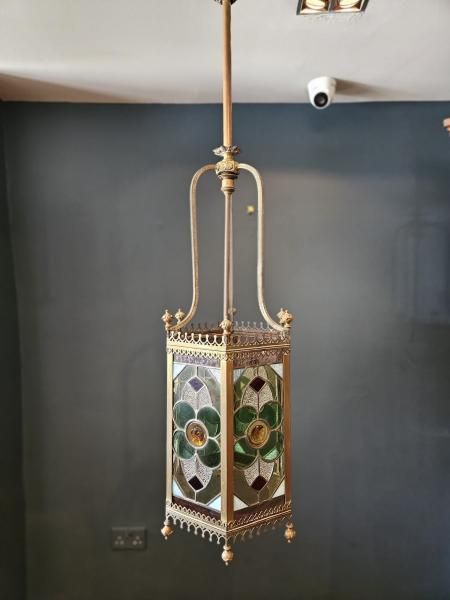
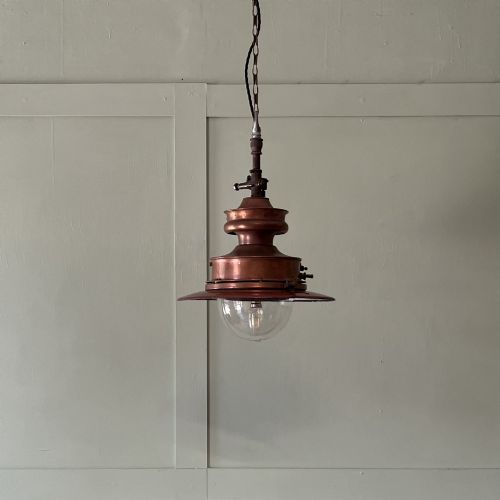
A hanging glass shade lantern brings overhead illumination to hallways, porches, and rooms using suspended fixtures from various historical periods. The examples found here span from the nineteenth century through the Art Deco and mid-twentieth century eras.
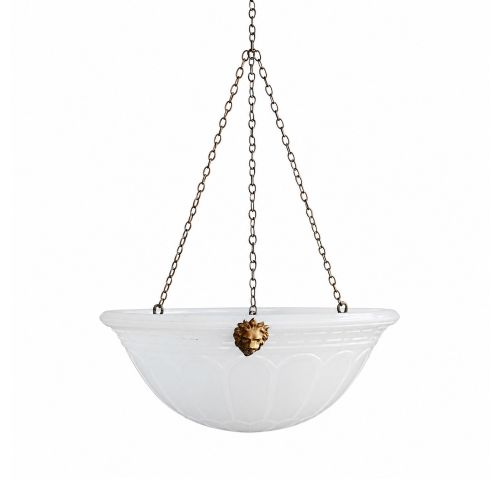
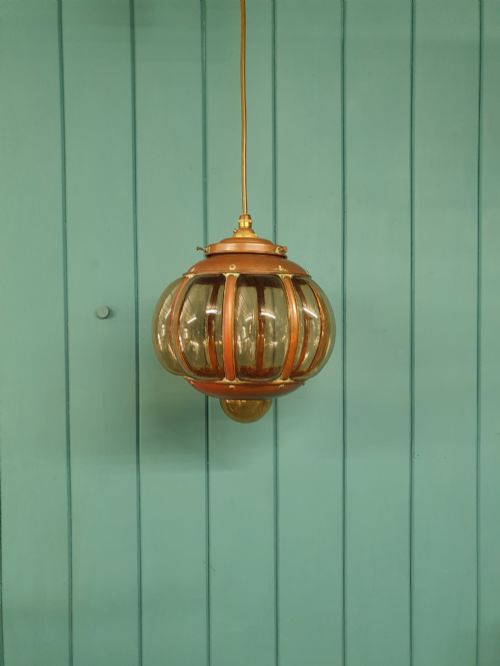
Most pieces combine metal frameworks such as brass, copper, or chrome with glass shades that diffuse the light downwards or outwards. Forms range from simple glass globes and bell jars to leaded stained glass and prism chandeliers.
Origins include English, French, and Italian workshops, alongside specialised utilitarian designs like railway and nautical lanterns. Buyers encounter Edwardian brass hall lanterns and Arts and Crafts copper fixtures most frequently on this page.
Materials and Construction
Makers constructed these lanterns using durable metal skeletons of brass, copper, iron, or silver plate to support the weight of the glass components. Frames were cast, forged, or spun to hold panels or blown shades securely.
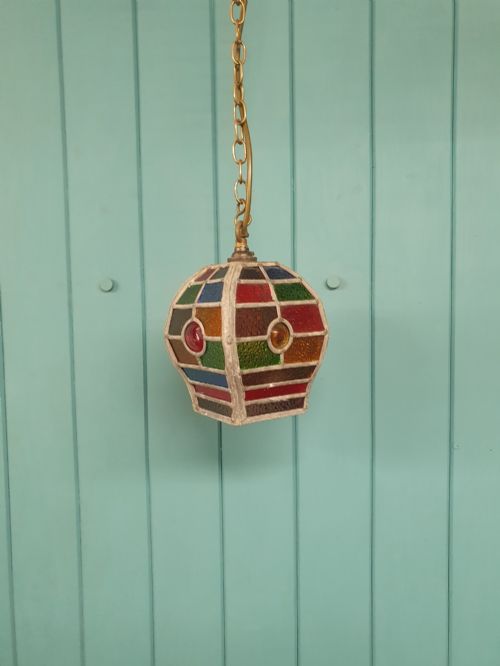
Glass elements utilised techniques such as hand blowing, moulding, cutting, and leaded stained glass construction. Surfaces often feature frosted, smoked, opalescent, or cut finishes to soften and direct the illumination.
Listings feature brass, copper, and silver-plated metalwork paired with cut, frosted, opalescent, and leaded glass.
Judging Quality and Finish
Quality rests upon the weight and integrity of the metalwork, whether solid brass, heavy copper, or gilded bronze rather than thin plated alternatives. Better pieces exhibit crisp casting detail, such as decorative mounts or hand-wrought iron elements.
The sophistication of the glass work dictates the tier of the piece, moving from standard pressed shades to hand-blown diamond-cut crystal, opalescent material, or intricate leaded panels. The cohesion between the metal frame and the specific glass shade determines the overall success of the design.
The Hanging Glass Shade Lantern Glossary
- Holophane
- A type of scientific ribbed glass designed to diffuse and direct light efficiently. It appears frequently in early twentieth-century industrial and commercial lighting.
- Opalescent glass
- Glass containing ingredients that cause it to appear milky with translucent colour variations. This material softens glare significantly in interior lighting.
- Leaded glass
- Small pieces of glass held together by strips of lead came to form geometric or pictorial patterns. It is a defining characteristic of Arts and Crafts and Gothic Revival lanterns.
- Bell jar lantern
- A hanging light enclosed by a curved glass bell suspended from a metal crown or rim. This form provides enclosed protection for the burner or bulb.
- Silver plate
- A thin layer of silver applied over a base metal framework to provide a bright reflective surface. It is often found on formal Edwardian hall lanterns.
Hanging Glass Shade Lantern: Frequently Asked Questions
Where should I hang a glass lantern?
These lanterns suit entryways, hallways, and high-ceilinged rooms where overhead suspension draws the eye upward. They provide focused or diffused downward illumination suited to transitional spaces.
Ensure the drop of the pendant matches your ceiling height so the fixture clears passage ways safely while remaining a central visual feature.
How do I date an antique lantern?
Dating relies on the stylistic markers of the metalwork and glass, such as the geometric lines of Art Deco or the organic curves of Art Nouveau. Construction methods like hand-cut crystal or leaded joints also point to specific eras.
Matching the wiring or fittings can offer further clues, though many pieces undergo rewiring for modern use.
Are these lanterns wired for electricity?
Many listings feature vintage pendants that have been rewired or adapted for contemporary electrical standards. Some retain original fittings which may require updating by a qualified electrician before installation.
Check individual descriptions to see if ceiling roses or suspension chains are included with the fixture.
What maintenance do glass and metal shades need?
Glass shades benefit from careful removal and washing with mild soapy water to restore clarity and remove dust accumulation. Metal frameworks require gentle dusting or cleaning appropriate to their specific finish.
Avoid harsh abrasives on plated surfaces or fragile opalescent and frosted glass treatments.