




Hanging Corner Display
Hanging corner display pieces solve difficult room layouts while holding objects securely in timber cabinets that mount directly to walls.
Hanging Corner Display
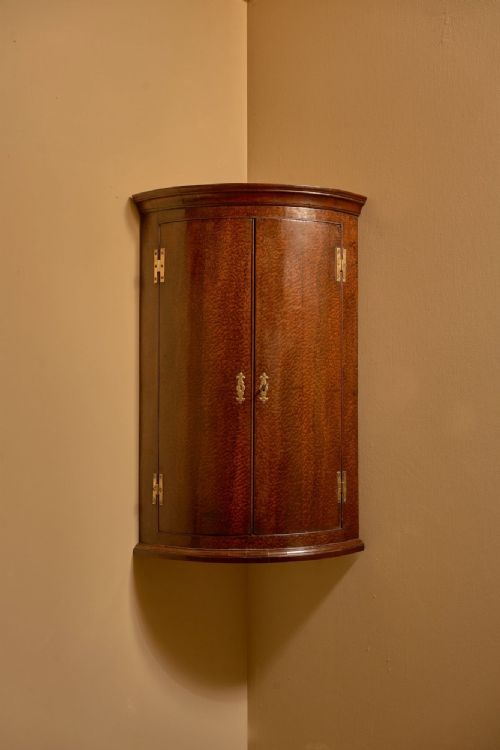
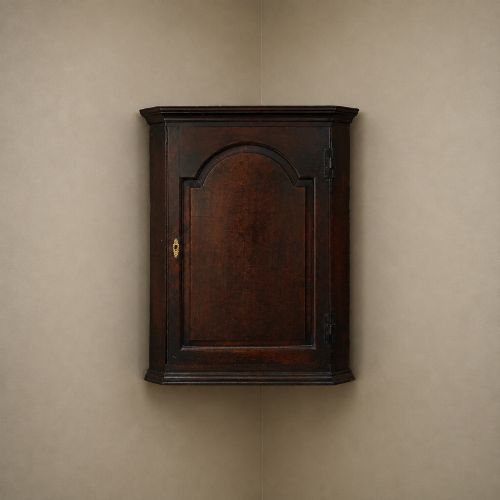
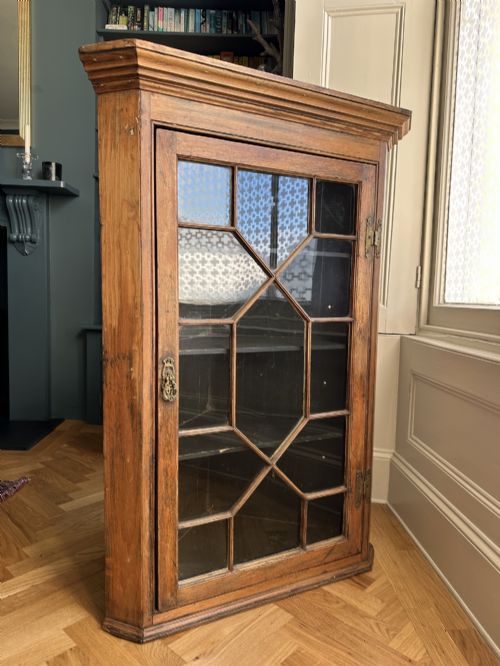
A hanging corner display piece is typically built to fit snugly into the 90-degree angle of a room, saving floor space while utilising neglected corners. Most examples encountered here are wall-mounted wooden cabinets and cupboards rather than open shelves, designed primarily to store and showcase contents behind single doors.
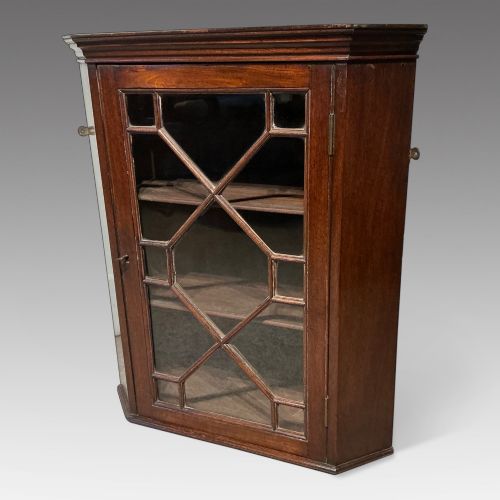
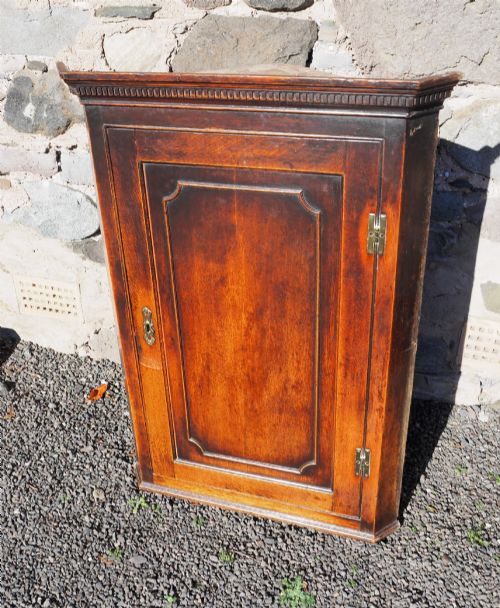
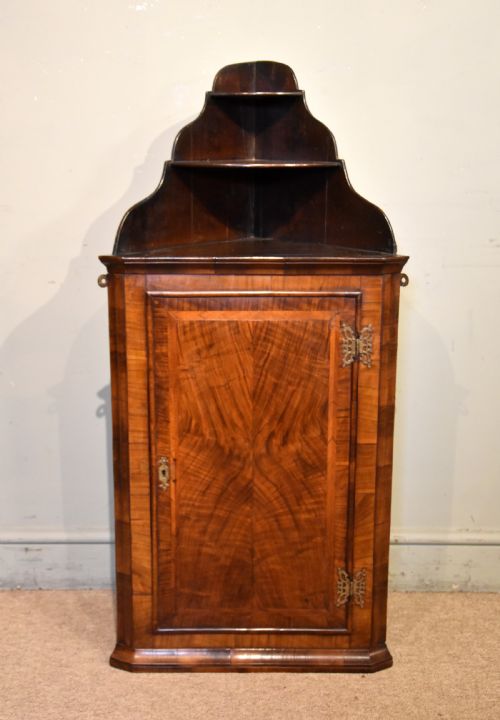
The selections span numerous eras, with Georgian and 18th-century pieces appearing frequently alongside Victorian and Edwardian examples. Formats vary from solid timber doors to glazed panels, sometimes incorporating lower drawers or broken arch pediments.
Makers and craftsmen utilised the triangular footprint to introduce architectural presence to modest domestic spaces. Interior shelving usually accommodates ceramics, glassware or small collectables at eye level.
Materials and Construction
Construction relies heavily on traditional hardwoods such as oak, mahogany, walnut and yew wood, supplemented by pine in simpler utilitarian versions. Cabinetmakers joined sides using dovetails and tongue-and-groove joints to ensure stability against wall brackets.
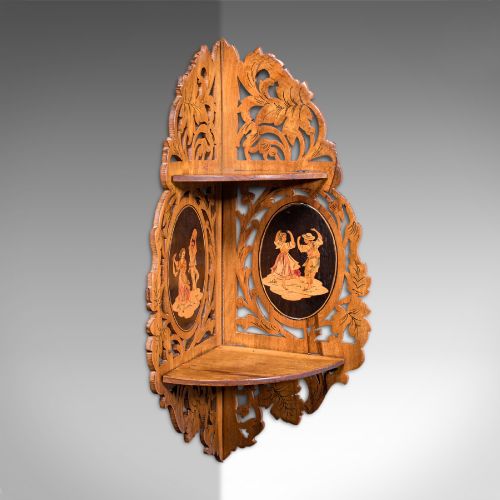
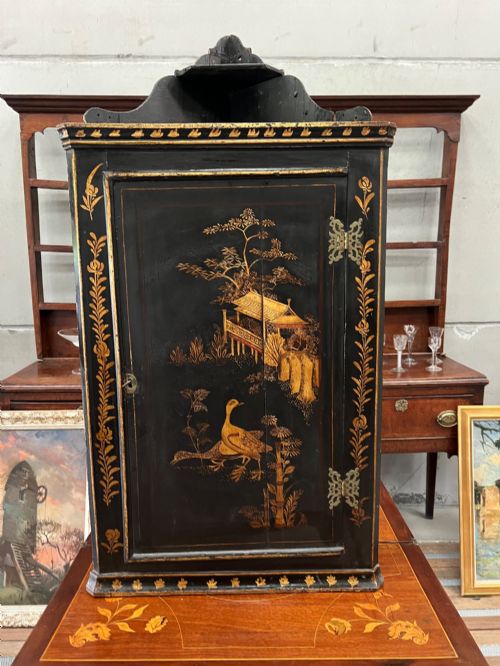
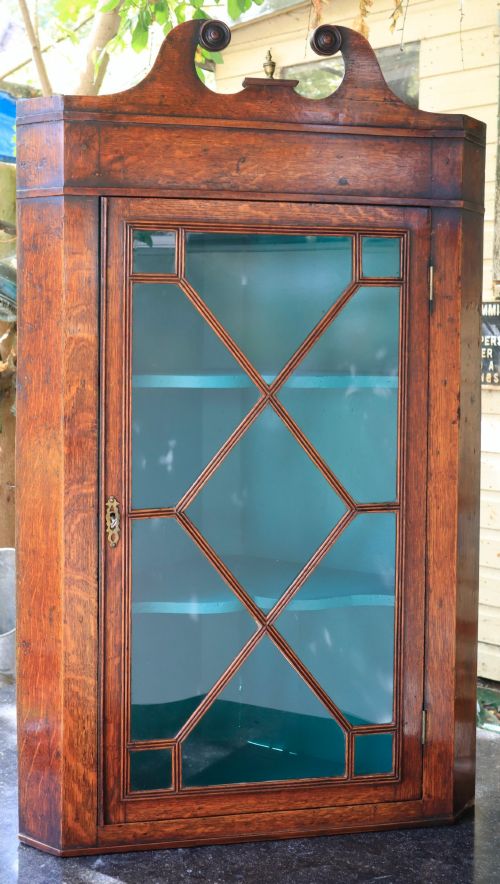
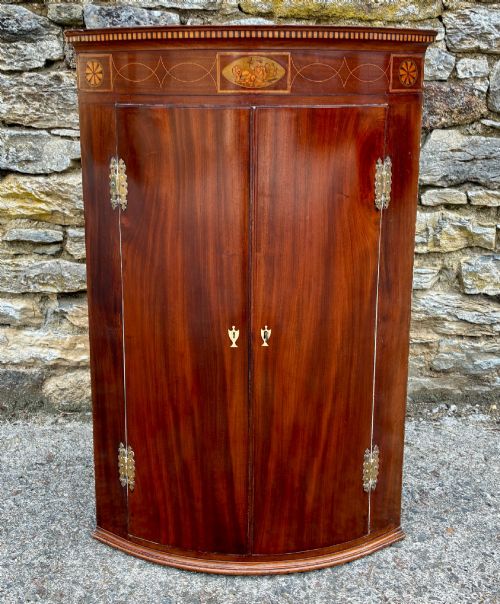
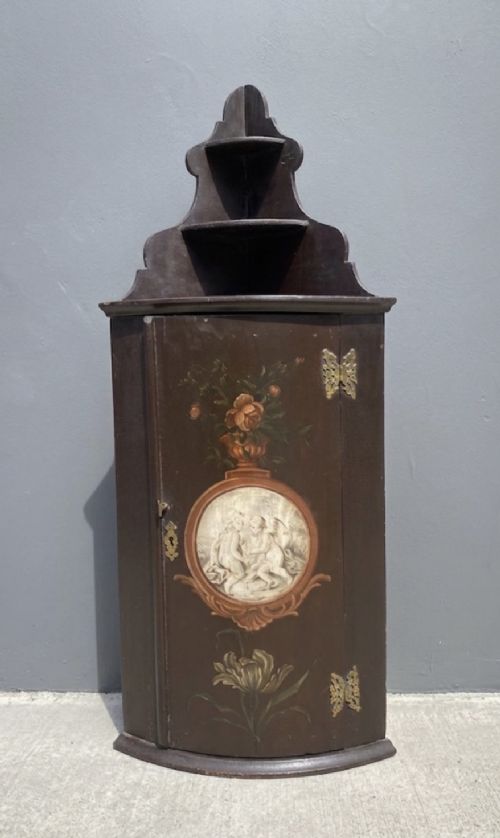
Surface decoration often includes satinwood inlay, marquetry, crossbanding and painted finishes, particularly on Georgian and Victorian iterations. Glazed doors utilise individual wooden glazing bars to hold small panes of glass in place.
Brass hinges and key escutcheons provide structural hardware, frequently accompanied by functional locks. Interior surfaces occasionally retain original paint schemes or polished wood finishes.
Hanging Corner Display Retail Price Guide 2026
Typical asking prices for hanging corner display among the pieces listed under this phrase on Sellingantiques today, from the lower quarter to the upper quarter. They describe what is for sale here now, not the wider market.
Several vintage corner cupboards secretly preserve their original brightly painted green or blue interiors behind dark mahogany exterior doors.
Judging Quality and Execution
Quality separates cabinets by the choice of primary timber grain and the precision of inlaid details like satinwood stringing or marquetry motifs. Superior examples display carefully matched veneer panels on curved bow fronts rather than plain flat boards.
Architectural ambition distinguishes standard utilitarian cupboards from finer Georgian specimens featuring broken arch pediments or multi-pane glazed doors. The crispness of internal shelving edges and the originality of brass hardware also indicate higher workshop standards.
The Hanging Corner Display Glossary
- Bow front
- A convexly curved cabinet door or facade that projects outward from the corner walls. This curved profile requires skilled timber bending or shaping.
- Crossbanding
- A narrow strip of veneer applied perpendicularly to the grain of the main surface around the border of a door. It creates a neat decorative frame on mahogany and oak panels.
- Broken arch pediment
- An ornamental triangular pediment at the top of a cabinet where the apex is left open or interrupted by a central finial. It is characteristic of formal 18th-century case furniture.
- Glazed
- Fitted with transparent glass panes to allow visibility of internal contents. This treatment turns a dark storage cupboard into a display cabinet.
- Escutcheon
- A protective metal plate surrounding the keyhole of a cabinet door. Brass examples are common on period pieces.
Hanging Corner Display: Frequently Asked Questions
How do you mount a hanging corner cabinet?
These cabinets attach directly to wall studs or masonry using internal fixing points or heavy-duty rear brackets built into the corner angles. Professional installation is essential due to the combined weight of solid timber and stored contents.
Ensuring the cabinet sits level ensures that heavy panel doors swing freely on their brass hinges without sagging over time.
What timber was used for most hanging corner display cabinets?
Oak and mahogany dominate the surviving inventory, reflecting the favoured hardwoods of the Georgian, Victorian and Edwardian periods. Walnut, yew and pine appear less frequently for specific regional or rustic variations.
Finer versions often layer contrasting woods like satinwood for decorative inlay and border banding.
How do I tell a Georgian corner cupboard from a Victorian one?
Georgian and 18th-century cupboards generally favour clean architectural proportions, solid brass H-hinges and timber panels like figured mahogany or quarter-sawn oak. Victorian and later revival pieces frequently incorporate heavier mouldings, glazed display doors and Arts and Crafts influences.
Examining internal construction methods and timber ageing helps clarify the likely manufacturing era.
Can these cabinets support heavy items inside?
Original fixed or adjustable wooden shelves safely hold standard collections of ceramics, glassware and small decorative objects. They are not engineered for massive loads like heavy books.
Distributing weight evenly across the shelves protects both the antique timber and the original wall fixings.