
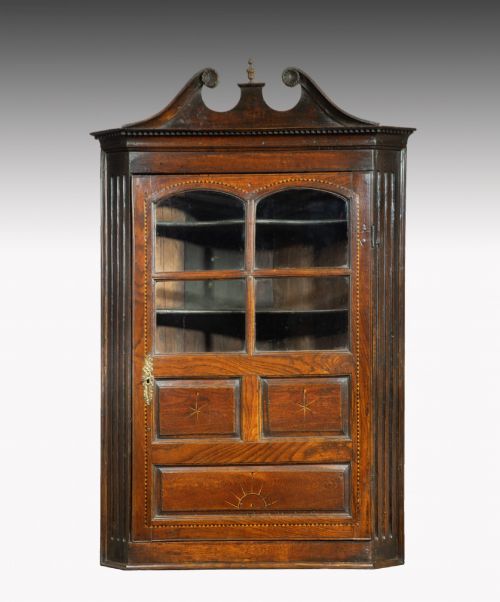


Hanging China Cabinet
A hanging china cabinet is a wall-mounted display piece for porcelain, and collectors choose them to save floor space while showing off their ceramics.
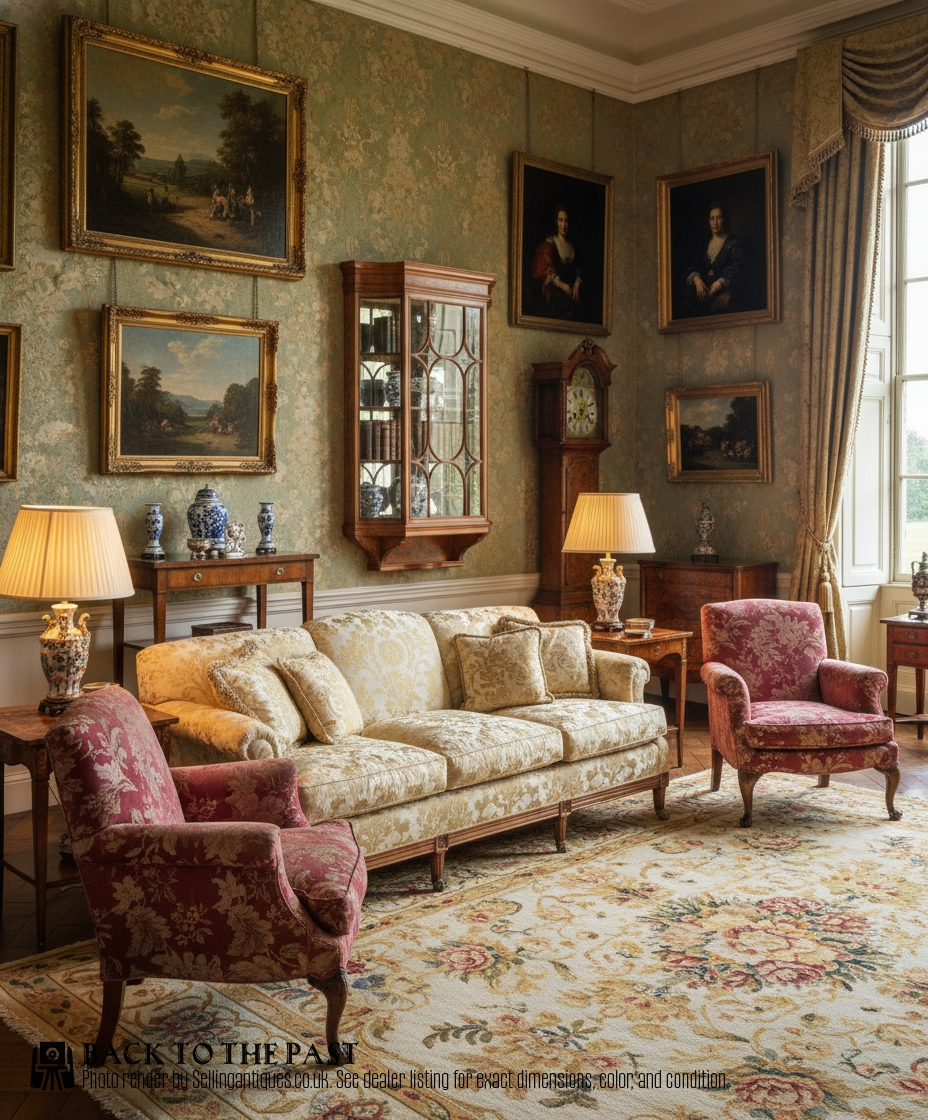
Hanging China Cabinet
When you search for a hanging china cabinet, you encounter wall-mounted cupboards and display cabinets designed to hold ceramic plates and cups off the floor. The examples available span the Georgian, Victorian, and Edwardian periods, stretching from the eighteenth century into the early twentieth century.
The most common form on this page is the corner cupboard, often built from oak or mahogany with a single glazed door. These pieces utilise wall space efficiently while keeping dust away from delicate porcelain.
How they were made
Cabinet makers relied primarily on timbers such as mahogany, oak, yew, and satinwood to build the carcases and frames of these wall cabinets. They often added brass hinges, escutcheons, and door catches to secure the front and accent the warm wood tones.
Glazing bars divided the glass panes on the doors to give a clear view of the interior shelves while supporting the structure. Some later examples also incorporated mirror glass at the back to reflect light through the displayed china.
What varies in quality
The choice of timber and veneer dictates much of the visual character, with finely figured mahogany or inlaid satinwood sitting above simpler oak carcases. Cabinet makers who invested time in precise joinery and delicate glazing bar arrangements produced pieces with greater structural refinement.
Proportion and decorative restraint separate standard utility cupboards from high-status display pieces. The crispness of the mouldings and the quality of the brass hardware complete the distinction between ordinary and exceptional examples.
The Hanging China Cabinet Glossary
- Bow front
- A convex curved front that projects outward from the corners. This shape softens the profile of a corner cupboard or wall cabinet.
- Glazing bar
- A narrow wooden strip holding panes of glass within a sash. These bars create geometric patterns across the door of a display cabinet.
- Inlay
- Contrasting wood or metal inserted into recessed spaces on the surface of furniture. Satinwood and other pale timbers were frequently used for this decorative work.
- Corner cupboard
- A cabinet specifically constructed to fit into the internal angle of a room. They maximise storage without jutting into the main floor area.
Hanging China Cabinet: Frequently Asked Questions
How do I hang a heavy cabinet?
These cabinets attach to walls using internal screw fixings through the backboards or robust external brackets fitted by a professional carpenter. Because older timber and glass carry substantial weight, secure wall anchors into studs or masonry are essential.
Ensure the hanging height allows safe access to the interior shelves while keeping delicate china out of reach of foot traffic. Distributing the weight of porcelain evenly inside prevents any strain on the antique structure.
How do I date a cabinet?
Dating relies on identifying timber choices, construction methods, and stylistic cues such as Georgian mouldings or Edwardian painted satinwood finishes. Secondary woods used inside the carcase also offer clues to the workshop's region and period.
Compare the brass hardware and glass type with known examples from the eighteenth and nineteenth centuries to narrow down the decade.
Can I clean the antique glass?
Old glass often contains bubbles, ripples, and uneven thickness that require gentle treatment with a soft cloth and mild cleaning solution. Avoid pressing too hard against fragile or aged glazing bars.
Check the stability of the putty or wooden retaining pins before wiping the panes to prevent loosening the antique glass.