





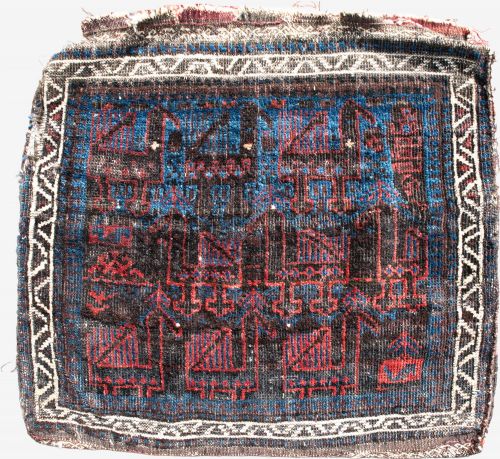


Handwoven Nomadic Pouch
When you handle a handwoven nomadic pouch, you hold a functional tribal textile crafted for storage and daily migration.
Handwoven Nomadic Pouch
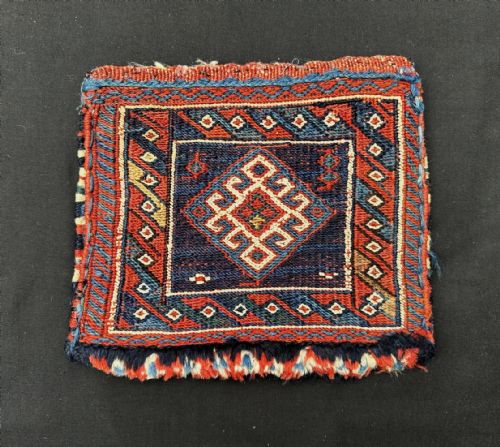
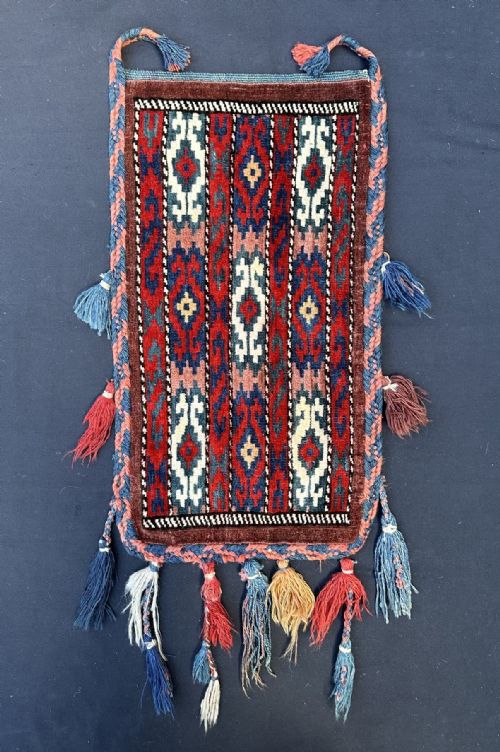
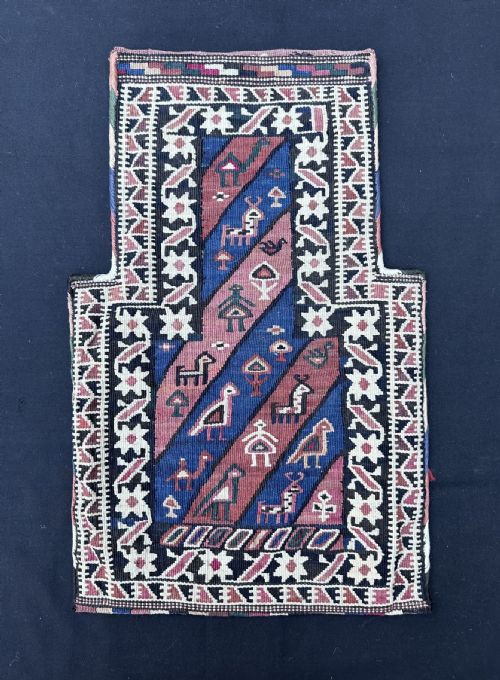
A handwoven nomadic pouch encompasses utilitarian bags created by tribal confederacies and pastoral groups across Persia, Afghanistan, and Central Asia. These items include vanity bags, tobacco and pipe bags, salt bags, spindle bags, and storage pouches used during seasonal migrations.
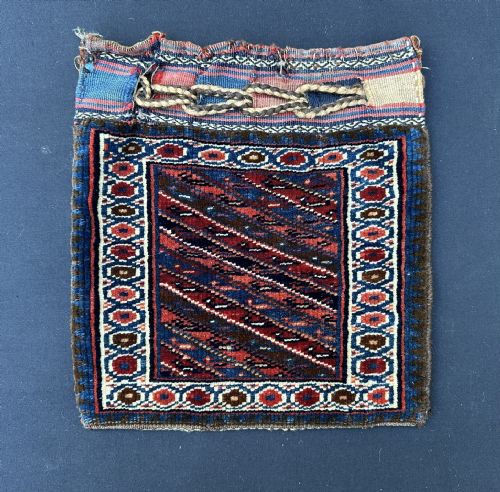
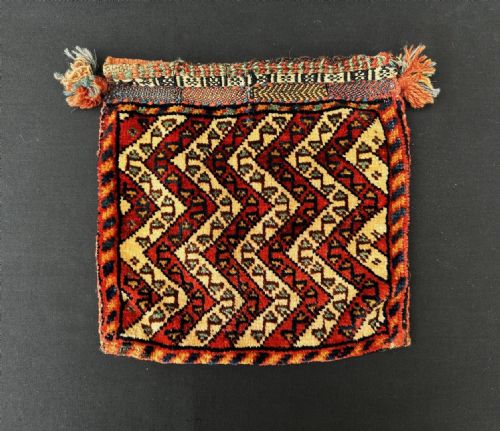
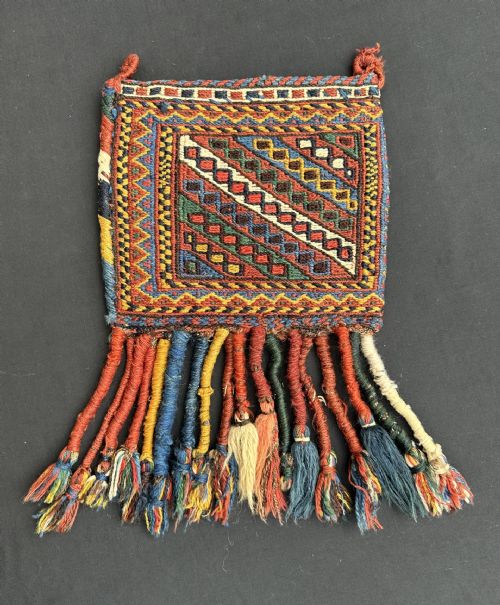
The pieces on this page most commonly appear as Persian tribal vanity bags and salt bags, originating from groups such as the Qashqa'i, Afshar, and Baluch. They reflect the specific domestic and personal needs of the makers across the late nineteenth and early twentieth centuries.
Each handwoven nomadic pouch exhibits regional forms, from the distinctive torba of the Turkmen to the smaller chanteh of the Afshar. Collectors encounter specific sub-tribe attributions that connect individual examples to precise provinces and mountain regions.
Materials and construction
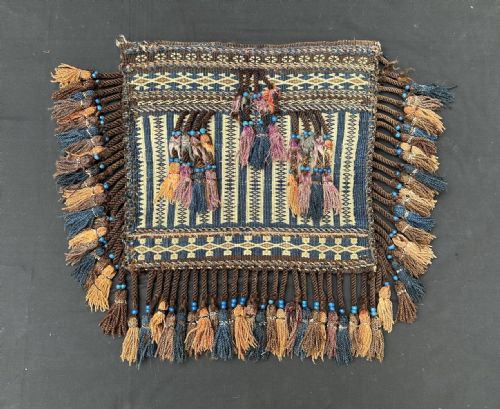
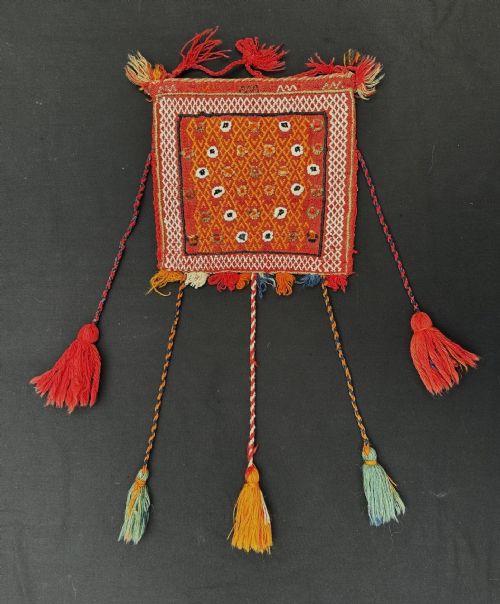
The structure relies primarily on wool spun by hand, often paired with cotton for supplementary warps or foundation elements. Artisans also integrated cowrie shells and glass beads into the surface design of specific vanity and storage bags.
Makers achieved colour through natural dyes derived from regional plants and minerals, creating rich palettes that developed stable patinas over decades of use. The weaving techniques combine pile knotting and flatweave structures, frequently finished with plain weave backs.
Nomadic weavers constructed these pieces on portable horizontal looms set up in camps. The tight knotting and durable flatweave construction ensured the pouches could withstand the rigours of transport and daily camp life.
Handwoven Nomadic Pouch Retail Price Guide 2026
Typical asking prices for handwoven nomadic pouch among the pieces listed under this phrase on Sellingantiques today, from the lower quarter to the upper quarter. They describe what is for sale here now, not the wider market.
Nomads tucked tiny glass beads and cowrie shells into these vanity bags to ward off the evil eye while on the move.
Judging quality and execution
Quality in a handwoven nomadic pouch rests on the density of the weave, the precision of the tribal pattern, and the handling of the wool. Finer knotting allows intricate geometric and figurative motifs to emerge with sharp definition.
The integrity of the natural dyes dictates visual success, where depth of hue and harmonious colour interaction elevate the piece. Examples retaining original backs, cowrie shells, and glass beads demonstrate superior preservation and completeness.
Structural execution, including secure selvedges and evenly beaten wefts, separates standard utility items from masterworks of tribal textile art. The balance between practical durability and refined aesthetic proportion marks the upper tier of these pieces.
The Handwoven Nomadic Pouch Glossary
- Chanteh
- A small personal bag or vanity pouch traditionally woven by Persian nomads for carrying small possessions.
- Torba
- A small Turkmen storage bag, frequently featuring gul motifs, used within the yurt for household storage.
- Namakdan
- A traditional salt bag characterised by a narrow neck and bottle-like profile, designed to store and dispense rock salt.
- Gul
- A medallion motif repeated across Turkmen and Central Asian tribal weaving, often identifying specific tribal groups.
- Kilim
- A flatweave textile construction lacking pile, utilised for both standalone bags and the backs of pile-woven pouches.
Handwoven Nomadic Pouch: Frequently Asked Questions
How were these bags used?
Nomadic families utilised these pouches inside tents and during seasonal migrations to store small possessions, salt, tobacco, and personal effects. Their portable nature suited pastoral life.
Many functioned as personal vanity bags or were hung from tent poles, while others served specific domestic roles such as holding pipes or spinning equipment.
How do I live with a nomadic pouch?
You can display these textiles mounted on walls, laid flat on surfaces, or preserved within specialised collections. Their durable wool construction suits gentle interior environments.
Keep them away from direct sunlight to protect the natural dyes, and periodically check them as you would any antique textile.
How do I tell tribal styles apart?
Distinguishing styles involves examining the structural format, colour palette, and specific geometric motifs native to different regions. Turkmen pieces often feature guls, while southern Persian pieces show varied animal and tribal symbols.
Reference the regional attributions in the evidence, such as Afshar, Qashqa'i, or Baluch, to understand the local weaving conventions.