

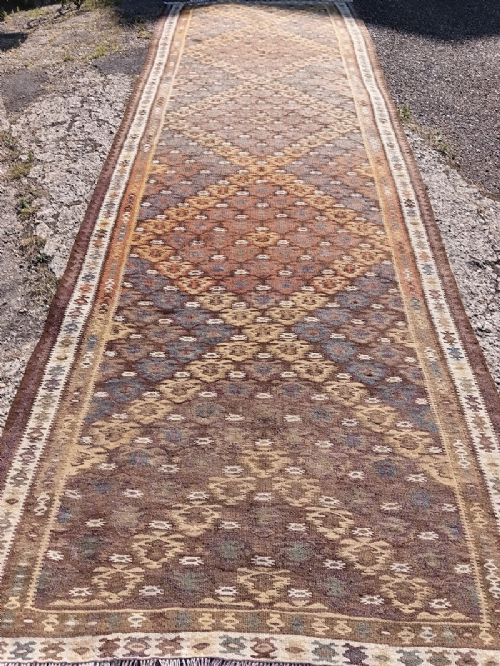

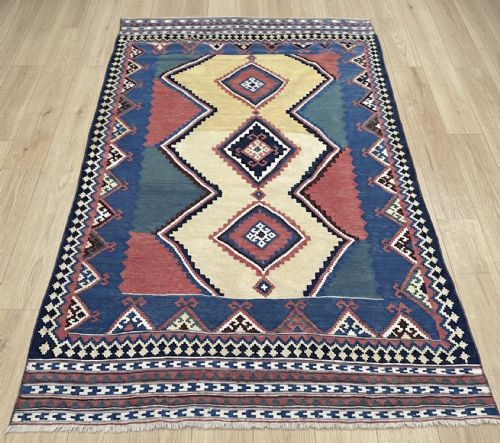
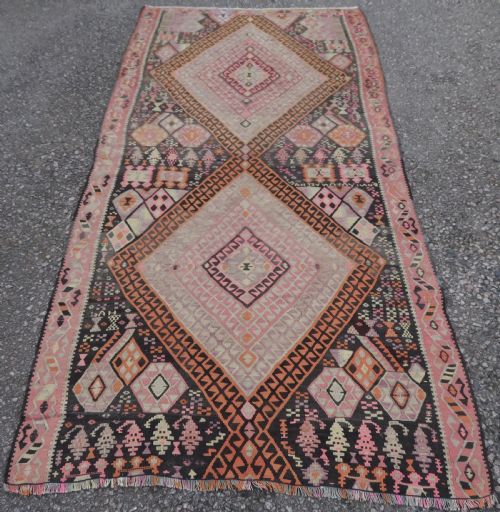
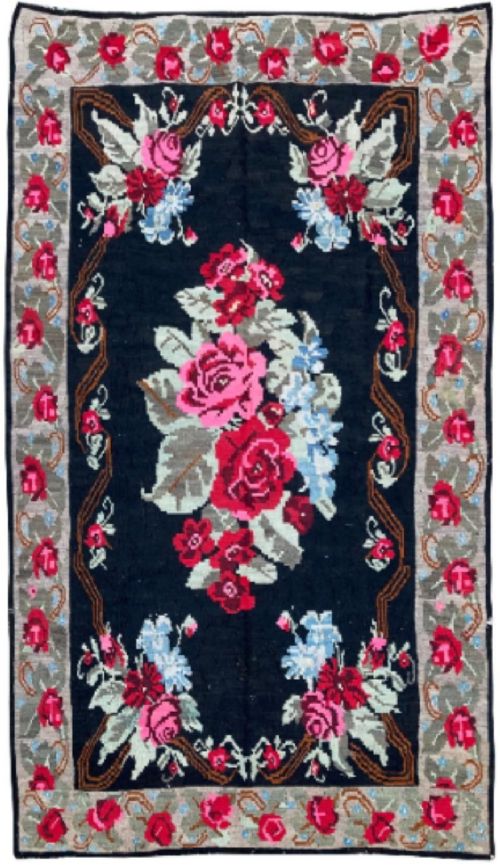
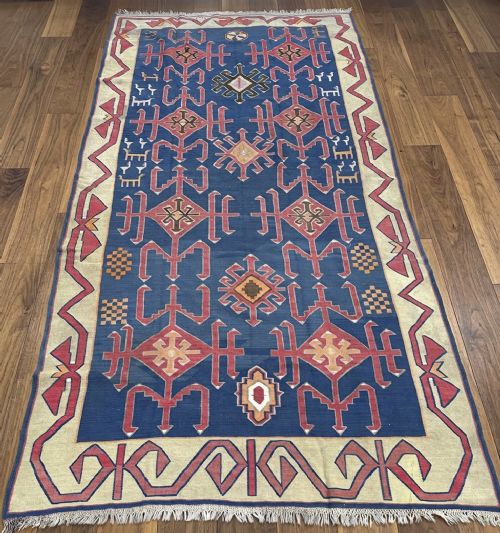


Handwoven Kilim Runner
When choosing a handwoven kilim runner, you select a flat-woven textile created by nomadic and village weavers across Persia, Turkey, the Caucasus, and Central Asia.
Handwoven Kilim Runner
A handwoven kilim runner brings linear geometry and rich tribal iconography into hallways and narrow spaces. These flat-woven floor coverings originate from traditional weaving centres across Anatolia, Persia, and Central Asia.
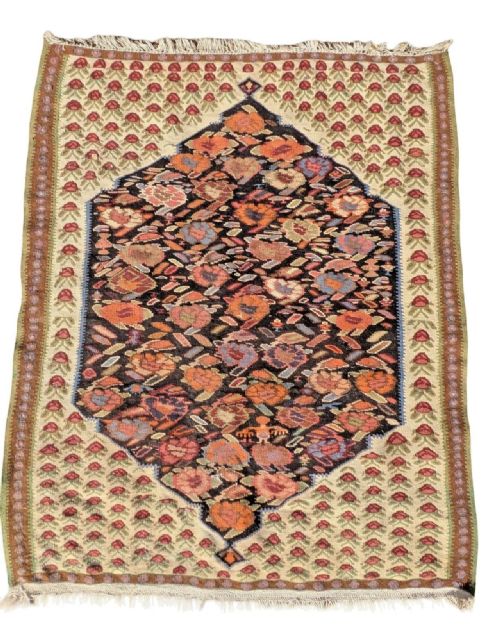
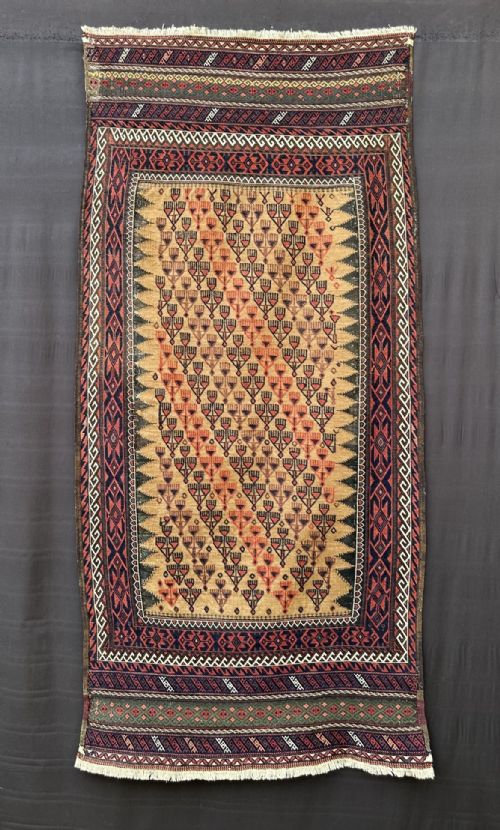
The selections on this page span the late nineteenth century through to the early twentieth century, showing regional patterns from tribal groups such as the Qashqai, Baluch, and Uzbek. Buyers encounter long, narrow formats designed for functional transit areas in homes.
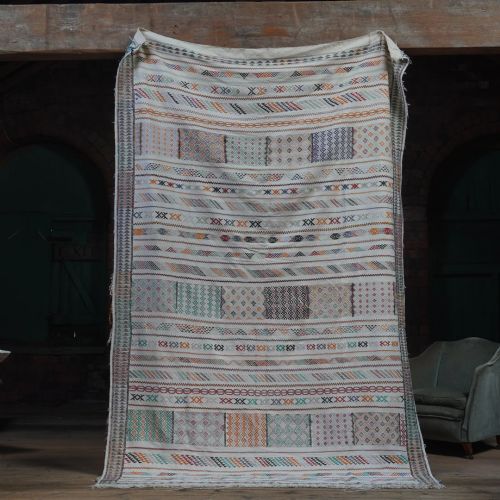
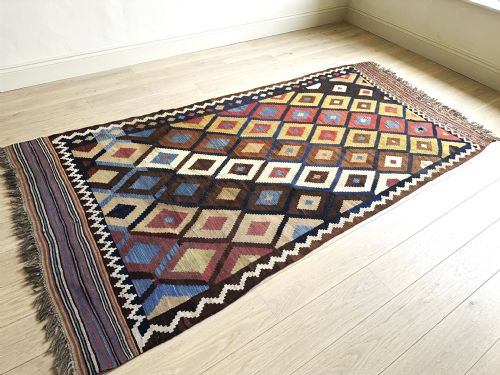
Makers utilised traditional slit-weave techniques to produce geometric motifs, medallions, and banded designs without a pile. These pieces reflect the specific weaving traditions of their originating village or nomadic confederation.
How they were made
Weavers constructed these textiles using hand-spun wool, cotton, and camel hair, often dyed with natural materials to achieve deep, lasting shades. The absence of a pile distinguishes flat-weaves from knotted carpets, relying entirely on the interlacing of warp and weft threads.
Many examples are assembled from narrow strips joined together or incorporate supplementary weft-wrapping techniques. This construction method required considerable skill from the artisan to maintain structural integrity across a long, narrow format.
Handwoven Kilim Runner Retail Price Guide 2026
Typical asking prices for handwoven kilim runner among the pieces listed under this phrase on Sellingantiques today, from the lower quarter to the upper quarter. They describe what is for sale here now, not the wider market.
Some runners started life as grain sacks or bedding storage before finding a second career protecting hallway floors.
What varies in quality
The tightness and regularity of the weave determine the structural standard of a runner. Finer tension in the wool or cotton creates a firmer fabric that withstands foot traffic better over decades of use.
The complexity of the geometric layout and the subtlety of the natural dye palette separate standard village work from finer tribal pieces. Consistency in the symmetry of the banded designs reflects the weaver's proficiency.
The Handwoven Kilim Runner Glossary
- Slit-weave
- A flat-weaving technique where the weft threads are looped back around the warp without interlocking, creating a small vertical slit between colour changes.
- Warp
- The stationary vertical threads stretched across a loom that form the structural foundation of the textile.
- Weft
- The horizontal threads passed through the warp to create the visible pattern and colour fields of the rug.
- Sofreh
- A dining or meal spread woven by tribal groups, used for serving food or storing bread rather than as a floor covering.
- Mafrash
- A storage bag or panel made by nomadic tribes, often repurposed into smaller flat-woven rugs or runners.
Handwoven Kilim Runner: Frequently Asked Questions
How do I clean an antique runner?
Gentle surface brushing and professional specialist cleaning preserve the natural wool fibres. Avoid harsh chemical detergents that strip the natural dyes.
Regular rotation prevents uneven wear patterns in high-traffic hallways.
Are these runners durable for hallways?
The tight flat-weave construction provides high durability for heavy foot traffic. Wool and camel hair naturally resist dirt and retain strength over decades.
Using a quality underlay prevents slipping and cushions the textile against hard floors.
How do I identify tribal origins?
Specific geometric motifs, border arrangements, and colour palettes point toward particular regions such as the Caucasus, Anatolia, or Persia. Comparing the weave structure helps differentiate between village and nomadic production.
Local weaving groups often utilised distinct structural strips or specific slit-weave patterns.
Why are some runners made in strips?
Nomadic looms often possessed limited widths, requiring weavers to produce narrow panels that were subsequently joined together. Uzbek and Baluch makers frequently utilised this multi-strip method for larger formats.
This technique forms a distinct stylistic feature characteristic of specific Central Asian traditions.