





Handwoven Accent Rug
A handwoven accent rug brings authentic texture and pattern to a floor space, drawn from traditional weaving regions.
Handwoven Accent Rug
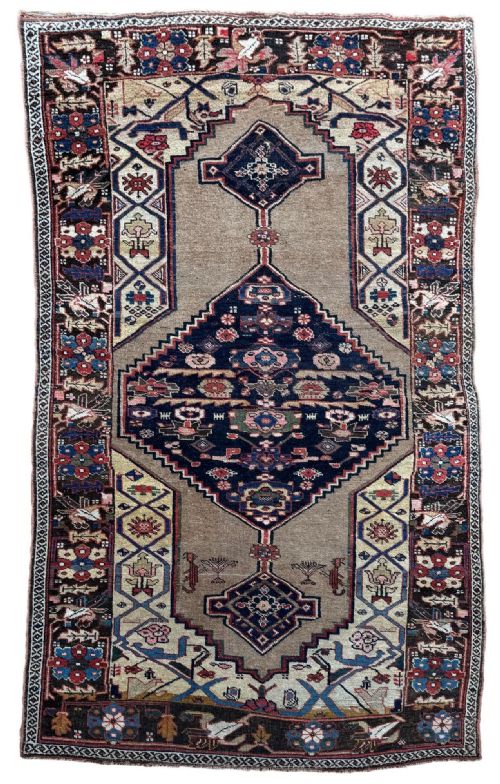
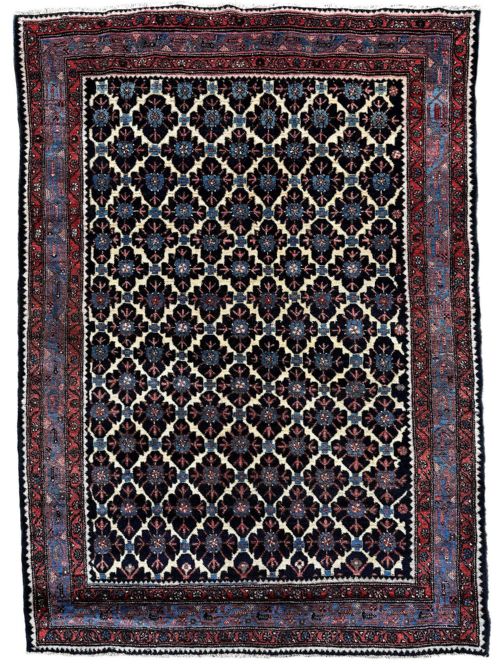
When searching for a handwoven accent rug, buyers encounter smaller floor coverings and cushions originating from Persian, Caucasian, Turkish, and Central Asian weaving traditions. The selection spans village workshops and nomadic camps, yielding pieces created for domestic use rather than mass production.
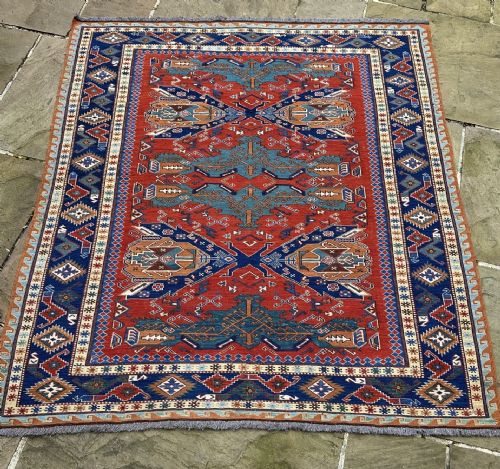
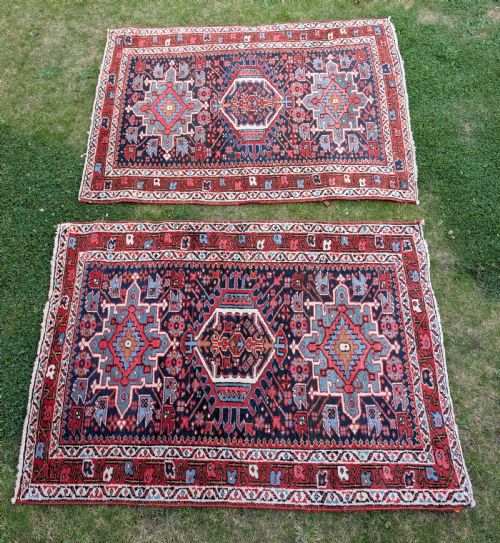
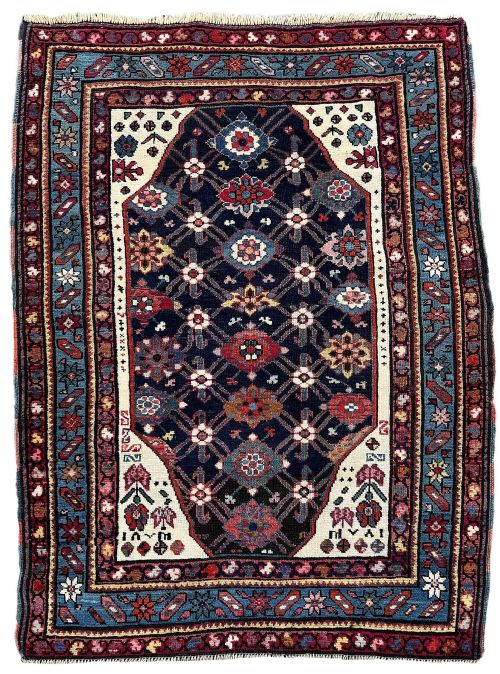
The formats on this page range from small area carpets and prayer rugs to repurposed cushions made from fragments of old kilims and tribal bag faces. Pieces date predominantly from the late nineteenth century through to the early decades of the twentieth century, reflecting traditional local motifs.
Nomadic and village pieces dominate the selection, bringing distinct geometric or floral designs associated with specific tribes such as the Qashqai, Baluch, and Karaja. Each item carries the structural characteristics of its specific geographic origin, whether woven on a vertical loom in a village or a horizontal ground loom in a camp.
How they were made
Weavers relied principally on wool and cotton for the foundation and pile, occasionally incorporating camel hair for natural tones. Hand-spun wool provides the durable base for traditional pile carpets and flatweaves, taking natural dyes with a rich variation in tone.
Natural dyes sourced from plants and minerals give these textiles their characteristic palette, which mellows gracefully over decades of light and wear. The construction methods vary between knotted pile techniques and flatwoven kilim or Soumak structures, depending on the regional tradition.
Handwoven Accent Rug Retail Price Guide 2026
Typical asking prices for handwoven accent rug among the pieces listed under this phrase on Sellingantiques today, from the lower quarter to the upper quarter. They describe what is for sale here now, not the wider market.
Several rugs on this page preserve the curious inclusion of small animal figures woven directly into traditional geometric fields.
What varies in quality
The quality of a textile rests in the integrity of the materials and the precision of the knotting or weaving technique. Finer density in the weave allows for sharper geometric or floral definition, while resilient wool ensures the pile retains its resilience under foot.
The depth and harmony of the natural dye palette separate standard pieces from exceptional examples, as complex colour interactions develop through skilful dyeing. Preservation of the original borders and structural edges also dictates the standing of a textile within its type.
The Handwoven Accent Rug Glossary
- Soumak
- A flatweaving technique that wraps supplementary weft threads over the warp to create a textured, durable surface. This method produces a thick fabric without a knotted pile.
- Prayer rug
- A small rug featuring a mihrab or niche design, traditionally used for daily prayers. The niche points toward Mecca during use.
- Kilim
- A tapestry-woven flat carpet produced without a pile. These pieces rely on interlocking weft threads to form sharp geometric patterns.
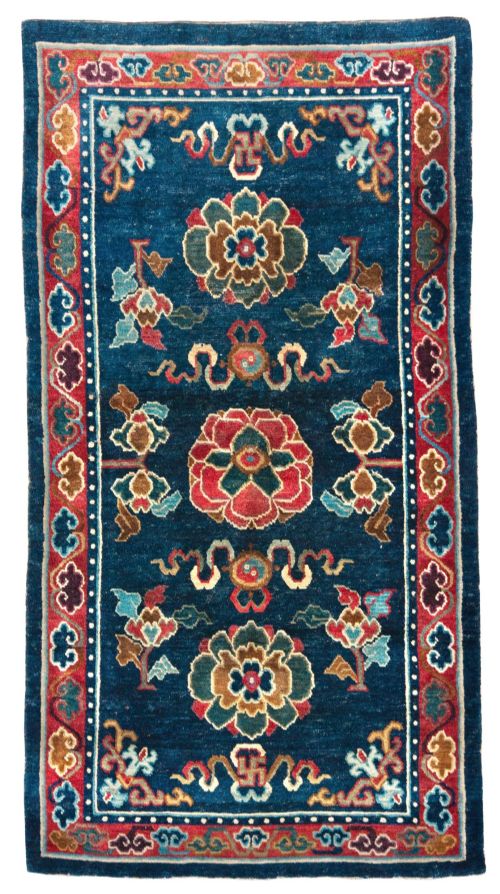
- Khaden
- A Tibetan rug format traditionally used as a sleeping or seating mat. They often display bold monastic colour combinations and distinctive designs.
Handwoven Accent Rug: Frequently Asked Questions
How do I style an accent rug?
Place smaller rugs in entryways, beside beds, or as focal points on wooden floors where their specific dimensions can be appreciated.
Pair tribal motifs with simple surroundings to let the traditional geometry and natural dyes stand out in the room.
Are these rugs suitable for daily use?
Traditional village and nomadic rugs use durable hand-spun wool that withstands normal foot traffic in domestic settings.
Use a quality underlay to prevent slipping and reduce friction between the fibres and the hard floor beneath.
How do I clean a antique rug?
Vacuum gently without using a rotating brush bar to remove surface dust from the pile without pulling the fibres.
Consult a specialist in antique textiles for professional washing, as household detergents and excessive water damage natural dyes.
What is the difference between pile and flatweave?
Pile rugs are made by knotting individual strands of wool onto a foundation warp and weft grid, creating a soft, tactile surface.
Flatweaves like kilims contain no pile, formed instead by tightly interlacing the coloured weft threads directly across the warp.