


Handled Drinks Tray
A handled drinks tray brings immediate practicality and period elegance to any room, offering a solid surface for glasses, bottles and decanters.
Handled Drinks Tray
A handled drinks tray serves as both a functional tabletop accessory and a decorative centrepiece, designed to transport glassware or hold decanters securely. When you search for a handled drinks tray, you encounter variations spanning the Victorian, Edwardian, and Art Deco periods, alongside mid-century interpretations.
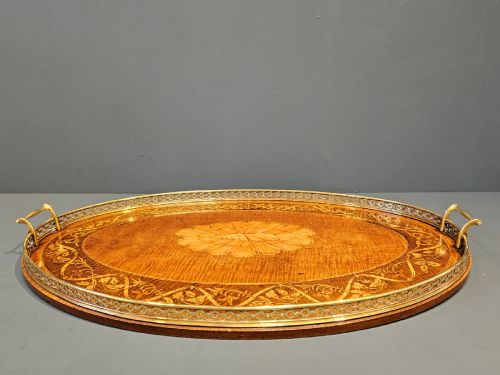
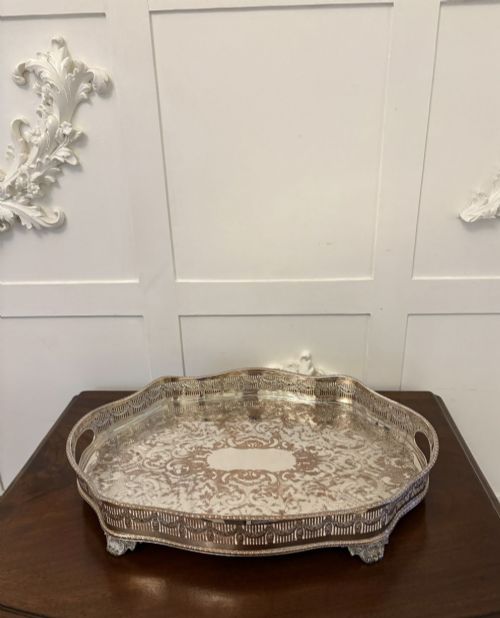
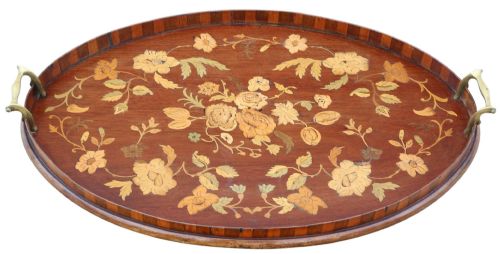
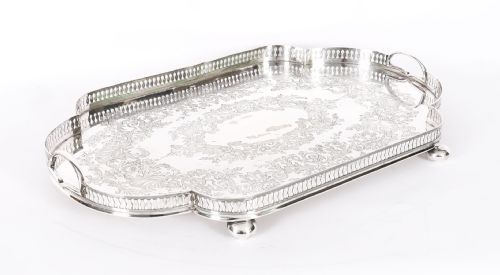
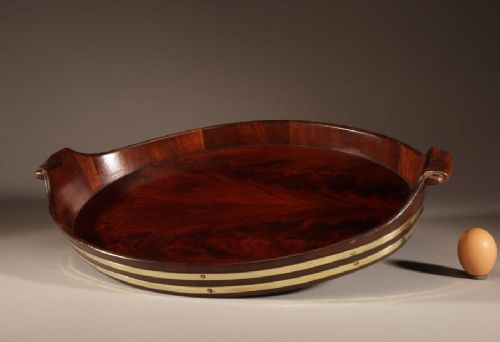
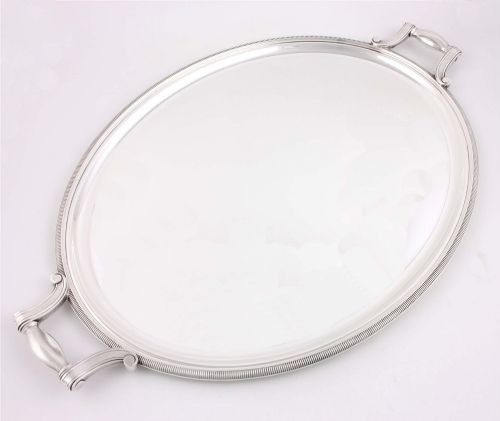
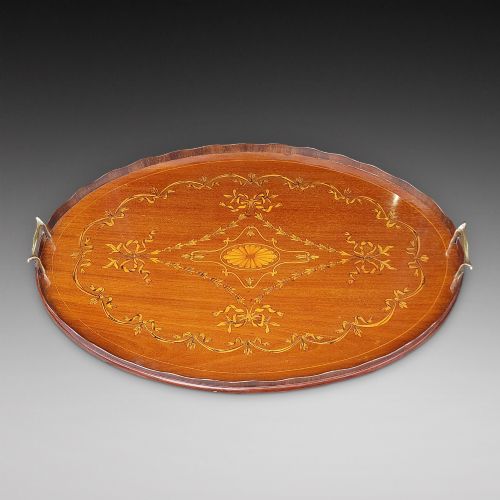
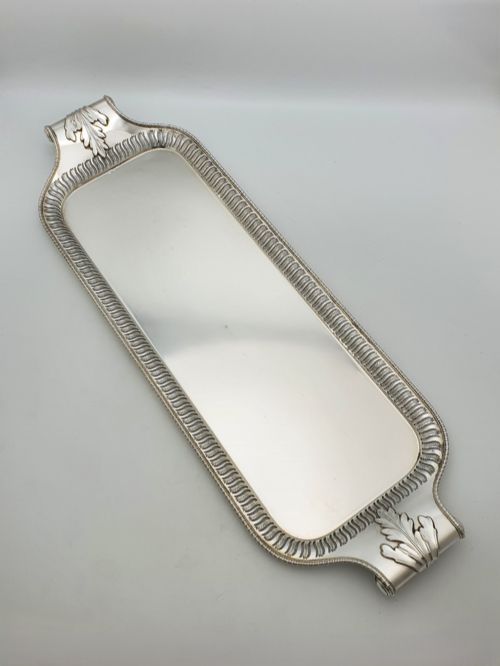
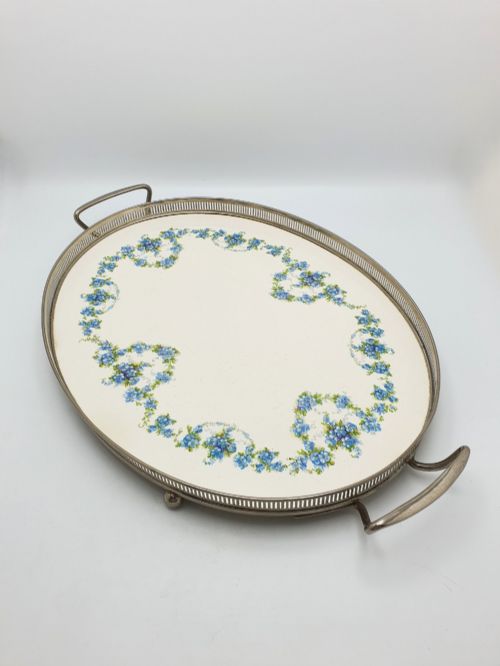
The most common examples on this page are Edwardian and Victorian mahogany models featuring inlaid wood, alongside silver-plated metal versions equipped with pierced borders, galleries, and sturdy carrying handles.
Materials and construction
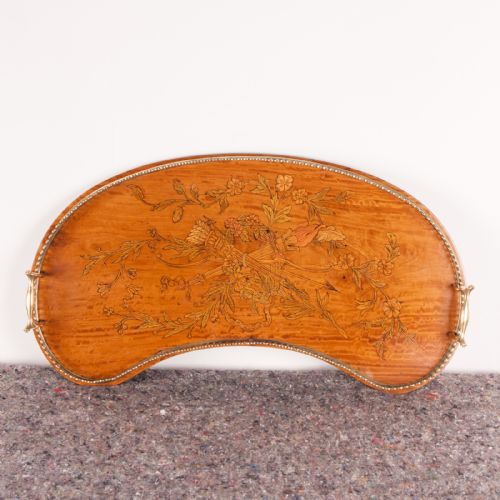
Wood trays rely on traditional cabinet-making skills, utilising mahogany, satinwood, burr yew, and rosewood, often enhanced with delicate marquetry, brass handles, or coopered construction.
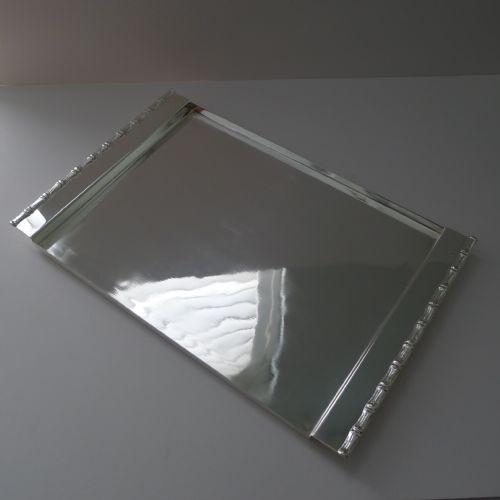
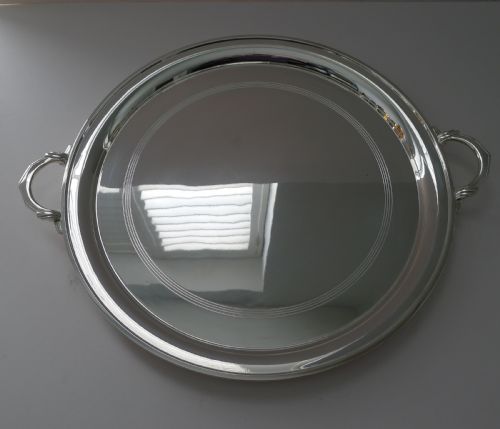
Metal versions combine base metal, copper, or electroplated nickel silver with Sheffield plating or sterling silver, incorporating cast handles, engraved surfaces, and pierced galleries.
Periods represented span from the 18th century and Georgian era through the Victorian, Edwardian, and Art Deco years up to 1960.
Judging execution and finish
Quality rests upon the crispness of the marquetry inlay, the weight and stability of the timber, and the integrity of the silver plating over the base metal.
Superior pieces display fine hand-engraving, secure joinery, and substantial cast handles that integrate harmoniously with the overall form.
Keith Murray For Mappin & Webb·James Deakin·Edwards and Roberts·Harrison Bros Sheffield·Mappin & Webb·Christofle
The Handled Drinks Tray Glossary
- Gallery tray
- A tray featuring a raised pierced or solid metal border designed to prevent items from sliding off during transport.
- Marquetry
- Decorative woodwork where different coloured veneers create pictorial patterns and motifs on the surface of the tray.
- Sheffield plate
- An early form of silver plating produced by fusing a sheet of silver to a copper ingot before rolling them together.
- Coopered
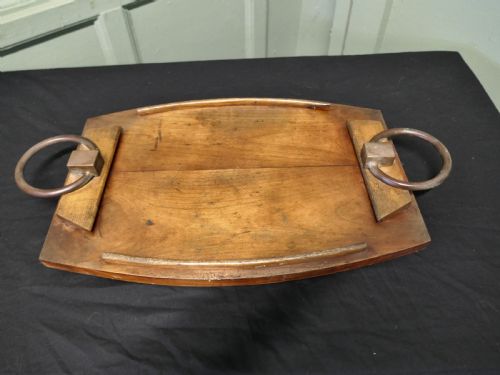
- Constructed from curved wooden staves joined tightly together, similar to the technique used for making barrels.
- Salver
- A flat metal tray, usually standing on small feet, used for serving drinks or presenting items.
Handled Drinks Tray: Frequently Asked Questions
How do I use a handled drinks tray today?
These trays sit comfortably on side tables, occasional tables, or sideboards to organise decanters, tumblers, and cocktail sets.
They also function effectively for carrying afternoon tea or serving drinks to guests from room to room.
How do I distinguish Edwardian trays from Victorian ones?
Victorian trays often lean towards heavier mahogany construction with bold inlays and substantial silver-plated mounts.
Edwardian examples frequently display lighter satinwood, kidney shapes, delicate marquetry, and refined pierced metal galleries.
What is the difference between silver plate and sterling silver?
Silver plate consists of a thin layer of silver bonded to a base metal or copper substrate, as seen in many period serving pieces.
Sterling silver contains a solid, regulated purity of silver throughout the entire object, hallmarked to indicate its metal content.
Can I place a wooden tray on a stand?
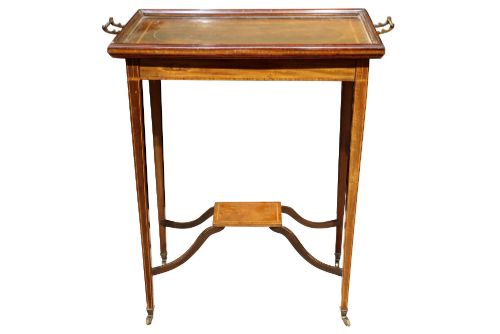
Certain larger butler's trays are designed to lift off their folding or fixed wooden stands to serve as independent platters.
When paired with a matching stand, they transform into stable occasional tables or cocktail surfaces.