


Handled Brass Bucket
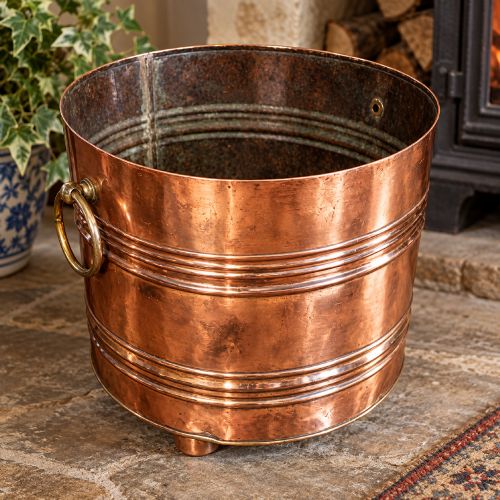
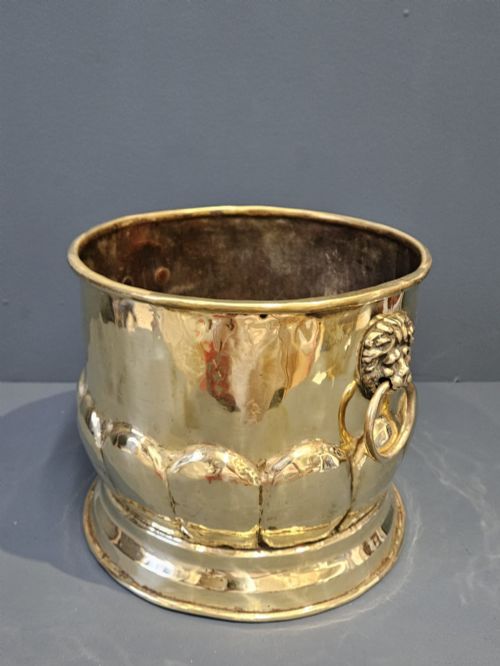
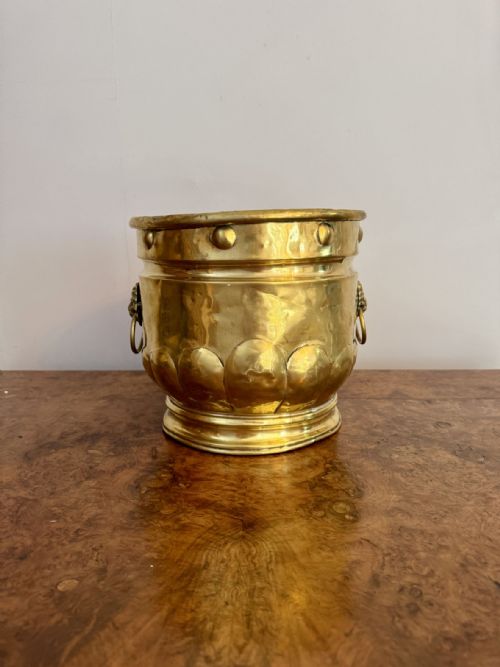
A handled brass bucket serves as a practical fireside receptacle or a striking planter, combining utility with warm metal tones.
Handled Brass Bucket
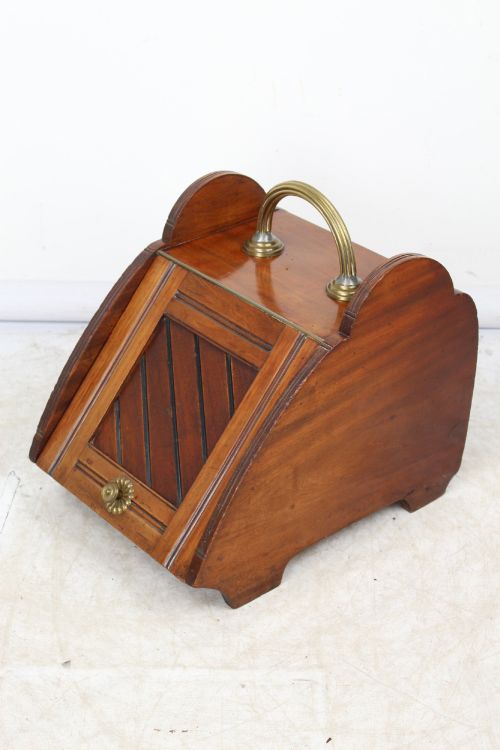
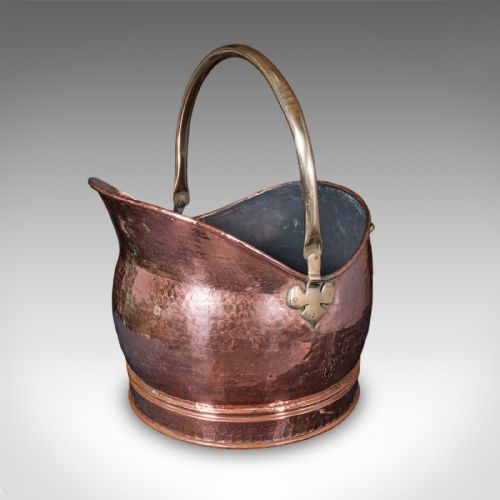
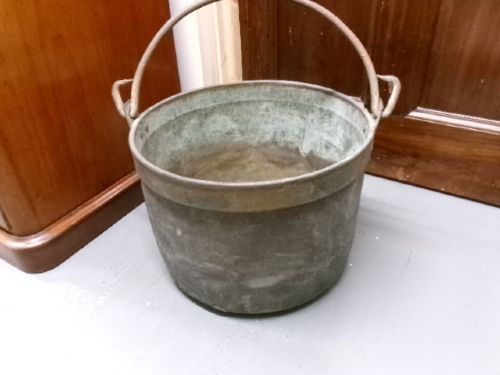
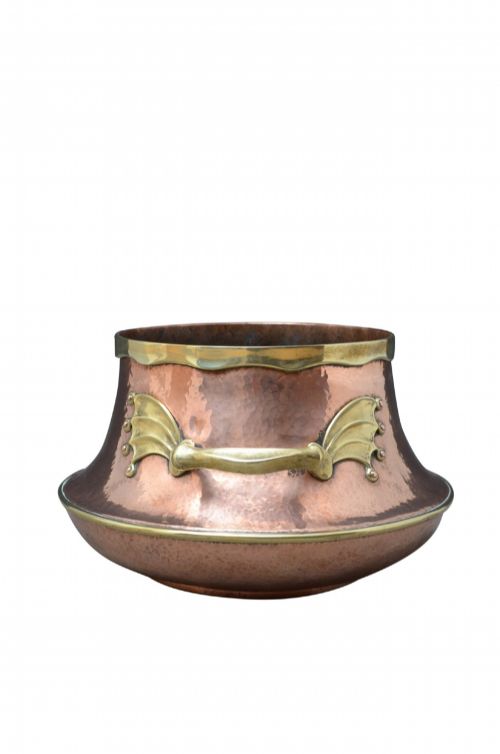
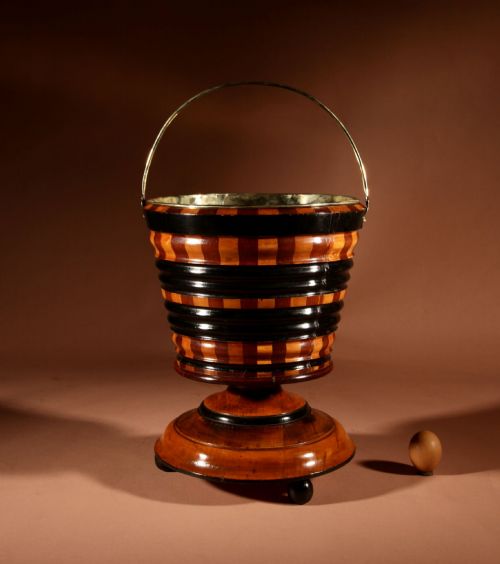
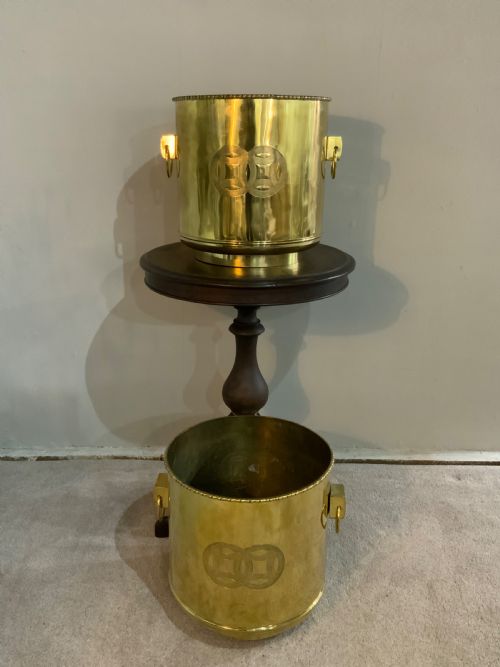
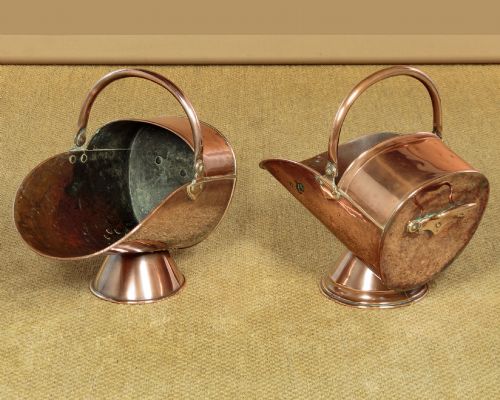
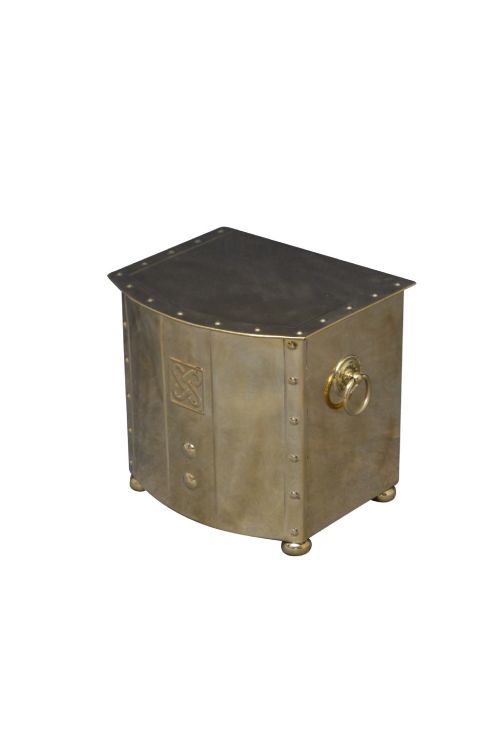
When you search for a handled brass bucket, you encounter versatile vessels primarily designed for domestic utility and fireside service. These pieces double as coal scuttles, log bins, and jardiniere planters, appearing frequently in Victorian and nineteenth-century iterations.
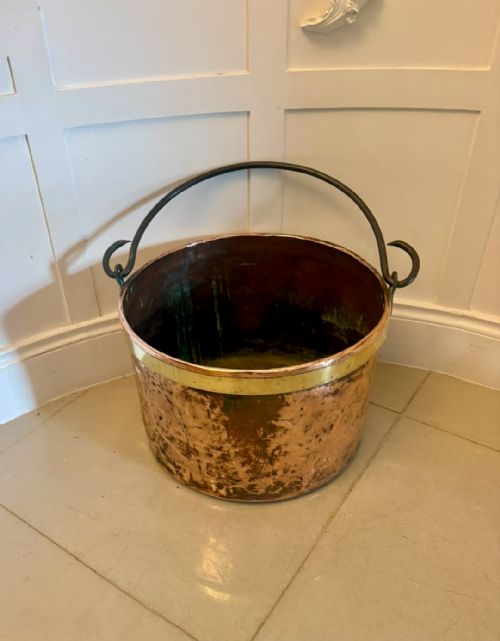
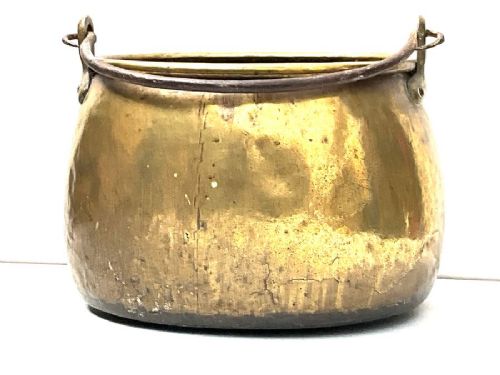
The selection on this page encompasses varied forms ranging from coopered wooden staves bound in brass to heavy hammered copper and brass combinations. Many examples hail from the Victorian period, alongside Georgian and later twentieth-century interpretations.
How they were made
Artisans constructed these containers using sheet brass and copper, frequently incorporating swing handles and decorative mounts in wrought iron or cast metal. Coopered timber versions utilise tight-fitting staves of mahogany, oak, or walnut secured by substantial brass bands.
Surface finishes include hand-hammered texturing and polished profiles, reflecting traditional metalworking techniques. Handles are typically riveted or attached via sturdy brackets to support heavy loads of coal, logs, or water.
Listings feature brass combined with oak, mahogany, walnut, and wrought iron across nineteenth-century and early twentieth-century periods.
What varies in quality
The calibre of a handled brass bucket depends heavily on the gauge of the metal and the integrity of its construction. Thicker brass and copper resist denting and maintain structural rigidity under daily fireside use.
Superior craftsmanship shows in the precision of coopered joints on wooden vessels and the deliberate finishing of riveted seams. Decorative elements such as cast brass feet, paw mounts, and heraldic embossing elevate standard utilitarian objects into finer decorative pieces.
William Soutter & Sons
The Handled Brass Bucket Glossary
- Coopered
- Made by a cooper using wooden staves bound together with metal hoops, typical of buckets and barrels.
- Purdonium
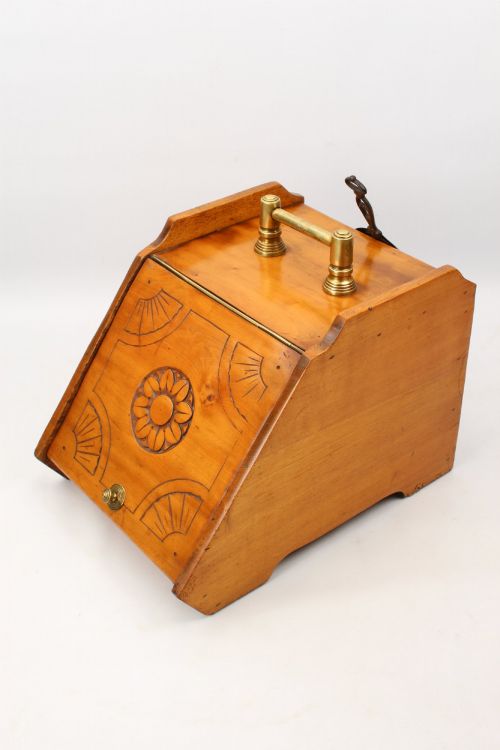
- A specialised coal box or scuttle designed for domestic fireside use during the Victorian era.
- Cellarette
- A lockable container used for storing wine bottles, frequently brass-bound and standing on the floor.
- Helmet scuttle
- A coal bucket shaped with a flared lip resembling a helmet to facilitate pouring fuel.
Handled Brass Bucket: Frequently Asked Questions
What is a handled brass bucket used for?
These vessels primarily served to transport and store coal, logs, or peat for open hearths in nineteenth-century homes.
Today, owners frequently repurpose them as indoor planters, wine coolers, or purely decorative fireside accessories.
How do I date a brass bucket?
Dating relies on examining manufacturing techniques, such as hand-hammered marks versus machine-rolled metal sheets, alongside the prevailing style of the period.
Victorian and Georgian examples often feature distinct handle attachments, dovetail joints, and specific patination on the brass and copper.
What is the difference between a coal scuttle and a jardiniere?
A coal scuttle is engineered for fuel storage, often featuring a shovel compartment, a sloped opening, and a robust carrying handle.
A jardiniere functions as an ornamental plant holder and typically lacks the utilitarian strengthening and coal dust residue found on scuttles.
How do I clean antique brass and copper?
Maintenance generally involves removing surface dust with a soft, dry cloth to preserve the historical aged appearance.
Applying harsh chemical polishes is usually discouraged by collectors who value the dark, natural patination accumulated over centuries.