
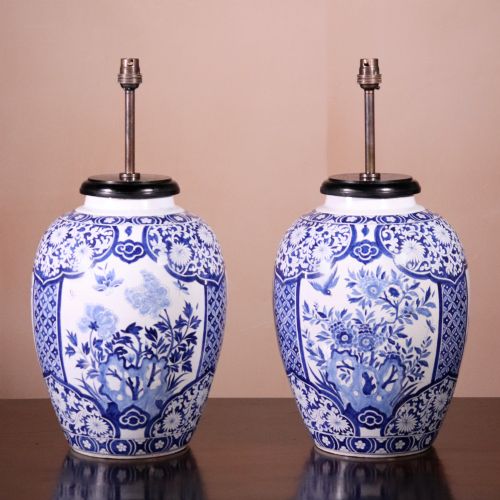


Hand Painted Vase Lamps
Hand painted vase lamps bring converted centuries-old porcelain and earthenware into domestic interiors as functional lighting.
Hand Painted Vase Lamps
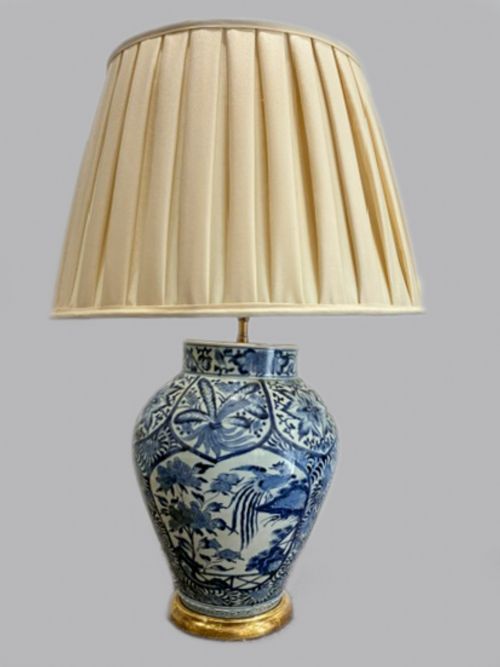
When searching for hand painted vase lamps, buyers encounter converted antique vessels originating from Chinese, Japanese, and European traditions. These pieces combine historic ceramic bodies, such as blue and white porcelain or Satsuma ware, with electrical fittings for contemporary illumination.
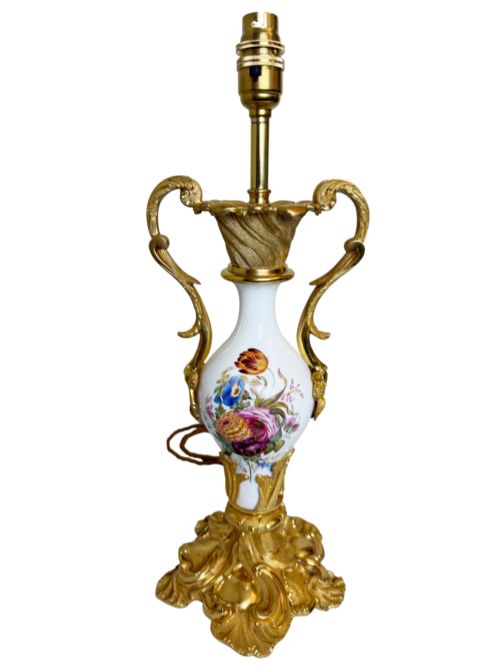
The most common examples on this page date from the nineteenth century, though earlier pieces from the seventeenth and eighteenth centuries appear alongside early twentieth-century creations. Forms range from ginger jars and baluster vases to mantle lustres mounted on brass or ormolu bases.
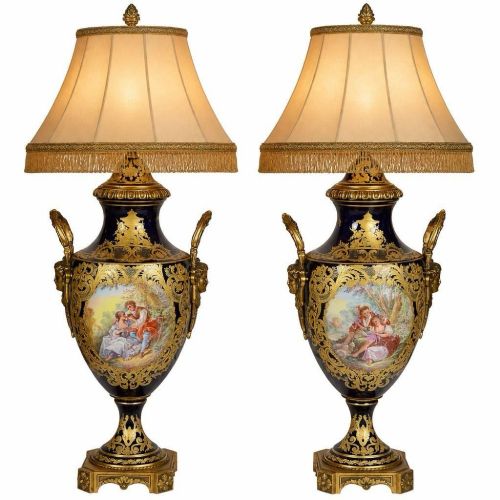
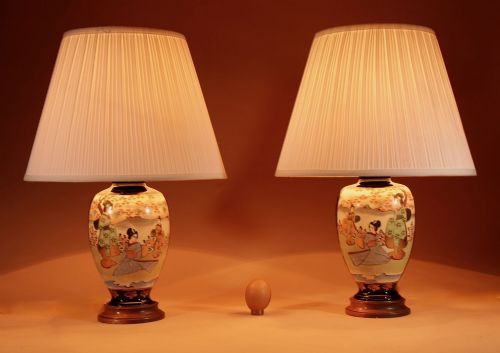
Origin styles span Chinese export and Qing dynasty aesthetics, Japanese Meiji period ceramics, and European interpretations like French Sevres style or Italian Majolica. Each lamp preserves hand-applied painted decoration from its original vessel lifespan.
What varies in quality
The distinction between ordinary and exceptional hand painted vase lamps rests on the finesse of the ceramic painting and the harmony of the metal mounts. Master painters executed intricate floral and figural scenes with precision, whereas lesser pieces display coarser, hurried brushwork.
Quality also depends on the structural integrity of the conversion process, where professional mounting respects the original vessel without causing intrusive damage. The choice of complementary ormolu or brass fittings further separates standard factory output from finer decorative pieces.
Ginger jars originally built for spices now illuminate modern rooms.
The Hand Painted Vase Lamps Glossary
- Famille Verte
- A traditional Chinese porcelain palette dominated by green enamel overglaze colours. This style frequently depicts botanical and narrative scenes across nineteenth-century vases.
- Imari
- A style of Japanese export porcelain featuring underglaze blue and contrasting iron red, complemented by gilt highlights. These pieces were produced in Arita for both domestic and international markets.
- Ormolu
- Gilded bronze used widely for decorative mounts and bases on European and converted Asian ceramics. The technique provides a lustrous metallic contrast to the painted porcelain body.
- Satsuma
- A type of Japanese earthenware characterised by a crackled ivory glaze and elaborate polychrome enamel decoration. These ceramics gained significant popularity during the Meiji period.
- Ginger Jar
- A high-shouldered ceramic vessel originally designed for spices, frequently converted into table lamps. Their rounded profiles provide an ideal canvas for hand-painted motifs.
Hand Painted Vase Lamps: Frequently Asked Questions
Are these lamps newly made?
The ceramic bodies originate from historic periods spanning the seventeenth to the early twentieth century. Artisans converted these antique vases into lighting fixtures at various points in their history.
While the electrical components and wiring are modern updates, the painted vessels themselves carry centuries of age and traditional craftsmanship.
How do I choose a lampshade?
Selecting a shade depends on the proportions of the painted vase and the surrounding interior space. Fabric and silk shades complement the texture of historic porcelain without overwhelming the hand-painted details.
Matching the scale of the shade to the height of the ceramic body ensures a balanced silhouette on a table or mantle.
Can these lamps be safely plugged in?
Many antique vase lamps arrive with updated or recently rewired electrical systems suitable for standard domestic use. Buyers should verify the specific wiring details provided in each listing before installation.
Consulting a professional electrician is recommended for any historic lighting fixture to ensure compliance with current safety standards.
How are different ceramic styles identified?
Styles are distinguished by the specific glaze palette, painting technique, and regional origin of the ceramic body. Terms like blue and white, Famille Rose, or Satsuma reference distinct aesthetic traditions from China and Japan.
Examining the brushwork and the crackle of the glaze helps date and attribute the vase to specific historic periods.