


Hand Painted Porcelain Cherubs
Hand painted porcelain cherubs bring playful Rococo charm to interior spaces through sculptural figures and delicate painted detail.
Hand Painted Porcelain Cherubs
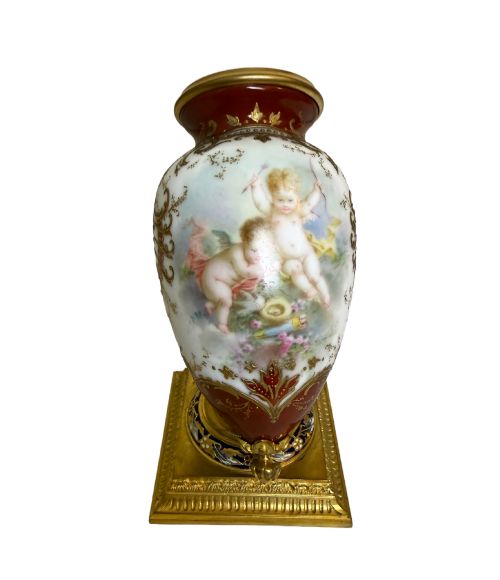
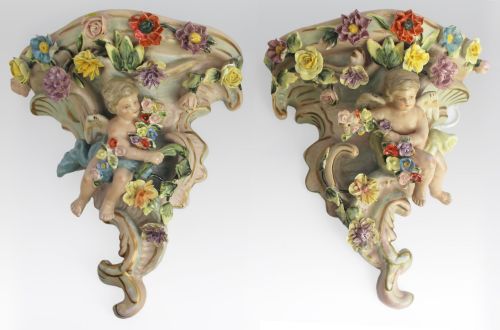
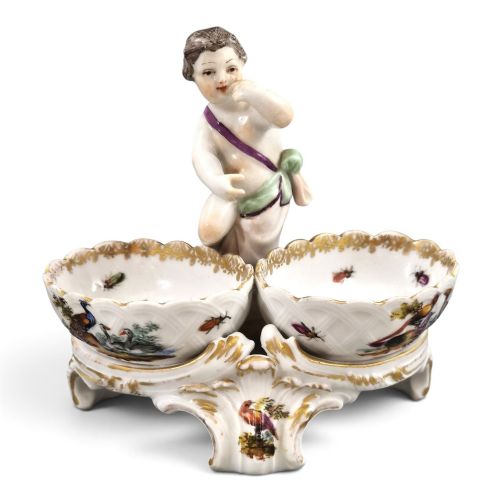
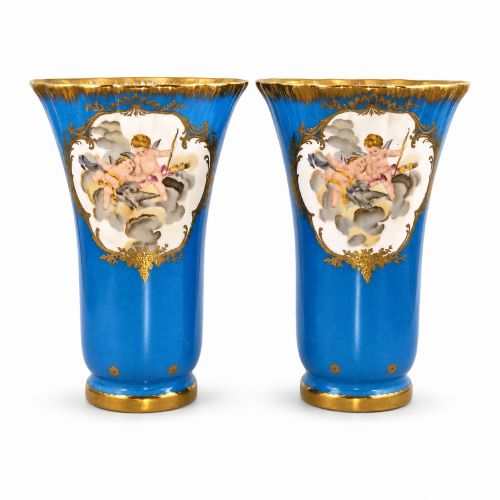
Hand painted porcelain cherubs comprise figural ornaments, centrepieces, vases, salt cellars, and wall brackets created across the eighteenth, nineteenth, and early twentieth centuries. These decorative objects draw heavily upon Rococo Revival and French Rococo design aesthetics, incorporating winged putti or angels into functional and ornamental vessels. Buyers encounter Continental European works most frequently, particularly pieces associated with German, French, and English porcelain traditions from the Victorian and Edwardian eras.
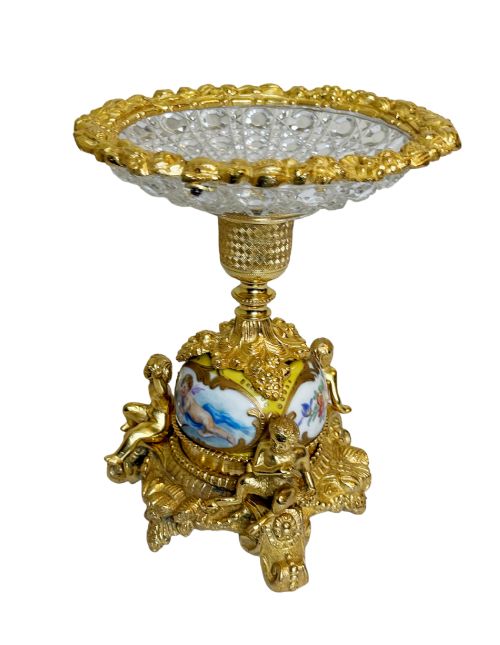
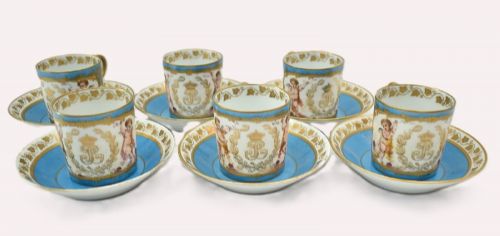
The objects serve diverse decorative functions within a room, ranging from large table centrepieces and lidded vases to smaller porcelain figurines and cup sets. Many examples integrate gilt bronze, ormolu, brass, or cut crystal mounts that frame the painted porcelain components. The cherub figures often appear alongside natural motifs such as shells, goats, and floral arrangements, reflecting classical and mythological themes popular during the period.
How they were made
Craftsmen shaped these items using hard-paste or soft-paste porcelain, ceramic, and occasionally faience, applying hand-painted pigments and enamel directly to the fired body. Artisans utilised gold leaf, gilt, and ormolu finishes to highlight moulded details, mounts, and hardware. Metalworkers constructed complementary mounts in gilt bronze and brass, securing porcelain bodies with pins, screws, or specialised adhesives.
Makers formed individual figures and components through intricate moulding before hand-finishing faces, hair, and clothing with fine brushwork. Kiln firing fixed the underglaze colours, while subsequent low-temperature firings set delicate enamel details and gilding. Workshops combined ceramic production with metal casting to produce composite objects like clocks, jewellery caskets, and centrepieces.
Cupids and putti ride happily on the backs of porcelain goats, shells, and chariots across these mischievous nineteenth-century designs.
What varies in quality
The refinement of the hand-painted brushwork distinguishes superior examples from standard production, particularly in the rendering of facial expressions, hair texture, and avian or floral details. Finer pieces demonstrate precise enamel control and delicate shading rather than heavy, uniform application.
The integration of the porcelain body with its metal mounts indicates the standard of manufacture. High-quality items display crisply cast gilt bronze or ormolu mounts that fit the ceramic contours seamlessly, whereas lesser examples show ill-fitting hardware or crude casting seams.
Sevres·Meissen·KPM Berlin·Samson Paris·Schierholz·Veuve Perrin·Johann Joachim Kandler
The Hand Painted Porcelain Cherubs Glossary
- Cherub
- A winged angelic being, frequently depicted as a chubby infant in decorative art. These figures often appear in eighteenth and nineteenth-century porcelain sculpture.
- Putto
- An artistic representation of a naked male child, usually winged, derived from classical art. The term is often used interchangeably with cherub in nineteenth-century Continental porcelain descriptions.
- Ormolu
- Finely ground high-carat gold applied in a mercury amalgam to a bronze object. This technique provides a rich golden surface finish on mounts framing porcelain bodies.
- Rococo Revival
- A nineteenth-century design style that revives the asymmetrical scrolls, shell motifs, and exuberant ornamentation of the mid-eighteenth-century French Rococo movement. It heavily influences Victorian decorative porcelain.
- Comport
- An ornamental dish or bowl raised on a stem, utilised for serving fruit or display. These pieces often feature hand-painted porcelain bowls supported by figural or gilded stems.
- Gilt Bronze
- Bronze metalwork that has been coated with a layer of gold leaf or gold paint. It appears widely in nineteenth-century French and German decorative accessories.
Hand Painted Porcelain Cherubs: Frequently Asked Questions
What are hand painted porcelain cherubs?
These pieces are decorative sculptures, vessels, and table objects featuring hand-painted infant angelic figures. They combine ceramic artistry with sculptural modelling.
Maker workshops across Europe produced them extensively during the nineteenth century, drawing on earlier Rococo design traditions.
How were antique cherub centrepieces used?
Owners placed them on dining tables as decorative focal points or flower holders during formal meals. They demonstrated the host's refined taste and wealth.
Secondary uses included shelf display in drawing rooms, where the gilt mounts caught the candlelight.
How do I care for porcelain and ormolu?
Keep the objects away from direct sunlight to protect fragile enamel paints and gilded surfaces from fading. Dust them gently with a soft, dry brush.
Avoid liquid cleaners entirely, as moisture can damage unglazed ceramic areas and degrade historic metal patinas.
How can I tell nineteenth century pieces apart?
Examine the painted details, glaze thickness, and mounting techniques to establish the likely manufacturing period. Nineteenth-century works often adopt styles inspired by eighteenth-century Meissen or Sevres models.
Base marks, where present, help identify specific factories operating in Germany, France, or England.