

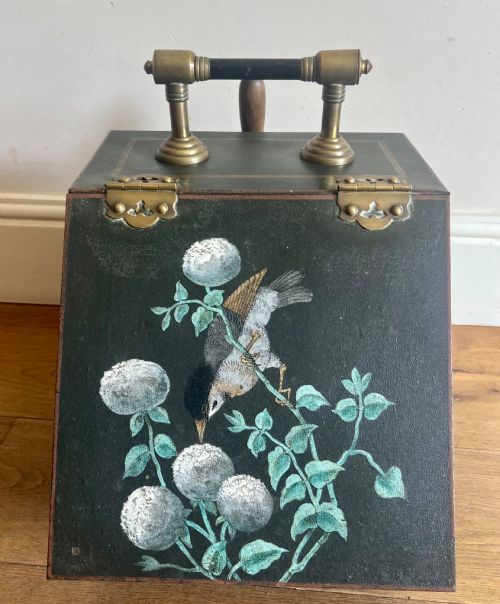


Hand Painted Metal Box
A hand painted metal box brings miniature artistry and robust utility together, offering small storage with decorative charm from past centuries.
Hand Painted Metal Box
A hand painted metal box covers a range of useful domestic objects, from small pocket containers to large fireside receptacles. When searching for a hand painted metal box, buyers encounter items created for holding tobacco, snuff, patches, or household fuel.
The pieces on this page span several centuries, featuring forms originating from the eighteenth and nineteenth centuries. Examples include Georgian enamel patch boxes, nineteenth-century toleware tobacco tins, and large Victorian coal scuttles or log boxes.
Makers utilised various base metals and applied painted decoration directly onto the surface, resulting in folk art pieces alongside refined Staffordshire enamels. These items served practical everyday functions while displaying intricate painted scenes or decorative motifs.
How they were made
Artisans constructed these vessels using sheet iron, copper, brass, and gilt metal as foundational materials. Enamel was also applied to copper bases in specialised workshops to create smooth, glossy surfaces suitable for fine miniature painting.
Workers shaped the metal into rectangular boxes, cylindrical tea canisters, or flared scuttles before applying layers of paint or lacquer. Toleware items received dark japanned finishes decorated with hand-painted floral designs or folk art scenes.
Hand Painted Metal Box Retail Price Guide 2026
Typical asking prices for hand painted metal box among the pieces listed under this phrase on Sellingantiques today, from the lower quarter to the upper quarter. They describe what is for sale here now, not the wider market.
Current listings feature materials including enamel, copper, brass, sheet iron, and wood across the eighteenth and nineteenth centuries.
What varies in quality
The refinement of the painted surface separates standard utility items from superior decorative pieces. Fine brushwork on eighteenth-century enamel snuff boxes displays considerable detail, whereas folk art pieces rely on bolder, simpler strokes.
The preservation of the original metal substrate and painted finish dictates the overall character of the piece. Intact hinges, secure clasps, and minimal loss to the painted decoration reflect careful handling over generations.
The Hand Painted Metal Box Glossary
- Toleware
- Metalware coated with lacquer or paint, often japanned and decorated by hand. This technique transformed everyday iron and tin objects into ornamental household goods.
- Patch box
- A small pocket container used to hold cosmetic patches made of silk or velvet. Georgian ladies placed these on their faces to highlight complexions or conceal blemishes.
- Japanning
- A European imitation of East Asian lacquerwork involving layered varnishes baked onto metal or wood. The process created a glossy, hard-wearing dark surface.
- Staffordshire enamel
- Enamel painted on copper produced in the English Midlands during the eighteenth century. Bilston and South Staffordshire were primary centres for this miniature art form.
Hand Painted Metal Box: Frequently Asked Questions
What were small metal boxes used for?
Small boxes held precious dry goods like snuff, tobacco, or small personal items such as cosmetic patches. People carried them daily in pockets or kept them on dressing tables.
Larger versions remained in public rooms to store fuel or waste paper, combining practical storage with visible decoration.
How do I identify eighteenth-century enamel pieces?
Eighteenth-century examples often feature copper bases covered in white or coloured enamel with finely detailed hand-painted pastoral or portrait scenes. They typically take the form of small snuff or patch boxes with hinged lids.
Makers in Staffordshire produced many of these miniature works, which exhibit a characteristic smooth, glossy finish.
What is toleware?
Toleware refers to lacquered or painted metal items, usually made from sheet iron or tinplate. Artisans decorated them with floral motifs, landscapes, or geometric patterns.
This tradition includes both delicate tea canisters and robust nineteenth-century coal scuttles used beside the fireplace.
How should I care for painted metal boxes?
Keep painted metal boxes away from direct sunlight and damp environments to protect the fragile surface decoration and prevent metal oxidation. Dust them gently with a dry, soft cloth.
Avoid using liquid cleaners or abrasive agents, which can damage the historical paint layers or enamel.