




Hand Painted Maiolica
Hand painted maiolica brings tin glazed earthenware into domestic spaces through vibrant polychrome and blue and white vessels.
Hand Painted Maiolica
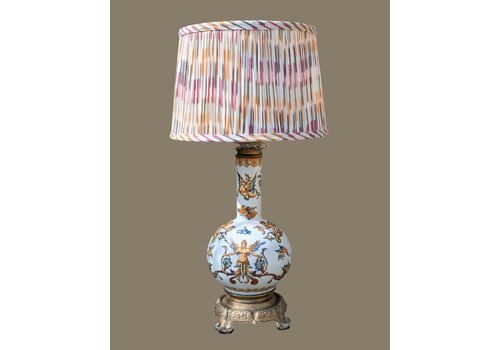
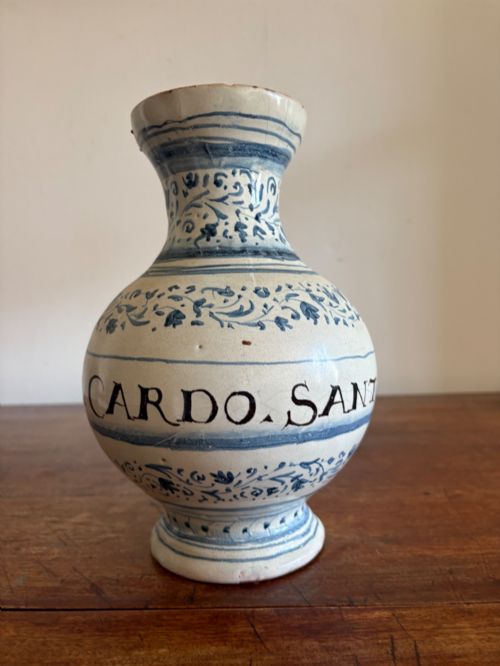
When you search for hand painted maiolica, you encounter tin glazed earthenware spanning the eighteenth and nineteenth centuries. These pieces encompass apothecary jars, lidded vases, table lamps, and decorative plates that reflect Italian traditional and Renaissance revival styles.
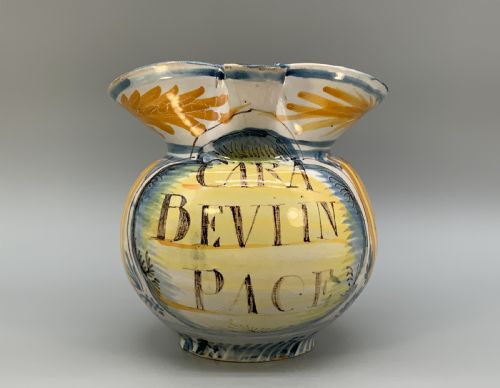
The objects available on this page lean heavily toward nineteenth century interpretations, alongside eighteenth century forms such as pharmacy jugs and garofano vases. Makers like Cantagalli from Florence appear in the material, showing how nineteenth century workshops revived earlier aesthetics.
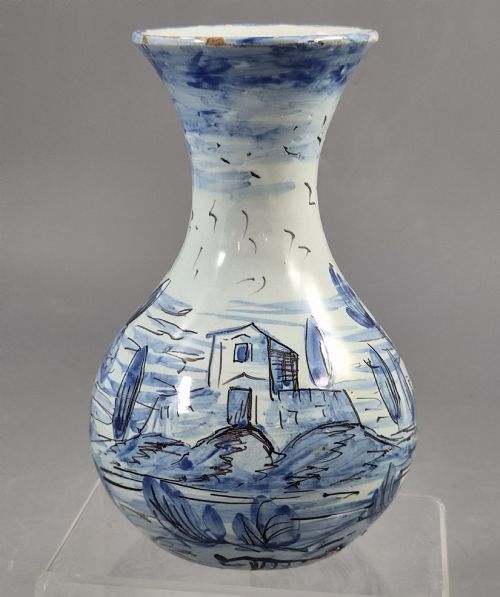
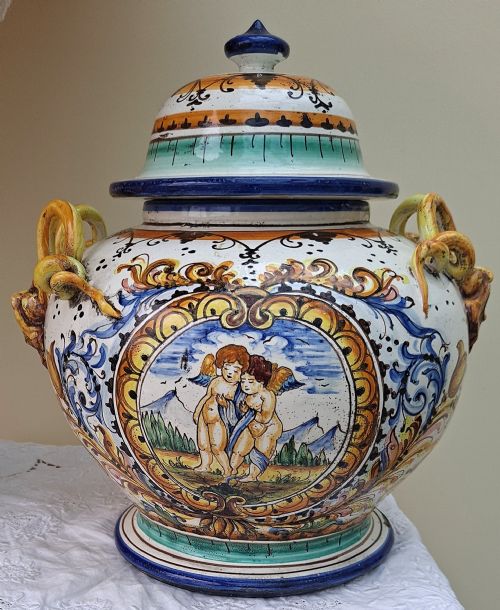
Vessels and jars dominate the selection, often finished with polychrome pigments or traditional blue and white painting. You also find centrepiece bowls and large pedestal vases that demonstrate the enduring popularity of Italian maiolica designs.
Materials and construction
The foundation of these objects is earthenware or terracotta, shaped into utility vessels and decorative items before receiving a specialised tin glaze. This opaque white glaze provides the smooth canvas necessary for hand painting detailed motifs.
Artisans applied metallic oxide pigments directly onto the unfired or raw glaze, allowing the colours to absorb into the surface during firing. This technique produced rich polychrome effects, including mangonese and yellow tones alongside classic cobalt blue.
Hand Painted Maiolica Retail Price Guide 2026
Typical asking prices for hand painted maiolica among the pieces listed under this phrase on Sellingantiques today, from the lower quarter to the upper quarter. They describe what is for sale here now, not the wider market.
Materials recorded across the selection include brass fittings alongside traditional tin-glazed earthenware and ceramic.
Distinctions in quality
Quality in hand painted maiolica rests upon the precision and confidence of the brushwork across the tin glazed surface. Stronger pieces display lively, deliberate polychrome detailing rather than mechanical repetition.
The clarity of the glaze and the harmony of the pigment application also separate standard production from finer output. Well-fired examples maintain crisp cobalt and manganese tones without blurring or excessive pooling.
Cantagalli·Ulisse Cantagalli
The Hand Painted Maiolica Glossary
- Maiolica
- Tin-glazed earthenware produced in Italy, typically decorated with colourful pigments over an opaque white glaze. This tradition spans centuries of domestic and decorative pottery.
- Tin-Glaze
- An opaque white glaze containing tin oxide that forms the traditional ground for painted decoration on earthenware. It provides a smooth, absorbent surface for pigments.
- Polychrome
- Decoration employing multiple distinct colours painted onto the ceramic body. In these pieces, it frequently includes manganese, yellow, and blue.
- Garofano
- A traditional decorative pattern featuring stylized carnation motifs, often seen on eighteenth-century Italian vessels. The style draws from regional ceramic traditions.
- Apothecary Jar
- A vessel originally used by pharmacists to store medicinal herbs, drugs, and syrups. These jars often feature painted labels and decorative scrollwork.
Hand Painted Maiolica: Frequently Asked Questions
How do I spot a reproduction?
Examine the glaze consistency and the crispness of the pigment application under good light. Older pieces show natural wear and soft integration of the colours into the tin glaze.
Look closely at the base and interior for signs of age, handling, and traditional manufacturing marks rather than modern production indicators.
Can I use these lamps daily?
Table lamps adapted from nineteenth century vessels function well in contemporary lighting schemes when wired properly. Ensure the conversion respects the structural integrity of the ceramic body.
Position them away from high traffic areas to protect the antique tin glaze from accidental knocks and chips.
What is a garofano vase?
A garofano vase displays a specific painted pattern centred on stylized carnation flowers. This traditional motif appears frequently on eighteenth century Italian earthenware.
The design combines botanical elements with flowing borders typical of regional Italian ceramic production.
How should I clean maiolica?
Dust these pieces gently with a dry, soft cloth to prevent particulate accumulation on the tin glaze. Avoid harsh chemical cleaners or abrasive materials that can scratch the decorated surface.
Keep them away from areas of high moisture and direct sunlight to preserve the stability of the earthenware body and pigments.