
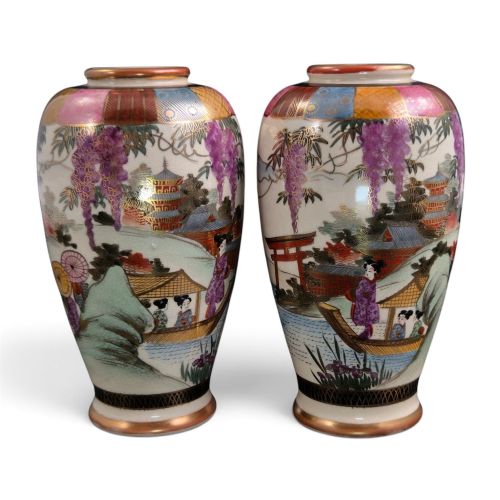

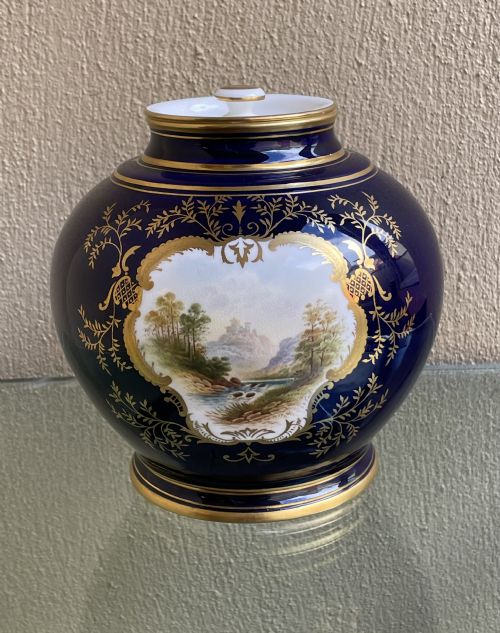


Hand Painted Landscape Vase
A hand painted landscape vase brings distant scenery, rivers, and cattle into the room through fine ceramic brushwork.
Hand Painted Landscape Vase
A hand painted landscape vase displays pictorial scenery rendered across porcelain, earthenware, and ironstone vessels. These pieces range from compact spill vases and bough pots to large covered jars and urns.
The versions most common on this page span the Georgian, Victorian, Edwardian, and early twentieth-century periods. British factories such as Royal Worcester, Coalport, and Derby appear frequently alongside Japanese Satsuma and Kutani wares.
Makers utilised these forms to showcase natural scenery, architectural ruins, and pastoral subjects. Collectors encounter both single cabinet pieces and matched pairs intended for mantelpieces.
Materials and methods of decoration
Potters shaped these vessels using porcelain, earthenware, and ironstone bodies before applying white or tinted glazes. Artisans then painted landscapes by hand using enamel paints, sometimes accentuating the ceramic surface with gold leaf, gilding, or gilt highlights.
Selected works incorporate applied brass mounts or covers that complement the ceramic form. Painters built up the scenery through meticulous brushwork, fixing the pigments in kilns through subsequent firings.
Listings feature porcelain and earthenware vessels decorated with enamel paint, gold leaf, and gilding across multiple centuries.
Distinctions in craftsmanship
The calibre of a hand painted landscape vase rests upon the dexterity of the brushwork and the precision of the landscape composition. Master painters working for established potteries achieved notable depth of perspective and tonal subtlety in foliage and skies.
The integration of gilding and the crispness of the porcelain body further separate standard production from superior output. Pieces bearing legible signatures from recognised artists command particular attention from observers.
Royal Worcester·Coalport·Royal Doulton·Mason's Ironstone·Derby Porcelain
The Hand Painted Landscape Vase Glossary
- Bough pot
- A decorative vessel equipped with a pierced cover designed to hold cut flowers or flowering branches. These containers frequently feature painted landscape panels on the ceramic body.
- Spill vase
- A tall, narrow cylinder used to hold wooden spills for lighting candles and fires. They often display miniature painted landscapes across the exterior.
- Earthenware
- A porous ceramic body fired at lower temperatures than porcelain. It requires an opaque glaze to provide a suitable ground for painted decoration.
- Gilding
- The application of gold leaf or gold paint to ceramic surfaces and handles. This technique highlights rims, collars, and footrings on decorative urns.
- Ironstone
- A heavy, durable type of earthenware patented in the nineteenth century. It offered a robust alternative to porcelain for large decorative vessels.
Hand Painted Landscape Vase: Frequently Asked Questions
How do I identify the painter?
Many professional artists signed their miniature landscapes directly onto the lower corner of the ceramic body. Factory marks on the underside of the base also provide clues to the period and workshop.
Comparing the painting style with documented works helps confirm the decorator's identity.
Were these vessels used for flowers?
Certain forms, such as bough pots and spill vases, were designed specifically to hold water or plant stems. Others functioned purely as ornamental display pieces on mantelpieces and cabinets.
Checking the interior for water staining reveals whether a piece served a practical purpose.
How should I clean my vase?
Dust the surface gently with a soft, dry brush to prevent accumulation in recessed areas. Avoid abrasive cloths or immersion in water, particularly on pieces with delicate gilt highlights.
Harsh cleaning agents can damage the enamel pigments and fragile gold leaf.
What periods do these pieces date from?
The listings span from the late eighteenth century through the Georgian and Victorian eras into the Edwardian period and the 1930s. Japanese Satsuma and Kutani pieces from the Meiji period appear alongside British ceramics.
Stylistic details and maker marks help narrow down the exact decade of manufacture.