

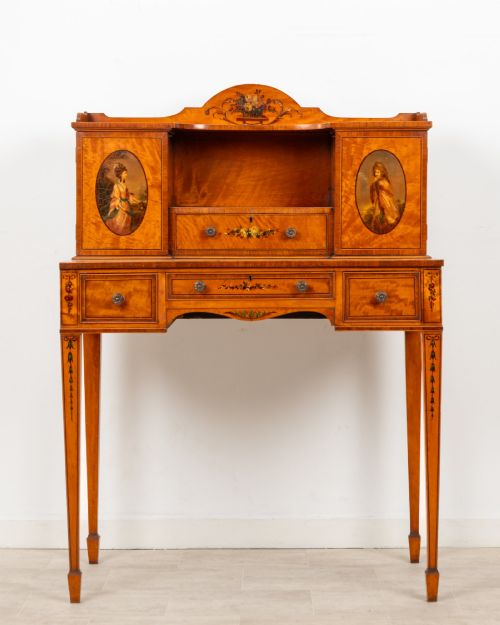


Hand Painted Ladies Table
These hand painted ladies table examples bring painted satinwood, lacquer, and mahogany to domestic writing and sewing spaces.
Hand Painted Ladies Table
A hand painted ladies table encompasses diminutive writing desks, bonheur du jour forms, workboxes, and occasional tables designed for private apartments. The pieces span periods from George III through Victorian, Edwardian, and Art Deco eras, with Edwardian satinwood versions appearing most frequently on this page. Makers and cabinetmakers utilised refined timbers to build these delicate writing and sewing surfaces.
Form follows function across these compact items, offering mirrored superstructures, writing flaps, and fitted compartments for correspondence or needlework. Alongside traditional writing desks, the category accommodates lacquer keepsake cases, cylinder escritoires, and ceramic powder bowls. Each item reflects the domestic requirements of a bygone parlor or boudoir.
How they were made
Cabinetmakers constructed these pieces primarily using satinwood, oak, and ebonised timber, often embellished with applied paint and delicate lacquer finishes. Artisans shaped timber panels into writing desks and workboxes, incorporating brass fittings and glass elements where structural or decorative demands required them. Surface decoration relied upon hand-painted motifs executed directly onto the wood.
The integration of painted decoration with fine cabinet timbers defined the workshop technique for these refined items. Carpenters joined structural elements with traditional joinery before artists applied figurative or floral paintwork to the satinwood and lacquer surfaces.
Hand Painted Ladies Table Retail Price Guide 2026
Typical asking prices for hand painted ladies table among the pieces listed under this phrase on Sellingantiques today, from the lower quarter to the upper quarter. They describe what is for sale here now, not the wider market.
Some Edwardian desks include mirrored superstructures, ensuring writers could check their composure between sentences.
What varies in quality
Quality rests upon the crispness of the hand-painted detailing and the choice of primary timber, with fine satinwood commanding particular attention. The precision of the joinery in small drawers and superstructures distinguishes master cabinet work from standard production.
Preservation of the original painted surface dictates the standing of an individual piece within its period. Finer examples retain their original lacquer and pigment without excessive modern intervention.
The Hand Painted Ladies Table Glossary
- Satinwood
- A durable timber featuring a lustrous, golden sheen utilised extensively for fine cabinet work and decorative writing furniture. It provides a pale ground well-suited to hand-painted ornamentation.
- Bonheur du jour
- A small, light ladies writing desk featuring a tiered superstructure with drawers, shelves, or a mirror above the writing surface. This form gained popularity during the eighteenth century.
- Lacquer
- A durable resin finish applied in multiple layers and polished to create a hard, smooth surface. It often incorporates hand-painted decorative scenes.
- Superstructure
- An upper tier of small drawers, compartments, or mirrors mounted upon the main writing surface of a desk. It maximises storage on compact tables.
- Ebonised
- Timber treated with a dark stain or finish to simulate expensive ebony wood. It provides a dramatic, dark contrast to painted highlights.
Hand Painted Ladies Table: Frequently Asked Questions
What is a ladies table?
A ladies table is a small, decorative piece of furniture designed for writing, sewing, or keeping personal items in a private room.
These compact tables often feature specialised compartments, drawers, and hand-painted decoration suited to refined domestic interiors.
How do I date these tables?
Dating relies on stylistic markers, timber choice, and construction techniques associated with periods like George III, Victorian, and Edwardian eras.
Examining the underlying timber and the style of the hand-painted motifs helps place the piece within its historical context.
Where were these tables used?
These pieces sat in private boudoirs, drawing rooms, and sitting rooms as personal writing or sewing stations.
Their small scale allowed them to be moved easily within domestic spaces according to the day's light and activities.
Are all these tables painted?
Most pieces in this category incorporate painted decoration, ranging from floral motifs on satinwood to elaborate lacquer work.
The application of paint distinguishes these decorative surfaces from standard polished mahogany or oak furniture.