



Hand Painted Lacquered Clock
A hand painted lacquered clock brings vibrant Chinoiserie ornament and rich historic form into a room.
Hand Painted Lacquered Clock
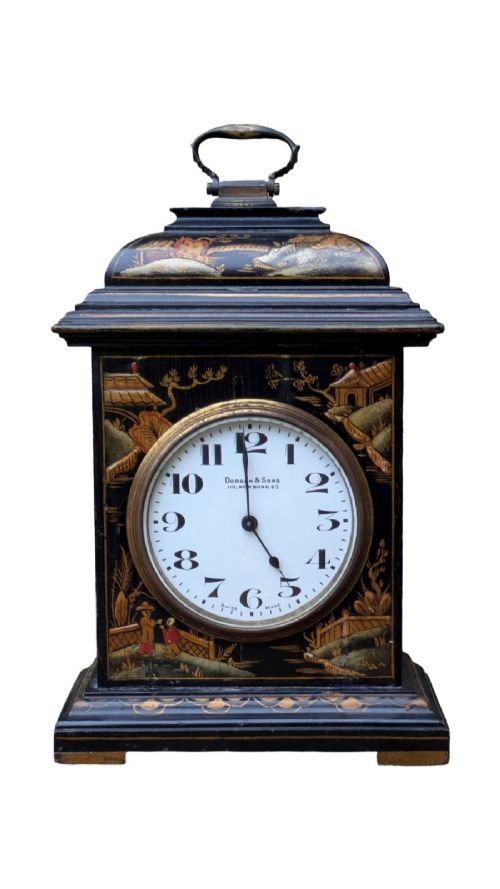
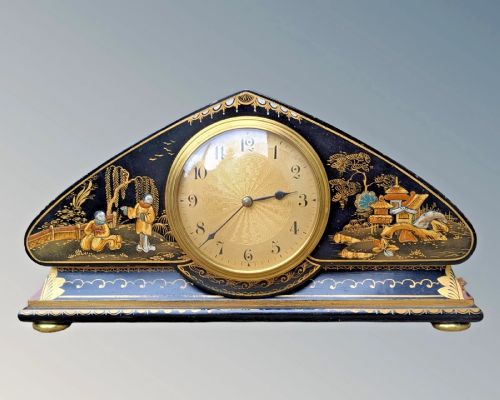
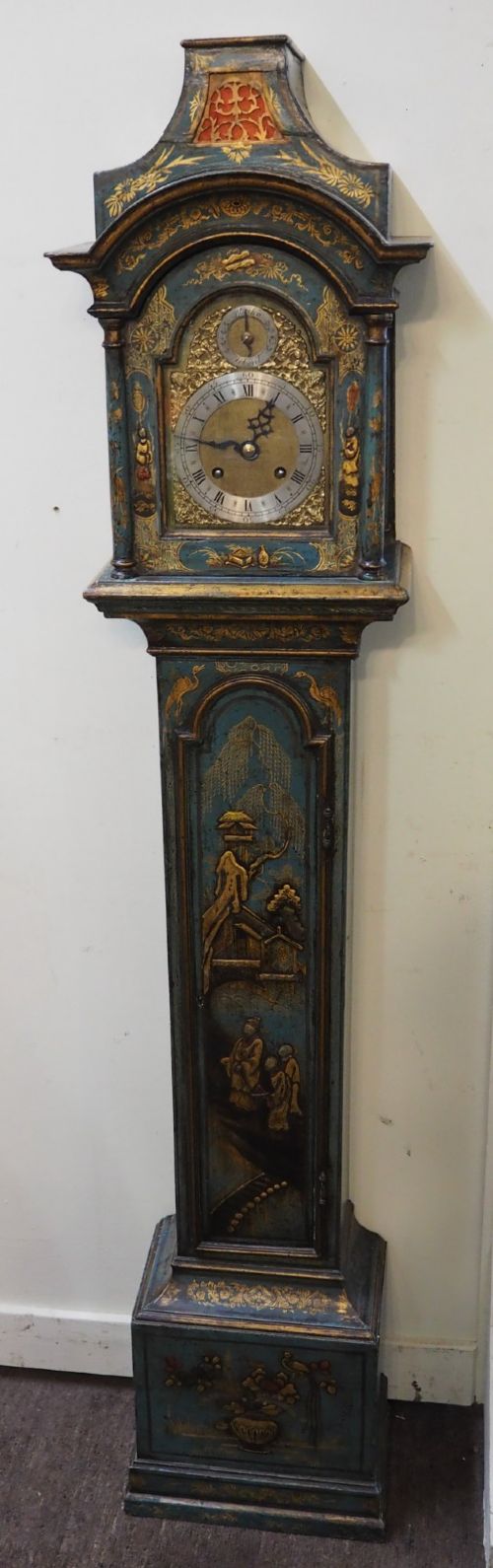
When you search for a hand painted lacquered clock, you encounter timepieces ranging from compact mantel designs to towering longcase and grandmother clocks. These pieces span the eighteenth century, the Georgian era, and the early twentieth century, reflecting enduring taste for orientalist decoration.
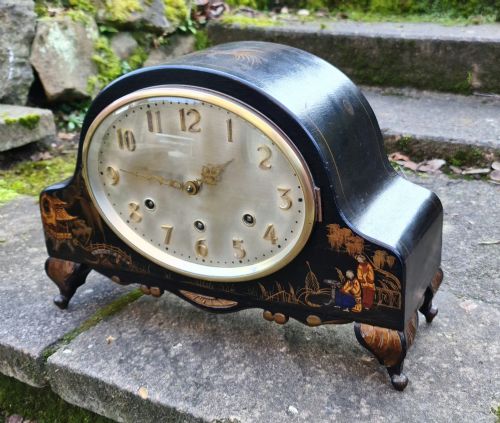
The most common versions on this page are mantel clocks and grandmother clocks produced during the 1920s and 1930s, often bearing Chinoiserie decoration in cream, green, or blue finishes. Alongside these sit taller floor-standing examples from the eighteenth and nineteenth centuries.
Mantel pieces provide accessible scale for domestic interiors, while tallcase variations offer architectural presence. Each type relies upon painted surfaces and lacquered wood to deliver visual depth.
How they were made
Makers constructed these clocks using wood bases coated in lacquer, applying gold leaf and delicate hand-painted motifs over the surface. Enamel dials and brass movements completed the construction, pairing mechanical precision with decorative lacquerwork.
The Chinoiserie style demanded meticulous brushwork to depict figures, pavilions, and landscapes in layered pigment. Craftsmen sealed the wood surfaces to protect the intricate painted scenes and ensure longevity.
Hand Painted Lacquered Clock Retail Price Guide 2026
Typical asking prices for hand painted lacquered clock among the pieces listed under this phrase on Sellingantiques today, from the lower quarter to the upper quarter. They describe what is for sale here now, not the wider market.
Even the smallest mantel clock can command a room when painted with bright blue lacquer and whimsical Chinoiserie figures.
What varies in quality
The finesse of the hand-painted ornament dictates the visual success of the piece, separating standard production from superior artistic execution. Finer examples display crisp detail in the Chinoiserie motifs and harmonious colour palettes across the lacquer.
Case proportion and the integration of movement relative to the cabinet influence the overall calibre of the clock. Superior pieces maintain crisp edges to the woodwork and retain the original integrity of their decorative schemes.
The Hand Painted Lacquered Clock Glossary
- Chinoiserie
- European interpretation and imitation of Chinese and East Asian artistic traditions, widely utilised in furniture and clock decoration during the Georgian period and later revivals. It employs scenic vignettes of figures and pagodas.
- Grandmother clock
- A slender floor-standing timepiece similar in proportion to a grandfather clock but significantly smaller in height. These clocks suit domestic spaces requiring vertical presence without massive scale.
- Longcase clock
- A tall pendulum clock enclosed in a wooden case that rests upon the floor, often referred to as a grandfather clock. These housing structures protect the weighted movement and showcase fine exterior decoration.
- Mantel clock
- A small clock designed to sit upon the shelf of a fireplace mantel or a sideboard. They prioritize decorative portability over the striking power of floor-standing mechanisms.
- Lacquer
- A durable resin finish applied in multiple layers to wood and polished to a smooth sheen. It provides a glossy canvas for painted decoration and gold leaf.
Hand Painted Lacquered Clock: Frequently Asked Questions
How do I care for a lacquered clock?
Keep the clock away from direct sunlight and sources of extreme heat to protect the delicate lacquer finish and prevent wood movement.
Dust gently with a dry, soft cloth and avoid chemical polishes that can degrade the hand-painted surfaces.
Where should I place a mantel clock?
Position the piece on a stable, level surface such as a mantelpiece, sideboard, or deep shelf where it remains secure from vibrations.
Ensure adequate clearance around the clock so the decorative case is clearly visible from the main angles of the room.
How do I wind an antique clock?
Insert the appropriate key into the winding holes on the dial and turn gently until you feel resistance, avoiding overwinding.
Consult the specific mechanical requirements of the movement to maintain correct timekeeping and prevent internal strain.
What is the difference between tallcase and mantel clocks?
Tallcase clocks rest directly on the floor and house long pendulums within protective wooden trunks, offering substantial architectural scale.
Mantel clocks are compact table versions designed for elevated display surfaces without floor support.